/images/ppid_59c68470-image-177017258106866183.webp)

/images/ppid_59c68470-image-177012253357226261.webp)
/images/ppid_59c68470-image-177005003144940566.webp)
/images/ppid_59c68470-image-176999004712317446.webp)
What is the story about?
Gold and silver extended their rebound on Wednesday (February 4), adding to a sharp recovery from the previous session as a weaker US dollar, technical buying and positioning ahead of key US labour data kept precious metals supported. The move came even as improving global trade sentiment suggested that safe-haven demand may not run unchecked in the near term.
Gold holds above $5,000 after historic surge
Spot gold climbed 2.2% to $5,044.74 per ounce by 0112 GMT, building on Tuesday’s (February 3's) 5.9% jump — the metal’s strongest daily gain since November 2008.
US April gold futures rose 2.7% to $5,067.0 per ounce. Bullion had touched a record $5,594.82 an ounce last Thursday (January 29) before correcting sharply, which traders said triggered renewed bargain buying this week.
The US dollar slipped against most major currencies, making gold cheaper for non-US buyers. At the same time, markets continued to price in at least two Federal Reserve rate cuts in 2026, a backdrop that typically favours non-yielding assets such as bullion.
The end of a partial US government shutdown after US President Donald Trump signed a spending deal removed a short-term political overhang, but investors remain focused on monetary policy and growth risks rather than fiscal headlines.
On the technical front, Reuters analyst Wang Tao said the current upswing could remain sharp, with likely near-term movement in the $4,950–$5,198 an ounce range.
Silver follows gold; industrial metals gain
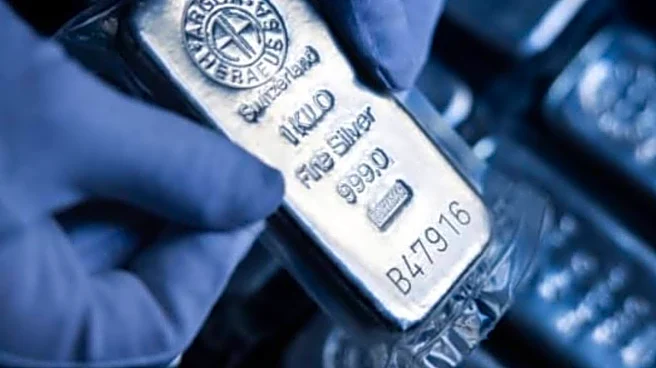
Spot silver rose 2.1% to $86.92 an ounce after touching record levels last week.
Silver’s trajectory remains influenced not just by safe-haven flows but also by expectations for industrial demand tied to global manufacturing.
Trade clarity introduces a counterweight to safe-haven demand
Ross Maxwell, Global Strategy Operations Lead at VT Markets, said the recent cut in US tariffs on Indian goods — from around 50% to 18% — improves trade sentiment and could lift risk appetite in financial markets.
Lower tariffs should help Indian exporters in textiles, engineering goods, chemicals and manufacturing, potentially supporting jobs, earnings and the rupee while encouraging foreign inflows into export-linked sectors.
“For gold and silver, this means a balancing act — clearer trade conditions may limit fear-driven buying, but persistent macro uncertainty keeps both metals structurally firm,” Maxwell said. He added that gold’s appeal as a strategic hedge remains intact, while silver could draw additional support from stronger industrial activity.
India outlook: consolidation likely, bias remains positive
Prithviraj Kothari — Managing Director, RiddiSiddhi Bullions Ltd., President of the India Bullion and Jewellers Association, and Chairman of Jain International Trade Organisation — said the US–India trade deal may encourage short-term consolidation in bullion prices.
A stronger rupee could also soften domestic gold prices by reducing import costs. However, he maintained that the medium-term backdrop remains constructive due to a dovish Fed bias, geopolitical risks, fiscal stress in major economies, and steady central-bank and ETF purchases.
“Gold is likely to remain range-bound with a positive tilt, while silver could see higher volatility but stay supported by industrial demand over time,” Kothari said.
Jateen Trivedi, VP Research Analyst – Commodity & Currency at LKP Securities, attributed the move to fresh safe-haven buying combined with short covering after the recent pullback. Trivedi placed immediate support for MCX gold at ₹1.45 lakh per 10 grams and resistance near ₹1.55 lakh per 10 grams.
Data risk ahead
This week’s U.S. Nonfarm Payrolls and unemployment figures remain the key catalysts for volatility, as they will shape expectations for Fed policy. Markets will also parse PMI data from China, Europe and the US, along with the ISM services index.
-With Reuters inputs
Gold holds above $5,000 after historic surge
Spot gold climbed 2.2% to $5,044.74 per ounce by 0112 GMT, building on Tuesday’s (February 3's) 5.9% jump — the metal’s strongest daily gain since November 2008.
US April gold futures rose 2.7% to $5,067.0 per ounce. Bullion had touched a record $5,594.82 an ounce last Thursday (January 29) before correcting sharply, which traders said triggered renewed bargain buying this week.
The US dollar slipped against most major currencies, making gold cheaper for non-US buyers. At the same time, markets continued to price in at least two Federal Reserve rate cuts in 2026, a backdrop that typically favours non-yielding assets such as bullion.
The end of a partial US government shutdown after US President Donald Trump signed a spending deal removed a short-term political overhang, but investors remain focused on monetary policy and growth risks rather than fiscal headlines.
On the technical front, Reuters analyst Wang Tao said the current upswing could remain sharp, with likely near-term movement in the $4,950–$5,198 an ounce range.
Silver follows gold; industrial metals gain
Spot silver rose 2.1% to $86.92 an ounce after touching record levels last week.
Silver’s trajectory remains influenced not just by safe-haven flows but also by expectations for industrial demand tied to global manufacturing.
Trade clarity introduces a counterweight to safe-haven demand
Ross Maxwell, Global Strategy Operations Lead at VT Markets, said the recent cut in US tariffs on Indian goods — from around 50% to 18% — improves trade sentiment and could lift risk appetite in financial markets.
Lower tariffs should help Indian exporters in textiles, engineering goods, chemicals and manufacturing, potentially supporting jobs, earnings and the rupee while encouraging foreign inflows into export-linked sectors.
“For gold and silver, this means a balancing act — clearer trade conditions may limit fear-driven buying, but persistent macro uncertainty keeps both metals structurally firm,” Maxwell said. He added that gold’s appeal as a strategic hedge remains intact, while silver could draw additional support from stronger industrial activity.
India outlook: consolidation likely, bias remains positive
Prithviraj Kothari — Managing Director, RiddiSiddhi Bullions Ltd., President of the India Bullion and Jewellers Association, and Chairman of Jain International Trade Organisation — said the US–India trade deal may encourage short-term consolidation in bullion prices.
A stronger rupee could also soften domestic gold prices by reducing import costs. However, he maintained that the medium-term backdrop remains constructive due to a dovish Fed bias, geopolitical risks, fiscal stress in major economies, and steady central-bank and ETF purchases.
“Gold is likely to remain range-bound with a positive tilt, while silver could see higher volatility but stay supported by industrial demand over time,” Kothari said.
Jateen Trivedi, VP Research Analyst – Commodity & Currency at LKP Securities, attributed the move to fresh safe-haven buying combined with short covering after the recent pullback. Trivedi placed immediate support for MCX gold at ₹1.45 lakh per 10 grams and resistance near ₹1.55 lakh per 10 grams.
Data risk ahead
This week’s U.S. Nonfarm Payrolls and unemployment figures remain the key catalysts for volatility, as they will shape expectations for Fed policy. Markets will also parse PMI data from China, Europe and the US, along with the ISM services index.
-With Reuters inputs
/images/ppid_59c68470-image-176999759888735704.webp)
/images/ppid_59c68470-image-177001007299636597.webp)
/images/ppid_59c68470-image-177000768191765899.webp)

/images/ppid_59c68470-image-177011522985119872.webp)

/images/ppid_59c68470-image-177006003434960459.webp)