



What is the story about?
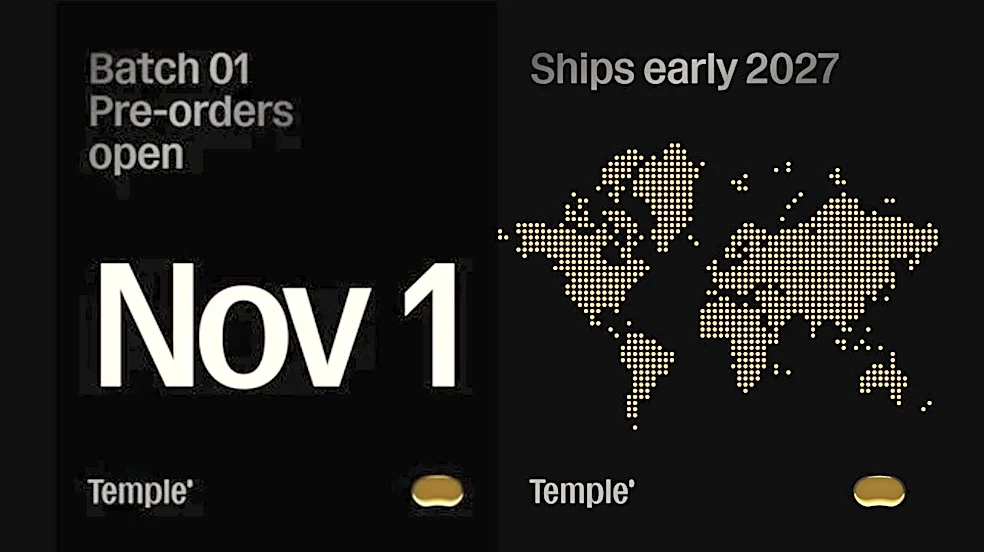
Deepinder Goyal, founder of Zomato, is moving closer to launching Temple, his upcoming health-tracking wearable, with pre-orders for the first batch set to open on November 1, 2026.
Announcing the development on X, Goyal said every Temple device would be made to order by hand, with deliveries expected within three months of purchase. Shipments are scheduled to begin in early 2027, according to the announcement.
The company is yet to reveal the device’s price in India or specify how many units will be available in the initial batch. Further details on its specifications and availability are also awaited.
Unlike conventional fitness bands and smartwatches worn on the wrist, Temple is designed to sit against the sides of the forehead. Its primary focus is measuring changes in blood flow towards the brain using light-based sensors.
Goyal has described this measurement as ‘BrainFlow’, positioning it as a way to understand aspects of the body’s physiological state beyond the metrics typically tracked by consumer wearables.
The device is also expected to feature an Entropy score, measured on a scale of 1 to 250. This score is intended to reflect the body’s overall load, accounting for influences such as sleep and recovery, physical activity, mental stress and caffeine consumption.
Temple’s development has also involved examining the relationship between body posture, gravity and blood circulation towards the brain. However, several product details, including battery life, the accompanying mobile application and the full range of tracking capabilities, have not yet been disclosed.
Temple is being positioned as a wellness wearable, rather than a clinical medical device. Its effectiveness, the precise interpretation of its measurements and the extent of the information available to users will become clearer as more product details emerge.
Also read: From lab to production line: Zydilac Bio bets on light-powered protein manufacturing
Temple attracted investor interest ahead of its planned launch. In February 2026, Goyal raised $54 million for the venture at a reported valuation of nearly $190 million, according to TechCrunch.
The funding round included Steadview Capital, Peak XV Partners, InfoEdge Ventures and Dharana Capital. Individual investors and Temple employees also participated.
With pre-orders scheduled to begin on November 1, the announcement brings the wearable a step closer to reaching customers. Pricing, the size of the first batch and further technical details remain among the key unanswered questions ahead of its launch.
Announcing the development on X, Goyal said every Temple device would be made to order by hand, with deliveries expected within three months of purchase. Shipments are scheduled to begin in early 2027, according to the announcement.
The
wait is over.
Temple Batch 01 pre orders open November 1. Each @temple is hand-made to order and delivered to you within three months of your purchase. https://t.co/t6qth9sUeV
— Deepinder Goyal (@deepigoyal) October 21, 2026
The company is yet to reveal the device’s price in India or specify how many units will be available in the initial batch. Further details on its specifications and availability are also awaited.
Temple tracker: How does it work?
Unlike conventional fitness bands and smartwatches worn on the wrist, Temple is designed to sit against the sides of the forehead. Its primary focus is measuring changes in blood flow towards the brain using light-based sensors.
Goyal has described this measurement as ‘BrainFlow’, positioning it as a way to understand aspects of the body’s physiological state beyond the metrics typically tracked by consumer wearables.
The device is also expected to feature an Entropy score, measured on a scale of 1 to 250. This score is intended to reflect the body’s overall load, accounting for influences such as sleep and recovery, physical activity, mental stress and caffeine consumption.
Temple’s development has also involved examining the relationship between body posture, gravity and blood circulation towards the brain. However, several product details, including battery life, the accompanying mobile application and the full range of tracking capabilities, have not yet been disclosed.
Temple is being positioned as a wellness wearable, rather than a clinical medical device. Its effectiveness, the precise interpretation of its measurements and the extent of the information available to users will become clearer as more product details emerge.
Also read: From lab to production line: Zydilac Bio bets on light-powered protein manufacturing
Temple funding: $54 million raised in February
Temple attracted investor interest ahead of its planned launch. In February 2026, Goyal raised $54 million for the venture at a reported valuation of nearly $190 million, according to TechCrunch.
The funding round included Steadview Capital, Peak XV Partners, InfoEdge Ventures and Dharana Capital. Individual investors and Temple employees also participated.
With pre-orders scheduled to begin on November 1, the announcement brings the wearable a step closer to reaching customers. Pricing, the size of the first batch and further technical details remain among the key unanswered questions ahead of its launch.