/images/ppid_59c68470-image-177563006272974280.webp)

/images/ppid_59c68470-image-177549503029187736.webp)
/images/ppid_59c68470-image-177555003745363140.webp)
/images/ppid_59c68470-image-177556756323862964.webp)
What is the story about?
On day one of the ceasefire between the US and Iran, a Singapore-based fund manager revealed that he shuffled stocks but never took money out of the market during the war that began on February 28.
In a conversation with CNBC-TV18, Samir Arora, Founder of Helios Capital, shares his thoughts on stocks that are attractive. He also explained why HDFC Bank and Eternal feature in that list.
You can watch the full conversation here or scroll down for edited excerpts from the interview.
Q: What have you done in the last 37 days while this conflict was on? And are you getting back risk today?
A: Actually, in my long-short fund, I had come in very aggressively in March. My net was something like 74–75, which, after 10–15 days, I reduced to oil and gas, refining, and a few others. And my net is now maybe 67–68—not much different, but it was actually lower.
But you know, it’s a long-short fund, and you have to react. In the other funds, I have a long-only fund here, quite big, and then we have the mutual funds there, and all of them would be 99% invested.
Also Read: Why this New York fund manager still believes Indian stocks are expensive
I can prove it again and again. You can see the data for the last year: for all the guys who come on TV and say, now we are becoming bullish, now our model is turning green, but their returns are plus-or-minus the same, in a period that should have helped the guy sitting on cash.
In the end, a few days here and there—like today—if you are sitting on cash, what you will lose is maybe 20 days of returns. And by that time, something else will happen.
So, we have realised that broadly being fully invested is okay. You change the stocks as you go. You can’t say I am long-term, I will time the market, but I will not change the stock. Once you buy a stock, you are always married to it—that doesn’t work. If you are willing to change stocks, it’s okay to be fully invested.
Q: How have you rebalanced and churned your portfolio?
A: As I said, we have changed some energy-related stocks, and we added a few. Maybe we added one new name to defence stocks.
And even if the war is ending, defence now—people will realise everybody needs to be more self-dependent. Secondly, in oil and gas and energy, you will have to put more effort into alternatives than before.
Other than that, we didn’t change much. We added to a stock, which fell 25% year-to-date. We felt the stories around it were more about egos than any scam in the company.
We added to that, including in our offshore fund in March. Also added positions in HDFC Bank and the delivery company (Eternal).
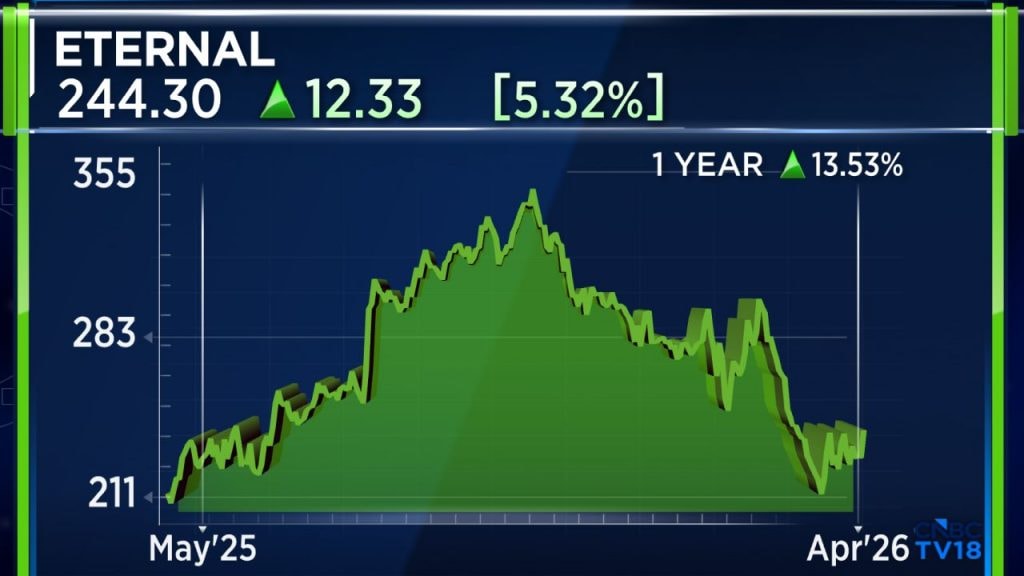
We didn’t change weights much otherwise, but we are very bullish on it—more bullish now. If you see, even large players are struggling to make money, so the pressure is reducing.
At current valuations, IPOs cannot happen at the valuations they expected earlier, so they will be less aggressive. You can already see pressure easing.
And there is no way you can avoid using quick commerce now—whether you are lazy or athletic, have time or not—it’s become part of life.
Q: One worry is the kind of FII selling we are seeing. March was aggressive due to the war, but April has also started weak. Do you think stability in currency can bring them back?
A: Even when IT fell 18–20%, the index was up, FII flows were positive, and currency was also up. That was the default scenario.
March was negative for everyone, but more negative for India due to oil imports and currency weakness. If oil rises sharply, the daily loss is significant.
If there is currency stability—and if they announce something like a $50–75 billion NRI bond—it can help. The cost is small relative to the stability it brings.
FII selling has been large globally—Korea and Taiwan have seen even bigger selling proportions.
Also Watch: Why high oil prices are making goods from cotton to chemicals expensive
We hope that flows stabilise to zero or positive, and the currency stops weakening every day. As I said earlier, the currency performance has been embarrassing.
Even when other currencies strengthened, we weakened. That shouldn’t happen daily. If banks were driving it via prop trades, stopping that was a good move.
Q: If you were sitting on 100% cash and deploying fresh today, where would you invest?
Without baggage, you look at beaten-down names—stocks down 15–25% due to temporary issues.
Banks, consumption, food delivery—these are areas we like. A 25% fall in a good company is usually due to an event, not structural damage.
Catch all the latest updates from the stock market here
Also, follow live updates from the RBI MPC meeting here
In a conversation with CNBC-TV18, Samir Arora, Founder of Helios Capital, shares his thoughts on stocks that are attractive. He also explained why HDFC Bank and Eternal feature in that list.
You can watch the full conversation here or scroll down for edited excerpts from the interview.
Q: What have you done in the last 37 days while this conflict was on? And are you getting back risk today?
A: Actually, in my long-short fund, I had come in very aggressively in March. My net was something like 74–75, which, after 10–15 days, I reduced to oil and gas, refining, and a few others. And my net is now maybe 67–68—not much different, but it was actually lower.
But you know, it’s a long-short fund, and you have to react. In the other funds, I have a long-only fund here, quite big, and then we have the mutual funds there, and all of them would be 99% invested.
Also Read: Why this New York fund manager still believes Indian stocks are expensive
I can prove it again and again. You can see the data for the last year: for all the guys who come on TV and say, now we are becoming bullish, now our model is turning green, but their returns are plus-or-minus the same, in a period that should have helped the guy sitting on cash.
In the end, a few days here and there—like today—if you are sitting on cash, what you will lose is maybe 20 days of returns. And by that time, something else will happen.
So, we have realised that broadly being fully invested is okay. You change the stocks as you go. You can’t say I am long-term, I will time the market, but I will not change the stock. Once you buy a stock, you are always married to it—that doesn’t work. If you are willing to change stocks, it’s okay to be fully invested.
Q: How have you rebalanced and churned your portfolio?
A: As I said, we have changed some energy-related stocks, and we added a few. Maybe we added one new name to defence stocks.
And even if the war is ending, defence now—people will realise everybody needs to be more self-dependent. Secondly, in oil and gas and energy, you will have to put more effort into alternatives than before.
Other than that, we didn’t change much. We added to a stock, which fell 25% year-to-date. We felt the stories around it were more about egos than any scam in the company.
We added to that, including in our offshore fund in March. Also added positions in HDFC Bank and the delivery company (Eternal).
We didn’t change weights much otherwise, but we are very bullish on it—more bullish now. If you see, even large players are struggling to make money, so the pressure is reducing.
At current valuations, IPOs cannot happen at the valuations they expected earlier, so they will be less aggressive. You can already see pressure easing.
And there is no way you can avoid using quick commerce now—whether you are lazy or athletic, have time or not—it’s become part of life.
Q: One worry is the kind of FII selling we are seeing. March was aggressive due to the war, but April has also started weak. Do you think stability in currency can bring them back?
A: Even when IT fell 18–20%, the index was up, FII flows were positive, and currency was also up. That was the default scenario.
March was negative for everyone, but more negative for India due to oil imports and currency weakness. If oil rises sharply, the daily loss is significant.
If there is currency stability—and if they announce something like a $50–75 billion NRI bond—it can help. The cost is small relative to the stability it brings.
FII selling has been large globally—Korea and Taiwan have seen even bigger selling proportions.
Also Watch: Why high oil prices are making goods from cotton to chemicals expensive
We hope that flows stabilise to zero or positive, and the currency stops weakening every day. As I said earlier, the currency performance has been embarrassing.
Even when other currencies strengthened, we weakened. That shouldn’t happen daily. If banks were driving it via prop trades, stopping that was a good move.
Q: If you were sitting on 100% cash and deploying fresh today, where would you invest?
Without baggage, you look at beaten-down names—stocks down 15–25% due to temporary issues.
Banks, consumption, food delivery—these are areas we like. A 25% fall in a good company is usually due to an event, not structural damage.
Catch all the latest updates from the stock market here
Also, follow live updates from the RBI MPC meeting here
/images/ppid_59c68470-image-177554008708596130.webp)
/images/ppid_59c68470-image-177562504229138853.webp)


/images/ppid_59c68470-image-177562003184413140.webp)
/images/ppid_59c68470-image-177545261163588030.webp)
/images/ppid_59c68470-image-177545756557632439.webp)
/images/ppid_59c68470-image-177556760132782474.webp)
/images/ppid_59c68470-image-177562517316871667.webp)
/images/ppid_59c68470-image-177562256555092140.webp)