



What is the story about?
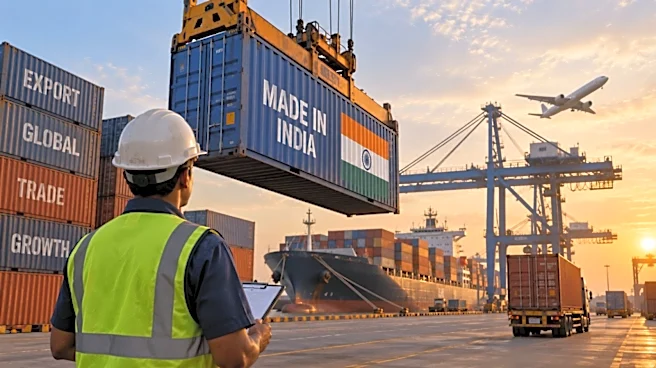
India is seeking to boost merchandise exports from districts across the country as it looks to curb its widening trade deficit, with a focus on helping local businesses identify and tap overseas markets.
Government sources said the initiative aims to broaden India’s export base by promoting farm products, textiles, footwear, geographical indication (GI)-tagged goods and engineering products.
Under the Districts as Export Hubs (DEH) scheme, District Export Promotion Councils held meetings in 120 districts between June and August 2026. In 113 districts where meetings were held, new exporters obtained 32,000 Importer Exporter Code (IEC) registrations, with micro, small and medium enterprises (MSMEs) accounting for 65% of the new codes, sources said. The registrations indicate that more first-time exporters are preparing to enter overseas markets.
The government plans to use three initiatives — Districts as Export Hubs, the Export Promotion Mission (EPM) and free trade agreements (FTAs) — to help small businesses and MSMEs begin exporting and make greater use of trade pacts.
The DEH initiative is intended to provide businesses with guidance and support, while the EPM will offer financial assistance. FTAs, meanwhile, are expected to help exporters gain preferential access to overseas markets.
The approach aims to help local businesses scale up in line with global demand and increase India’s foreign-exchange earnings, sources said.
The DEH initiative grew out of the One District One Product (ODOP) programme, which seeks to identify, brand and promote a distinctive product from each district, turning local strengths into economic opportunities. Its remit has since expanded beyond product promotion to include broader export support and the development of local export ecosystems.
As of January 2026, the DEH initiative covered more than 770 districts across the country.
A few days ago, Commerce and Industry Minister Piyush Goyal said India’s trade agreements before 2014 covered economies with a combined gross domestic product of $10 trillion. He said nine trade pacts concluded with 38 economies over the past five years had added $60 trillion in market access.
The agreements cited by the minister include pacts with the US, the 27-member European Union, the four-member European Free Trade Association (EFTA), the UK, the UAE, Oman, Australia, Mauritius and New Zealand.
Goyal added that trade agreements currently under negotiation with Canada, Israel, Mexico, the Gulf Cooperation Council, the Brazil-led Mercosur bloc and the South Africa-led Southern African Customs Union (SACU) could add another $15 trillion in market access.
Amid continuing geopolitical tensions in West Asia and neighbouring regions, India has also extended insurance cover for exporters until March 31, 2027, under the Resilience & Logistics Intervention for Export Facilitation (RELIEF) initiative, which is part of the Export Promotion Mission (EPM).