/images/ppid_59c68470-image-177927255926740595.webp)


/images/ppid_59c68470-image-177927252988054009.webp)

What is the story about?
Tarun Arora, CEO and Whole-Time Director of Zydus Wellness expects recovery in the company's seasonal beverage portfolio in 2026-27 (FY27), after unseasonal rains affected demand last summer. The company is also seeing continued momentum in its non-seasonal categories and international business.
Arora said heatwave conditions are now supporting demand recovery in summer-linked products. “We should see some recovery from that now,” he said, referring to the Glucon-D portfolio.
The company’s non-seasonal portfolio grew around 16-17% in
FY26. Over a three-to-four-year period, Arora expects even seasonal brands to deliver double-digit growth despite year-to-year weather volatility.
Zydus Wellness is also exploring opportunities to introduce parts of its protein and nutrition portfolio into European markets under the WeightWorld brand, while also evaluating product learnings from international markets for India.
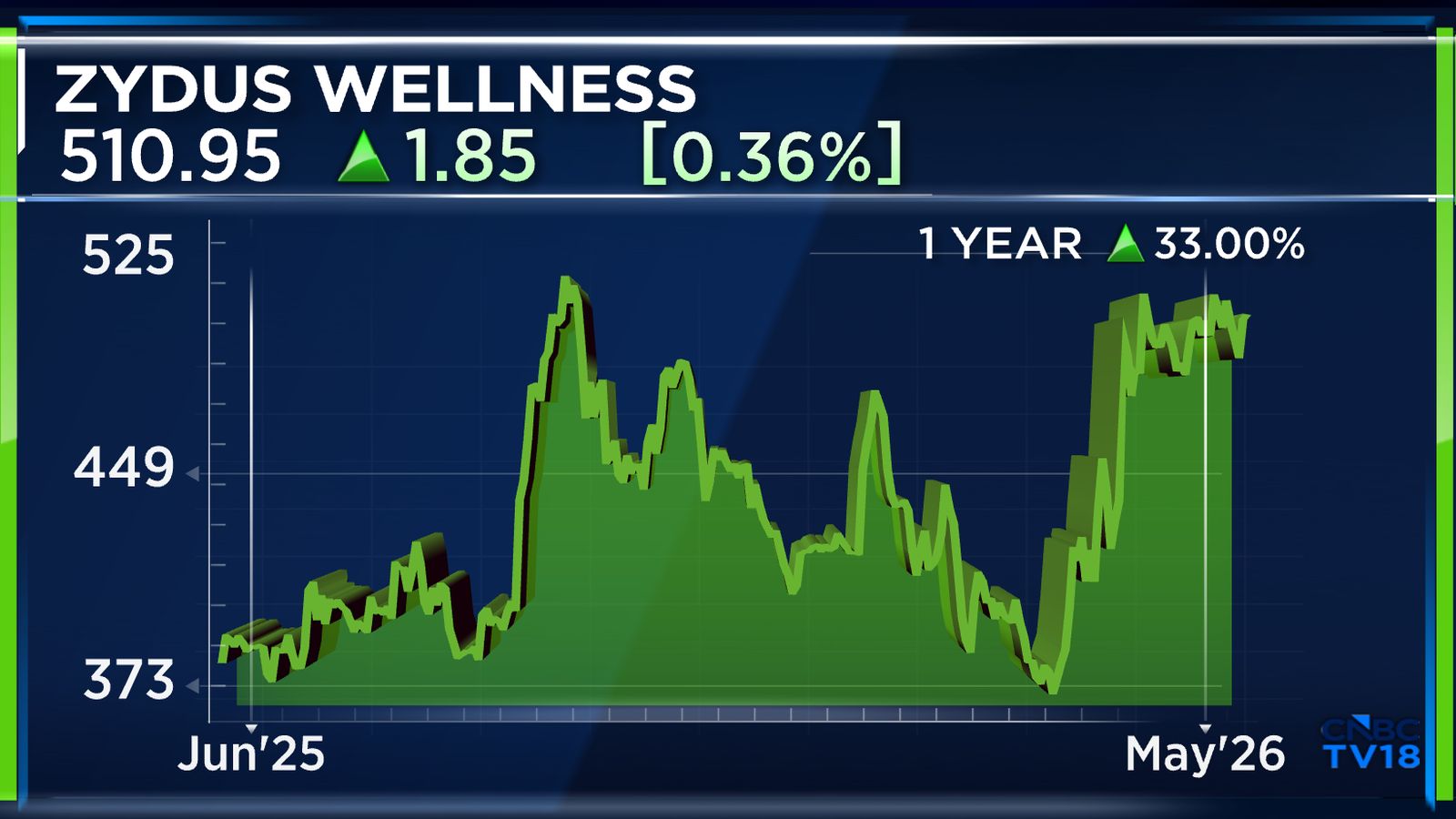
Zydus Wellness currently has a market capitalisation of ₹16,366.19 crore. Shares have gained more than 33% over the past one year.
These are edited excerpts from the interview.Q: A large part of your fourth quarter revenue was impacted by unseasonal rains, which is basically the Glucon-D portfolio, which saw a decline of almost 10-odd percent. But we are now in a heat wave. Has the first quarter seen a strong pickup in that portfolio? And in light of that, what can we expect for the first half of this year?
A: We had a very good start last calendar year, where we had a very good summer starting off, and then it tapered off, and we had early rains. Now this year seems to be going absolutely opposite to what we saw last year. So, till mid-April, there was a bit of lower temperatures. After that, the temperatures have got better from a seasonal point of view, and it's a heat wave, so we should see some recovery from that.
It is very hard to predict how this will pan out, but of course we have a going-forward lower base because we had difficult summer conditions last year, and we hope that we can recover some part of what we lost. So that's the nature of the beast that we deal with in our seasonal brands.
Q: I wanted to know whether you've seen signs of that in the first quarter so far or not. But be that as it may, organic like-for-like growth in FY26 for India, what was that, and what is it likely to be in FY27?
A: So, like-for-like, at an overall level, India growth was more like 2.5% to 3%, but if you segregate the seasonal and non-seasonal, the non-seasonal was almost about 16-17%. So, it just reflects that our overall portfolio is on a very good trajectory. We are delivering on the double-digit growth that we've always talked about. It's just that there are external factors, which are temporary by nature, and our view is that, over a period of three to four years, typically you will see that even the seasonal portfolio delivers double-digit growth.
Also Read | This 'consensus buy' stock has seen its biggest single-day gain in 17 years
There are years when it is doing better and years when it's not doing so well, but over the medium term of three to four years, it delivers well. But the underlying all-season business is on a good mid-teens trajectory last year, so we're quite happy with whatever we've been able to deliver.
Q: What proportion of your revenue and margin synergies with Comfort Click have been achieved, and what's the way ahead from here on?
A: Comfort Click is a very different level of business, and the way we are looking at it, or the thesis of acquisition is, first of all, it's in a high-growth space, so we want to focus on the growth aspects of the business. We have talked about, on a constant currency basis, about 27-28% growth in the last quarter, and including the currency benefits, more than 31% growth. Now, the focus is clearly on driving the growth. The synergy benefits are not what we are chasing, of course. There are benefits we are looking at.
Can we take some of our protein portfolio or some other nutrition portfolios into European markets under the WeightWorld brand? And those are explorations we are doing. We're also working with the team at the back end in Hyderabad and other places and seeing what we can do together, bring in some capability and processes from the Zydus group and Zydus Wellness from a particular perspective. But I think it's a separate business, and I'm not chasing so hard on synergy, at least in the near term, but processes and culture, yes.
Q: These businesses are in geographies where you're not present, so obviously you would want to scale some revenues there too.
A: So, we're looking at our protein products range and some other nutrition portfolio, which we could take there. We're also trying to learn something on the VMS side, which at some point in time we could consider bringing back to India, and there are a couple of other options. It is still early days. It's just been six-seven months since we acquired it, and we are working with the team very closely to see what we can take from there and what we can bring from a global knowledge-to-India perspective.
For the full interview, watch the accompanying videoQ: What has gone right for you this time around has been the currency depreciation, which has aided your Comfort Click business by about 3%. But I also wanted to know how much more of that benefit will be visible in the quarter that we're currently in, because the rupee is at a record low, and the debt on your books, how much of that is denominated in non-rupee currencies? Could that be an impact as well?
A: The currency gain is not what we are fundamentally relying on. Of course, there may be continued 3-4% benefits, which may come depending upon how the rupee performs.
Having said this, we are focused on like-for-like constant currency growth, which is in sync with what our aspirations are. They have delivered 27-28% kind of growth on a constant currency basis, which we will continue to build. The currency gains sit on top of it.
Having said this, when you look at the loan, we took about ₹2,800 crore of loan when we acquired it, which was pound-denominated. Now we have converted it into a euro-based loan, which is a tad cheaper, and I think the acquired business itself is capable of paying for it. At an overall business level, we should only get better, and the arbitrage exists because we are earning in euros to a substantial extent, and therefore the payment and the loan are also in euros, so there is no major risk sitting there in terms of currency issues on the loan.
Catch all the latest updates from the stock market here
Arora said heatwave conditions are now supporting demand recovery in summer-linked products. “We should see some recovery from that now,” he said, referring to the Glucon-D portfolio.
The company’s non-seasonal portfolio grew around 16-17% in
Zydus Wellness is also exploring opportunities to introduce parts of its protein and nutrition portfolio into European markets under the WeightWorld brand, while also evaluating product learnings from international markets for India.
Zydus Wellness currently has a market capitalisation of ₹16,366.19 crore. Shares have gained more than 33% over the past one year.
These are edited excerpts from the interview.Q: A large part of your fourth quarter revenue was impacted by unseasonal rains, which is basically the Glucon-D portfolio, which saw a decline of almost 10-odd percent. But we are now in a heat wave. Has the first quarter seen a strong pickup in that portfolio? And in light of that, what can we expect for the first half of this year?
A: We had a very good start last calendar year, where we had a very good summer starting off, and then it tapered off, and we had early rains. Now this year seems to be going absolutely opposite to what we saw last year. So, till mid-April, there was a bit of lower temperatures. After that, the temperatures have got better from a seasonal point of view, and it's a heat wave, so we should see some recovery from that.
It is very hard to predict how this will pan out, but of course we have a going-forward lower base because we had difficult summer conditions last year, and we hope that we can recover some part of what we lost. So that's the nature of the beast that we deal with in our seasonal brands.
Q: I wanted to know whether you've seen signs of that in the first quarter so far or not. But be that as it may, organic like-for-like growth in FY26 for India, what was that, and what is it likely to be in FY27?
A: So, like-for-like, at an overall level, India growth was more like 2.5% to 3%, but if you segregate the seasonal and non-seasonal, the non-seasonal was almost about 16-17%. So, it just reflects that our overall portfolio is on a very good trajectory. We are delivering on the double-digit growth that we've always talked about. It's just that there are external factors, which are temporary by nature, and our view is that, over a period of three to four years, typically you will see that even the seasonal portfolio delivers double-digit growth.
Also Read | This 'consensus buy' stock has seen its biggest single-day gain in 17 years
There are years when it is doing better and years when it's not doing so well, but over the medium term of three to four years, it delivers well. But the underlying all-season business is on a good mid-teens trajectory last year, so we're quite happy with whatever we've been able to deliver.
Q: What proportion of your revenue and margin synergies with Comfort Click have been achieved, and what's the way ahead from here on?
A: Comfort Click is a very different level of business, and the way we are looking at it, or the thesis of acquisition is, first of all, it's in a high-growth space, so we want to focus on the growth aspects of the business. We have talked about, on a constant currency basis, about 27-28% growth in the last quarter, and including the currency benefits, more than 31% growth. Now, the focus is clearly on driving the growth. The synergy benefits are not what we are chasing, of course. There are benefits we are looking at.
Can we take some of our protein portfolio or some other nutrition portfolios into European markets under the WeightWorld brand? And those are explorations we are doing. We're also working with the team at the back end in Hyderabad and other places and seeing what we can do together, bring in some capability and processes from the Zydus group and Zydus Wellness from a particular perspective. But I think it's a separate business, and I'm not chasing so hard on synergy, at least in the near term, but processes and culture, yes.
Q: These businesses are in geographies where you're not present, so obviously you would want to scale some revenues there too.
A: So, we're looking at our protein products range and some other nutrition portfolio, which we could take there. We're also trying to learn something on the VMS side, which at some point in time we could consider bringing back to India, and there are a couple of other options. It is still early days. It's just been six-seven months since we acquired it, and we are working with the team very closely to see what we can take from there and what we can bring from a global knowledge-to-India perspective.
For the full interview, watch the accompanying videoQ: What has gone right for you this time around has been the currency depreciation, which has aided your Comfort Click business by about 3%. But I also wanted to know how much more of that benefit will be visible in the quarter that we're currently in, because the rupee is at a record low, and the debt on your books, how much of that is denominated in non-rupee currencies? Could that be an impact as well?
A: The currency gain is not what we are fundamentally relying on. Of course, there may be continued 3-4% benefits, which may come depending upon how the rupee performs.
Having said this, we are focused on like-for-like constant currency growth, which is in sync with what our aspirations are. They have delivered 27-28% kind of growth on a constant currency basis, which we will continue to build. The currency gains sit on top of it.
Having said this, when you look at the loan, we took about ₹2,800 crore of loan when we acquired it, which was pound-denominated. Now we have converted it into a euro-based loan, which is a tad cheaper, and I think the acquired business itself is capable of paying for it. At an overall business level, we should only get better, and the arbitrage exists because we are earning in euros to a substantial extent, and therefore the payment and the loan are also in euros, so there is no major risk sitting there in terms of currency issues on the loan.
Catch all the latest updates from the stock market here
/images/ppid_59c68470-image-177909512471764083.webp)


/images/ppid_59c68470-image-177912502486914157.webp)

/images/ppid_59c68470-image-177911506417066166.webp)
/images/ppid_59c68470-image-177910252903766647.webp)
/images/ppid_59c68470-image-177921008848564412.webp)
/images/ppid_59c68470-image-177919510491469563.webp)