/images/ppid_59c68470-image-17878925960091755.webp)


/images/ppid_59c68470-image-178826252517979263.webp)

What is the story about?
Aye Finance Founder and Managing Director Sanjay Sharma said the company's loan growth and asset quality trends for the financial year 2026-27 (FY27) are moving in line with its full-year guidance.
"On AUM growth, we have not seen any slowdown from our markets. We were guiding for a 25 to 30% growth, and I think in the first quarter, we've shown a 28% growth," Sharma said, adding that growth is expected to move toward the higher end of that range as the year progresses.
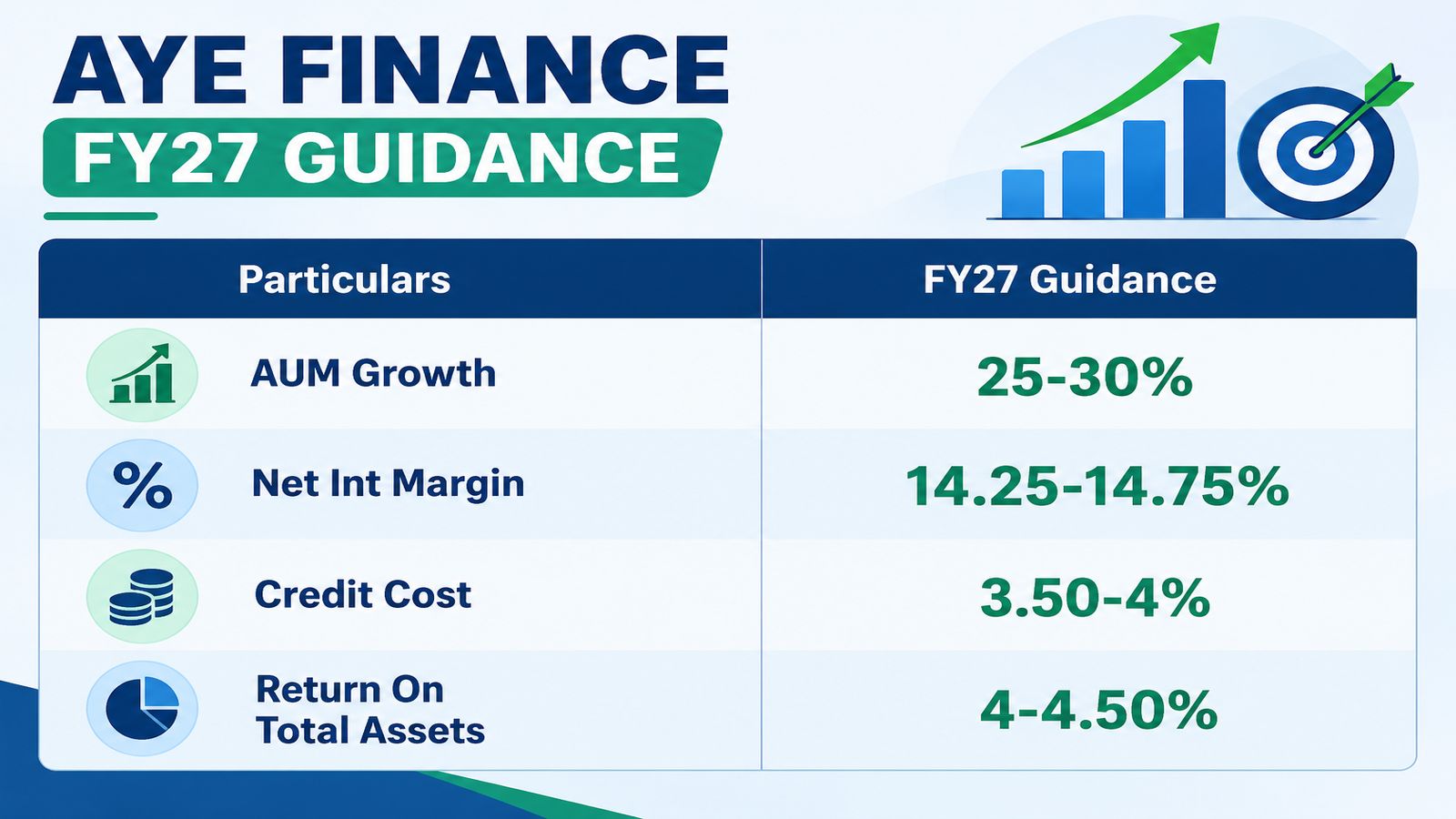
Sharma said the credit cost — the share of loans that a lender sets aside for expected loan losses — has been falling for six straight quarters. "We have seen six quarters of falling credit cost, and we typically model our business around a credit cost of 3.5-4%," he said, adding that the figure stood at 4% in the April-June 2026 quarter and should move toward the company's guided level of 3.75%, plus or minus 25 basis points.
Net interest margin (NIM) — the gap between what it earns on loans and what it pays to raise funds — is also ahead of plan. "We had forecast that our NIMs would be over 14.5%, and in the first quarter the NIM was actually at 15% plus," Sharma said, pointing to funds raised through its recent initial public offering (IPO) as a factor keeping margins steady.
Aye Finance, headquartered in Gurugram, gives business loans to small and micro enterprises across India. The company lends mainly through hypothecation loans, where the loan is secured against movable business assets such as machinery, rather than property. This segment makes up about 70-72% of the loan book, with a ticket size of ₹1 lakh to ₹2 lakh. Micro loans against property (LAP), with a ticket size closer to ₹5 lakh, make up most of the remaining book.
Sharma said hypothecation lending carries a similar default pattern to mortgage-backed lending, since business assets tend to be protected by borrowers in the same way as a home would be. He said Aye Finance underwrites these loans through a cluster-based method that looks at business data rather than relying only on formal documents, an approach he said limits competition in this segment.
Gross non-performing assets (NPAs) — loans where repayment is overdue — rose from 3.2% in FY24 to 4.2% in FY25 and 4.7% in FY26. Sharma said the figure has since come down from the 4.5% level at the end of FY26 to below that mark currently. He said the company expects gross NPAs to stay in a range of 3.5% to 4.5% over time, with credit cost oscillating between 3.5% and 4%, except during periods of broader stress such as the COVID-19 pandemic or industry-wide overlending.
Sharma said the company has not yet entered adjacent lending categories such as gold loans but may explore this over a two-to-three-year horizon.
For the full interview, watch the accompanying video
Catch all the latest updates from the stock market here
"On AUM growth, we have not seen any slowdown from our markets. We were guiding for a 25 to 30% growth, and I think in the first quarter, we've shown a 28% growth," Sharma said, adding that growth is expected to move toward the higher end of that range as the year progresses.
Sharma said the credit cost — the share of loans that a lender sets aside for expected loan losses — has been falling for six straight quarters. "We have seen six quarters of falling credit cost, and we typically model our business around a credit cost of 3.5-4%," he said, adding that the figure stood at 4% in the April-June 2026 quarter and should move toward the company's guided level of 3.75%, plus or minus 25 basis points.
Net interest margin (NIM) — the gap between what it earns on loans and what it pays to raise funds — is also ahead of plan. "We had forecast that our NIMs would be over 14.5%, and in the first quarter the NIM was actually at 15% plus," Sharma said, pointing to funds raised through its recent initial public offering (IPO) as a factor keeping margins steady.
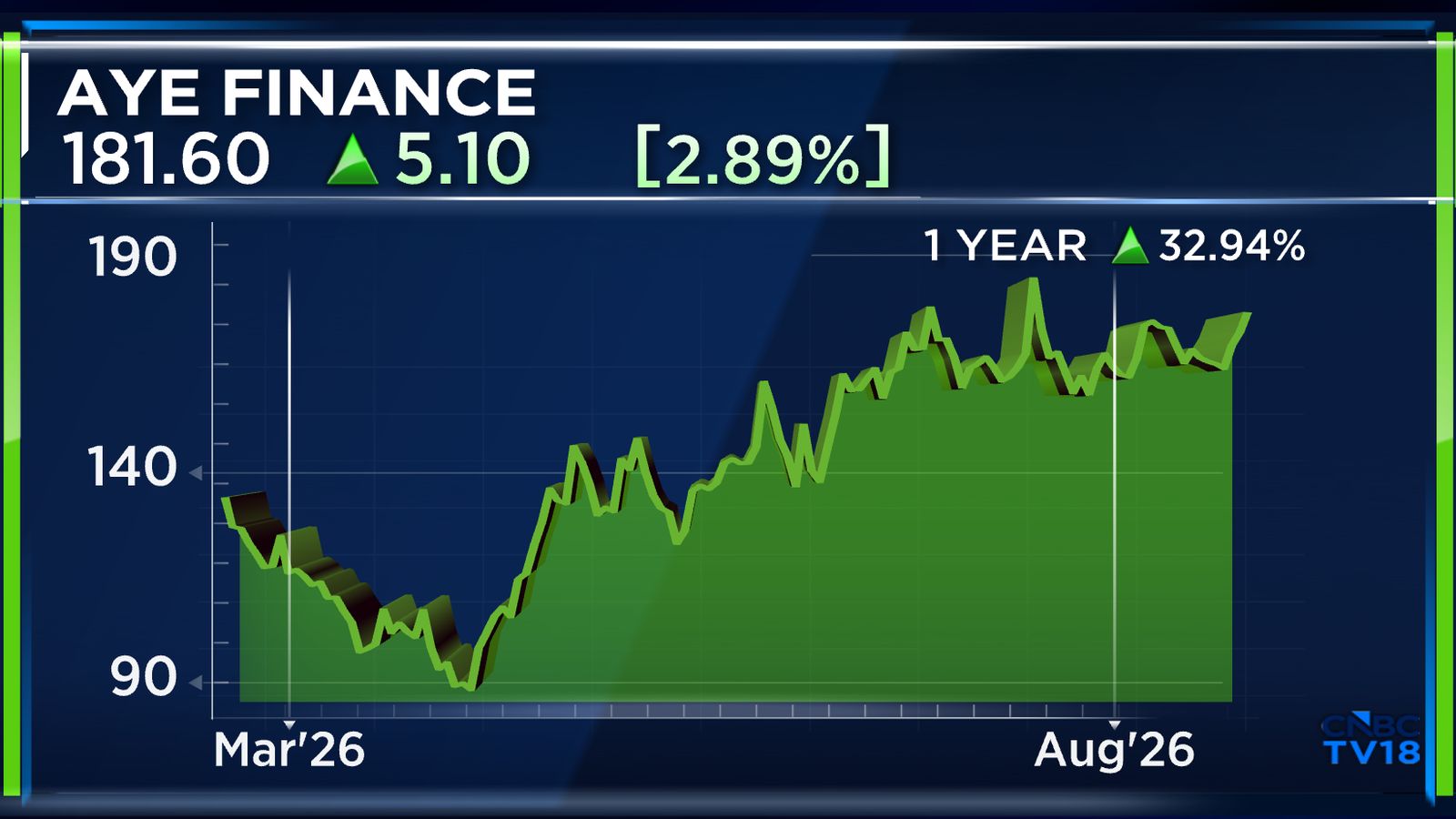
Aye Finance currently has a market capitalisation of ₹4,481.60 crore, and its shares have gained more than 32% over the past year.
Aye Finance, headquartered in Gurugram, gives business loans to small and micro enterprises across India. The company lends mainly through hypothecation loans, where the loan is secured against movable business assets such as machinery, rather than property. This segment makes up about 70-72% of the loan book, with a ticket size of ₹1 lakh to ₹2 lakh. Micro loans against property (LAP), with a ticket size closer to ₹5 lakh, make up most of the remaining book.
Sharma said hypothecation lending carries a similar default pattern to mortgage-backed lending, since business assets tend to be protected by borrowers in the same way as a home would be. He said Aye Finance underwrites these loans through a cluster-based method that looks at business data rather than relying only on formal documents, an approach he said limits competition in this segment.
Gross non-performing assets (NPAs) — loans where repayment is overdue — rose from 3.2% in FY24 to 4.2% in FY25 and 4.7% in FY26. Sharma said the figure has since come down from the 4.5% level at the end of FY26 to below that mark currently. He said the company expects gross NPAs to stay in a range of 3.5% to 4.5% over time, with credit cost oscillating between 3.5% and 4%, except during periods of broader stress such as the COVID-19 pandemic or industry-wide overlending.
Sharma said the company has not yet entered adjacent lending categories such as gold loans but may explore this over a two-to-three-year horizon.
For the full interview, watch the accompanying video
Catch all the latest updates from the stock market here


/images/ppid_59c68470-image-178819271707757734.webp)
/images/ppid_59c68470-image-178816003597887566.webp)
/images/ppid_59c68470-image-17882676042458122.webp)
/images/ppid_59c68470-image-17882400348149644.webp)




/images/ppid_59c68470-image-178824505282386000.webp)