/images/ppid_59c68470-image-1785495108557745.webp)

/images/ppid_59c68470-image-178531002770855828.webp)
/images/ppid_59c68470-image-178534764914419765.webp)

What is the story about?
Bengaluru-headquartered Indegene expects its revenue growth for the financial year 2026-27 (FY27) to exceed last year's 23-24% as a strong deal pipeline, broad-based client demand and new customer additions support momentum.
The tech-native commercialisation company serving the life sciences and biopharmaceutical industries also expects margins to recover to the 19-20% range by the January-March 2027 quarter of the current financial year, as investments made over the past year begin to normalise, said Suhas Prabhu, CFO of Indegene.
Prabhu said the company's April-June 2026 quarter performance reflected sustainable demand rather than one-off revenue recognition. He added that growth was driven by both existing customers and new client additions.
He also highlighted healthy deal momentum, with more than five contract wins above $1 million in annual contract value (ACV), including one worth over $3 million.
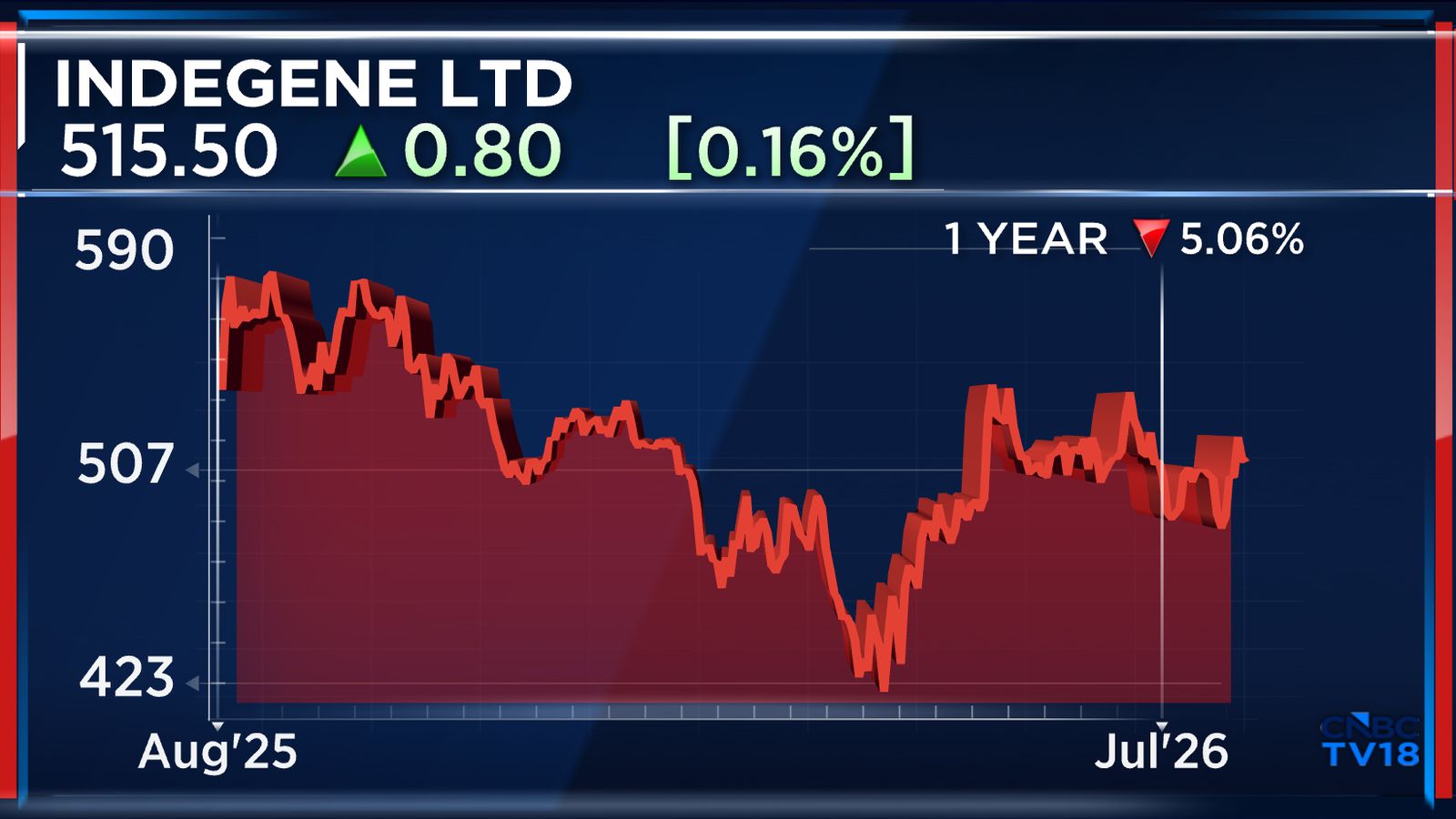
Indegene has a current market capitalisation of $1.2 billion, while its shares have declined more than 5% over the past year.
These are edited excerpts from the interview.Q: I want to start with the growth that you've seen—39% growth, the highest growth rate that at least I'm seeing on record for the company. First, is this growth rate sustainable, or was there any particular revenue recognition that supported the growth this quarter? Also, in terms of the deal pipeline, what are the conversations you are having with your clients right now? Could you help us understand that as well? What should we watch out for over the full year? A: This has been a great start to Q1, with close to 40% growth. What is also heartening about this growth is that it is broad-based. Not only are we seeing stable-to-growing revenues from our existing customers, but we are also seeing the addition of new customers and the ramp-up of existing ones.
If I look beyond our top 10 or top 20 customers, the growth there is outpacing that of our larger customers. So, I would say this is broad-based, and we believe it is sustainable given the diversity of the sources of growth.
The other aspect that you touched upon was the deal pipeline and conversion. I would like to say that this quarter has also been a very good one for us, with pipeline generation higher than in the previous few quarters.
Conversion has also remained healthy, in line with what we have seen over the last few quarters, with more than five deal wins in excess of $1 million, and one deal worth more than $3 million from an ACV perspective. All of these are sustainable, renewable businesses, and therefore they give us confidence about the momentum we are carrying into the latter part of the current fiscal year.
Q: You touched upon a couple of points as well. So, for the full year, can we expect this 39% growth to sustain, or remain around these levels?A: I would say the year-on-year growth base does not include the inorganic growth. We acquired BioPharm in October of last year, and therefore, the comparison is not like-for-like. But having said that, the second half of last year had the impact of the acquisition. On a full-year basis, we are confident that last year's growth rate of 23%–24% will be surpassed in the current fiscal year.
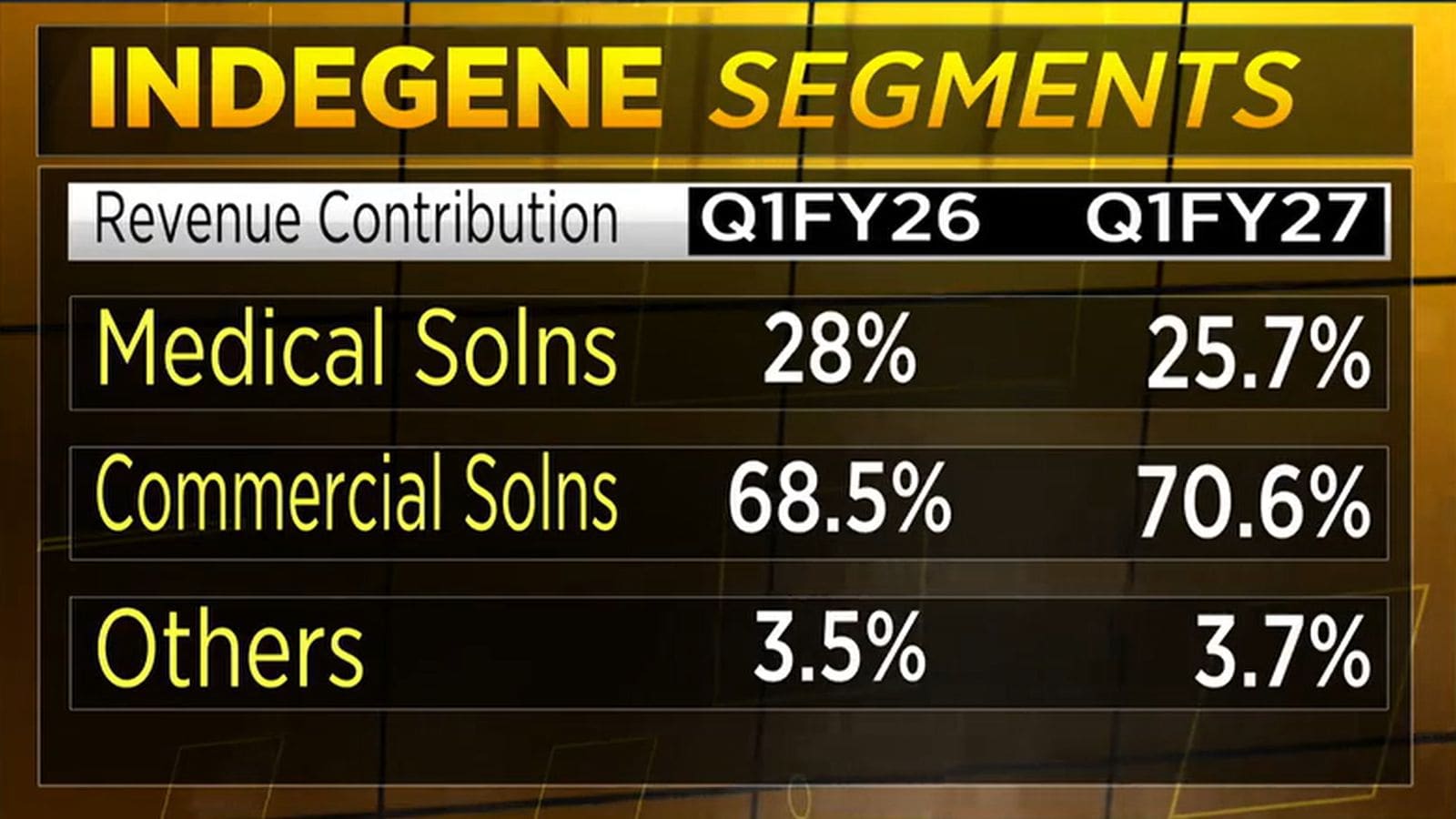 Q: And margins—when do you see them coming back? They are still around the 17% mark. Previously, you've reached a peak margin of 20%. Should we expect margins to return to that level in FY27, or will it take longer?A: Yes, as you and the viewers may recollect, back in October we had mentioned that we were investing ahead of the curve. This would impact our margins by about 150 basis points, or 1.5 percentage points, and it would take about six to eight quarters from Q3FY26 to normalise.
Given the growth trajectory and the momentum and deal pipeline that we are seeing, we believe that the margin recovery to the 19%–20% range should be visible towards the lower end of that timeline. So, within six quarters rather than the outer limit of eight quarters, and more specifically, in Q4 FY27.
Q: This time your revenue per employee hit a record of $77,100. Can you explain whether this is a sustainable number? What has driven it? Is it pricing-led, volume-led, or driven by GenAI productivity gains? And do you expect it to improve further, or do you see this as a stable level?A: Yes, and this is something that we have focused on. Our trajectory over the last four or five years shows clearly that revenue per employee has increased from about $50,000–$55,000 four years ago to $77,000, which is also higher than the $75,000 we clocked last quarter. We believe this is sustainable.
There are two interlinked parts to this. One is technology, and more specifically, the GenAI-enabled solutions that we offer to the market. Therefore, this is not a purely effort- and input-driven offering. The second is the nature of our engagements, wherein we contract and charge a significant portion of our revenues on an output- or outcome-based model.
Therefore, the benefits of automation and technology are embedded into the way we generate revenue. As a result, we believe our higher-than-industry revenue per employee, and its growth trajectory, are here to stay.
For the full interview, watch the accompanying videoCatch all the latest updates from the stock market here
The tech-native commercialisation company serving the life sciences and biopharmaceutical industries also expects margins to recover to the 19-20% range by the January-March 2027 quarter of the current financial year, as investments made over the past year begin to normalise, said Suhas Prabhu, CFO of Indegene.
Prabhu said the company's April-June 2026 quarter performance reflected sustainable demand rather than one-off revenue recognition. He added that growth was driven by both existing customers and new client additions.
He also highlighted healthy deal momentum, with more than five contract wins above $1 million in annual contract value (ACV), including one worth over $3 million.
Indegene has a current market capitalisation of $1.2 billion, while its shares have declined more than 5% over the past year.
These are edited excerpts from the interview.Q: I want to start with the growth that you've seen—39% growth, the highest growth rate that at least I'm seeing on record for the company. First, is this growth rate sustainable, or was there any particular revenue recognition that supported the growth this quarter? Also, in terms of the deal pipeline, what are the conversations you are having with your clients right now? Could you help us understand that as well? What should we watch out for over the full year? A: This has been a great start to Q1, with close to 40% growth. What is also heartening about this growth is that it is broad-based. Not only are we seeing stable-to-growing revenues from our existing customers, but we are also seeing the addition of new customers and the ramp-up of existing ones.
If I look beyond our top 10 or top 20 customers, the growth there is outpacing that of our larger customers. So, I would say this is broad-based, and we believe it is sustainable given the diversity of the sources of growth.
The other aspect that you touched upon was the deal pipeline and conversion. I would like to say that this quarter has also been a very good one for us, with pipeline generation higher than in the previous few quarters.
Conversion has also remained healthy, in line with what we have seen over the last few quarters, with more than five deal wins in excess of $1 million, and one deal worth more than $3 million from an ACV perspective. All of these are sustainable, renewable businesses, and therefore they give us confidence about the momentum we are carrying into the latter part of the current fiscal year.
Q: You touched upon a couple of points as well. So, for the full year, can we expect this 39% growth to sustain, or remain around these levels?A: I would say the year-on-year growth base does not include the inorganic growth. We acquired BioPharm in October of last year, and therefore, the comparison is not like-for-like. But having said that, the second half of last year had the impact of the acquisition. On a full-year basis, we are confident that last year's growth rate of 23%–24% will be surpassed in the current fiscal year.
Q: And margins—when do you see them coming back? They are still around the 17% mark. Previously, you've reached a peak margin of 20%. Should we expect margins to return to that level in FY27, or will it take longer?A: Yes, as you and the viewers may recollect, back in October we had mentioned that we were investing ahead of the curve. This would impact our margins by about 150 basis points, or 1.5 percentage points, and it would take about six to eight quarters from Q3FY26 to normalise.
Given the growth trajectory and the momentum and deal pipeline that we are seeing, we believe that the margin recovery to the 19%–20% range should be visible towards the lower end of that timeline. So, within six quarters rather than the outer limit of eight quarters, and more specifically, in Q4 FY27.
Q: This time your revenue per employee hit a record of $77,100. Can you explain whether this is a sustainable number? What has driven it? Is it pricing-led, volume-led, or driven by GenAI productivity gains? And do you expect it to improve further, or do you see this as a stable level?A: Yes, and this is something that we have focused on. Our trajectory over the last four or five years shows clearly that revenue per employee has increased from about $50,000–$55,000 four years ago to $77,000, which is also higher than the $75,000 we clocked last quarter. We believe this is sustainable.
There are two interlinked parts to this. One is technology, and more specifically, the GenAI-enabled solutions that we offer to the market. Therefore, this is not a purely effort- and input-driven offering. The second is the nature of our engagements, wherein we contract and charge a significant portion of our revenues on an output- or outcome-based model.
Therefore, the benefits of automation and technology are embedded into the way we generate revenue. As a result, we believe our higher-than-industry revenue per employee, and its growth trajectory, are here to stay.
For the full interview, watch the accompanying videoCatch all the latest updates from the stock market here
/images/ppid_59c68470-image-178542256033592954.webp)
/images/ppid_59c68470-image-178542505660129356.webp)
/images/ppid_59c68470-image-178540755508946985.webp)





/images/ppid_59c68470-image-178534512879928476.webp)

/images/ppid_59c68470-image-178533255983978474.webp)