


What is the story about?
Indian markets could deliver annualised returns of 15-17% over the next two to three years, according to Raamdeo Agrawal, Chairman and Co-Founder of Motilal Oswal Financial Services. He sees Nifty earnings growth reaching 30%, supported by a recovery in the economy, stronger credit flow and recent goods and services tax (GST) cuts.
"Every economist is wrong in last four quarters in anticipating what is going to the growth. So, and that has also boosted the earnings. Now the Nifty earnings are looking to be. We were highest on the street at about 27%. It looks like it will be more like 30%," Agrawal noted.
Assuming inflation remains steady at 3-4%, the market offers a highly attractive compounding opportunity with limited downside risk, he added.
The long-term market return over a five to ten-year horizon directly mirrors earnings growth, with price-to-earnings multiples typically fluctuating between 18 and 20 having only a marginal impact of 1% to 2%. Following a period of flat or muted 4% to 5% earnings expansion in recent years, the macroeconomic landscape has shifted significantly over the past two to three quarters.
Credit flow, which had previously dropped below 10%, has rebounded to 19% to 20%. This resurgence, combined with GST reductions, has boosted consumption and pushed economic growth to between 7.5% and 8%.
Several global headwinds are also showing signs of easing. The geopolitical tensions involving Iran could resolve within a year, potentially allowing crude oil prices to fall back to a more comfortable $70 to $75 per barrel range. Additionally, the global artificial intelligence trade appears to be reaching a peak.
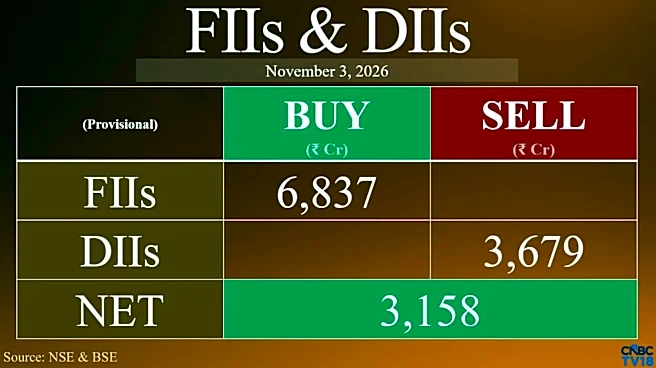
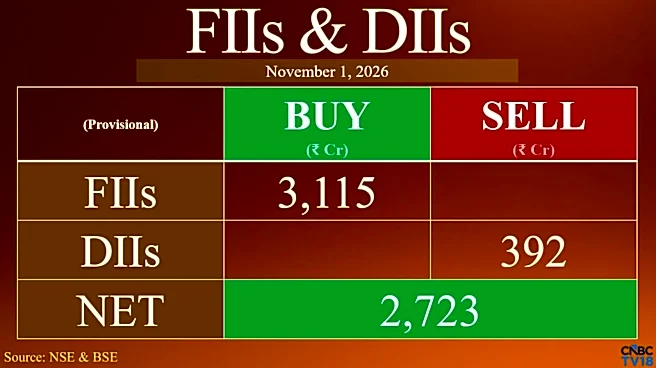
On the institutional front, foreign institutional investors have heavily sold Indian equities, offloading ₹3 lakh crore annually over the past two years and an estimated ₹4.5 lakh crore in the current period. This sustained selling has reduced foreign ownership from 21%. Domestic institutional investors have absorbed this supply, supported by continuous systematic investment plan inflows and bulk domestic money.
Watch the full conversation here
Currently, market supply stems primarily from foreign offloading, promoter stake sales and initial public offerings. However, a reversal in foreign institutional sentiment could dramatically alter market dynamics. "If I say no, I don't want to sell India, I want to buy India, I want to build up India, I want to take it from 11% to 15%, 17%, then I think it will be very interesting to see what happens in the market," Agrawal explained, highlighting that the segment which previously supplied up to 60% of the equity could soon change the supply equation.
Catch all the latest updates from the stock market here
"Every economist is wrong in last four quarters in anticipating what is going to the growth. So, and that has also boosted the earnings. Now the Nifty earnings are looking to be. We were highest on the street at about 27%. It looks like it will be more like 30%," Agrawal noted.
Assuming inflation remains steady at 3-4%, the market offers a highly attractive compounding opportunity with limited downside risk, he added.
The long-term market return over a five to ten-year horizon directly mirrors earnings growth, with price-to-earnings multiples typically fluctuating between 18 and 20 having only a marginal impact of 1% to 2%. Following a period of flat or muted 4% to 5% earnings expansion in recent years, the macroeconomic landscape has shifted significantly over the past two to three quarters.
Credit flow, which had previously dropped below 10%, has rebounded to 19% to 20%. This resurgence, combined with GST reductions, has boosted consumption and pushed economic growth to between 7.5% and 8%.
Several global headwinds are also showing signs of easing. The geopolitical tensions involving Iran could resolve within a year, potentially allowing crude oil prices to fall back to a more comfortable $70 to $75 per barrel range. Additionally, the global artificial intelligence trade appears to be reaching a peak.
On the institutional front, foreign institutional investors have heavily sold Indian equities, offloading ₹3 lakh crore annually over the past two years and an estimated ₹4.5 lakh crore in the current period. This sustained selling has reduced foreign ownership from 21%. Domestic institutional investors have absorbed this supply, supported by continuous systematic investment plan inflows and bulk domestic money.
Watch the full conversation here
Currently, market supply stems primarily from foreign offloading, promoter stake sales and initial public offerings. However, a reversal in foreign institutional sentiment could dramatically alter market dynamics. "If I say no, I don't want to sell India, I want to buy India, I want to build up India, I want to take it from 11% to 15%, 17%, then I think it will be very interesting to see what happens in the market," Agrawal explained, highlighting that the segment which previously supplied up to 60% of the equity could soon change the supply equation.
Catch all the latest updates from the stock market here