/images/ppid_59c68470-image-178168002706824639.webp)



/images/ppid_a911dc6a-image-178185026061086047.webp)


What is the story about?
Anand Shah, CIO-PMS & AIF at ICICI Prudential AMC, which manages assets worth over $3.05 billion, remains positive on manufacturing, arguing that India needs to increase production relative to consumption to improve its economic structure.
Shah expects companies in the manufacturing segment, many of which are housed in the mid-cap and small-cap universe, to benefit from this shift.
He noted that earnings growth remains the key driver of market performance. While the Nifty 50 is witnessing slower profit growth, mid-cap and small-cap companies continue to report faster earnings expansion, supporting their market outperformance.
Shah said concerns around rupee depreciation are overstated. Instead, he views a weaker currency as part of the adjustment process that could improve the competitiveness of domestic manufacturing. According to him, both inflation and currency movements could support manufacturing profitability over time.
At the same time, he cautioned that inflation remains a key risk. Rising energy costs, tariffs, de-globalisation trends and potential food inflation could put pressure on consumers.
"If the country is going to face inflation and you add to that rupee depreciation, it will be a big boost for manufacturing," he said.
Within financial services, Shah remains overweight on select private banks, asset managers and insurance companies. He believes India's demographic transition and rising affluence are driving stronger demand for financial products and wealth management services.
He is also positive on consumer services, including telecom, travel, airlines and entertainment. According to Shah, spending patterns are gradually shifting from goods to services as income levels rise.
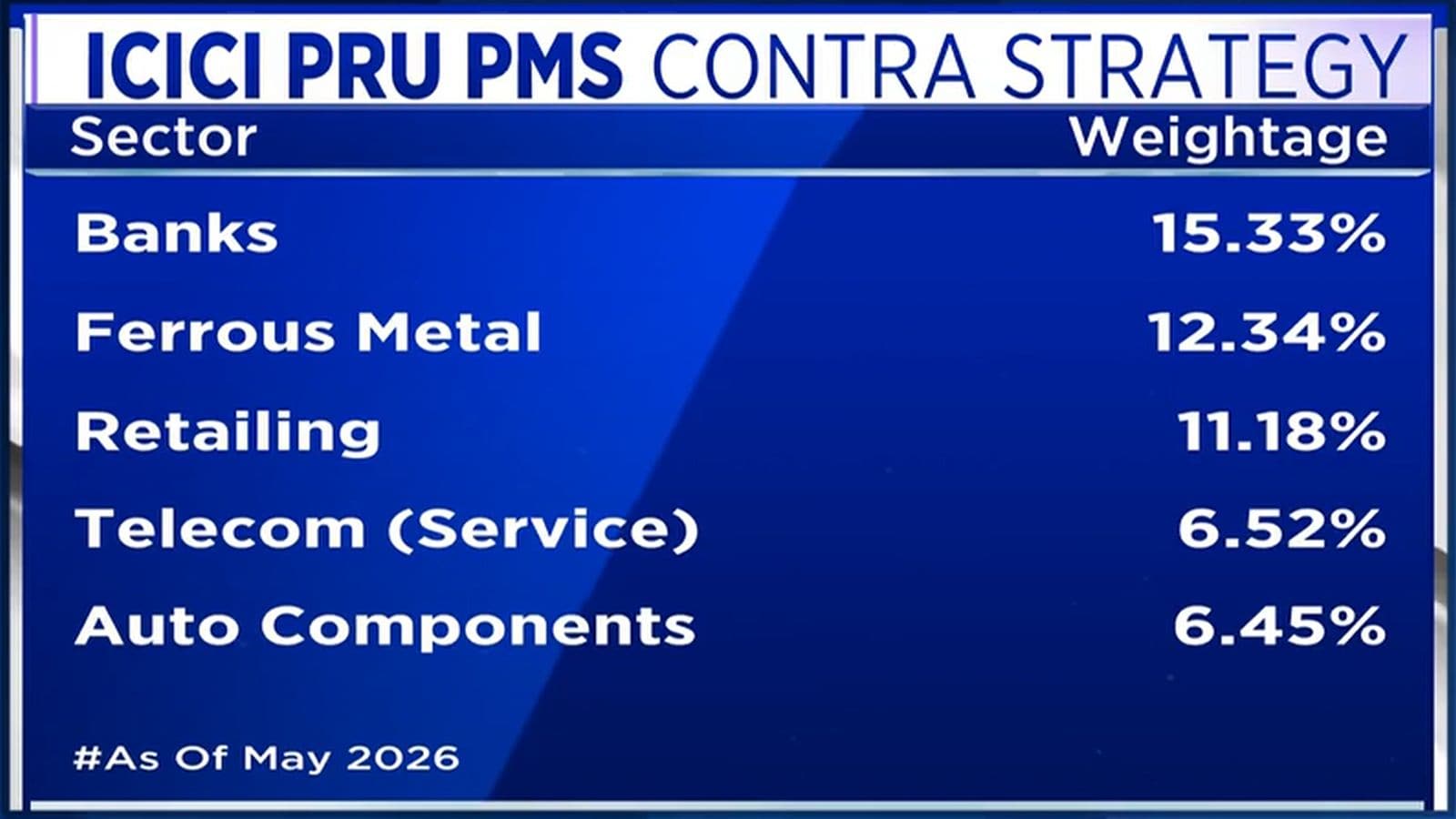
Shah expects telecom industry profitability to improve over the long term as market consolidation reduces competition. While he acknowledged that inflationary pressures may delay tariff increases, he believes telecom prices in India will gradually move higher over time.
Shah said non-banking financial companies (NBFCs) have outperformed in recent years because they have delivered stronger growth. However, he expects large private banks to benefit when private sector capital expenditure accelerates and corporate credit demand improves.
He added that measures such as the FCNR deposit window could provide support to bank funding in the near term, while a recovery in private sector investment would be a key trigger for stronger credit growth going forward.
For the full interview, watch the accompanying video Catch all the latest updates from the stock market here
Shah expects companies in the manufacturing segment, many of which are housed in the mid-cap and small-cap universe, to benefit from this shift.
He noted that earnings growth remains the key driver of market performance. While the Nifty 50 is witnessing slower profit growth, mid-cap and small-cap companies continue to report faster earnings expansion, supporting their market outperformance.
Shah said concerns around rupee depreciation are overstated. Instead, he views a weaker currency as part of the adjustment process that could improve the competitiveness of domestic manufacturing. According to him, both inflation and currency movements could support manufacturing profitability over time.
At the same time, he cautioned that inflation remains a key risk. Rising energy costs, tariffs, de-globalisation trends and potential food inflation could put pressure on consumers.
"If the country is going to face inflation and you add to that rupee depreciation, it will be a big boost for manufacturing," he said.
Within financial services, Shah remains overweight on select private banks, asset managers and insurance companies. He believes India's demographic transition and rising affluence are driving stronger demand for financial products and wealth management services.
He is also positive on consumer services, including telecom, travel, airlines and entertainment. According to Shah, spending patterns are gradually shifting from goods to services as income levels rise.
Shah expects telecom industry profitability to improve over the long term as market consolidation reduces competition. While he acknowledged that inflationary pressures may delay tariff increases, he believes telecom prices in India will gradually move higher over time.
Shah said non-banking financial companies (NBFCs) have outperformed in recent years because they have delivered stronger growth. However, he expects large private banks to benefit when private sector capital expenditure accelerates and corporate credit demand improves.
He added that measures such as the FCNR deposit window could provide support to bank funding in the near term, while a recovery in private sector investment would be a key trigger for stronger credit growth going forward.
For the full interview, watch the accompanying video Catch all the latest updates from the stock market here