/images/ppid_59c68470-image-177798253276968475.webp)

/images/ppid_a911dc6a-image-177774459410124036.webp)
What is the story about?
Sanjiv Puri, Chairman and Managing Director of ITC, is betting on India’s long runway for growth to drive the company’s next phase.
With a presence across FMCG, hotels, agriculture, paperboards and packaging, cigarettes, information technology, and newer segments like fresh foods and digital commerce, he sees strong headroom across businesses, supported by rising consumption and improving policy momentum across states.
ITC is preparing to back this opportunity with a steady investment push, planning around ₹20,000 crore in capital expenditure over the next four to five years.
The focus is not just on expanding existing businesses, but also on building new growth engines—from fresh foods to digital-first distribution—while keeping a close eye on execution and returns.
At the same time, the company is adapting to shifts in how consumers buy. New-age channels such as quick commerce and e-commerce already contribute a significant share of revenues, and that mix is only expected to rise.
Even as regulatory pressures persist in cigarettes, Puri’s approach remains measured—balancing pricing, volumes and long-term stability across the portfolio.
Below are the excerpts of the conversation.Q: ITC is headquartered in Kolkata, one of the oldest companies to continue to maintain its roots in Kolkata. What does this very dramatic change, dramatic shift in politics in West Bengal mean for industry?
A: We have seen fair bit of changes in the elections. West Bengal is just one example. It's been also other states prior to that and what we really see is that the democracy in India is vibrant. It's very clearly a vote of confidence on the development vision of the Honourable Prime Minister. It's a very strong endorsement of his inclusive and growth policies. That's evidently clear, considering the number of states that BJP has been winning. Let me also take this opportunity to congratulate him for the for the performance, not only what we heard 24 hours back, but in the past as well.
We are headquartered in Kolkata, but we are a pan India company, and we have operations everywhere. I think change is always good, and we are hoping that we should get an accelerated pace of growth in the states where we have seen the change. We would be particularly happy to see that in West Bengal also.
you know, you were talking about the pace of growth, as well as how you operate pan India, across different states, and there's been a lot of focus on the ease of doing business, not just at the level of the centre, but at the level of individual state governments you operate across different states. Sanjeev, what is the tangible difference that you're seeing on the ground, and where do you believe the rubber still needs to hit the road? Well, there is, first of all, an overall difference in terms of intent to industrialised, intent to draw investments. I think there is certainly a positive momentum, and there is a very strong effort to facilitate the same.
Q: What kind of overall investments that you are making in agri, but also the other investments that you are looking at, what would the capex number be for the coming year?
A: For the group, one year is, capex investments tend to be lumpy. It's not that it's linear. We will really look at it in medium term. Medium term, we are talking about ₹20,000 crores for the group over the next four to five years.
Q: The cigarette business, that has seen a regulatory impact on account of the tax incidence. In fact, the tax incidence has been quite high. What is the outlook as far as volume growth is concerned, and how much have you been able to absorb? How much have you been able to pass on?
A: The tax increase is quite severe, and what we have seen is that every time the tax increases, it only gives the fillip to elicit and that's not just Indian experience. It is global experience. In fact, in in a country like Australia, there is discussion going around the fact that is the tax incidence on cigarettes overdone to the degree that it's created lot of unintended consequences of smuggling and social issues in the society.
In another geography, there was a royalty national that stopped manufacturing because illicit became 75% this is no more viable to produce. So, these are global experiences, and if you look at it in India already, it's just about 10% of the tobacco consumption in India accounts for 80% of the taxes. Therefore, it's many times taxed than other products. Our taxes are about 14 times, on a per capita GDP basis, higher than countries like the US, so that's just to give you data on the intensity of the taxation. Illicit is equal to 1/3 of the legal industry. So that's the magnitude. So that's the concern that all of us have, that every time the taxes go up, it gives a fillip. This is what worries us. That's what worries the industry.
The way that we are approaching it, at least, is that if we passed on, we have to ultimately, the tax increase is massive, we have to pass it on. There is no question of absorbing it. But if we were to do it at a single stroke, then it probably can lead to a larger shift to illicit. So we want to stagger it up so we are staggering it.
Q: How much have you already taken?
A: We have taken about 50-60% of it, something like that. I don't have an exact figure. It's ongoing. Some more will happen. Ultimately, we have to pass on the whole thing, and we are just cushioning it so that we can retain as much volume as is required. We are also concerned that when all these volumes drop, the requirement for Indian tobaccos goes down. There is also stress in the plantation and the tobacco economy that belt also. We will like to cushion it as much as possible, so the impact to the farmer is minimised.
Q: Quick commerce and e-commerce, how much is that now contributing in terms of ITC sales, and how much do you foresee that contributing to ITC sales using that that channel, and what is that meant for the company?
A: It is the new channels that we are looking at and in fact, we put all of them together, which is, quick commerce, e-commerce, modern trade. We also have this app - if you put all of that together, actually it's about 34% of our revenues come from through that route. So it's large chunk.
Q: And that will continue to be a focus area. What could that 34% number look like?
A: It will be continued to be a focus area. We are doing quite well in these channels. But for us is about its omni channel. You have to be aware where the consumer is going. And of course, we put in special effort for as far as the general trade is concerned, because those have been our partners and will remain our very strong partners. So lot of effort in strengthening the general trade also, while we continue to maximise our benefits out of the new generation channels.
Q: Do you have appetite for more acquisitions?
A: Appetite for more and it's not just, for example, just acquisitions also internal. What I didn't speak about, just to give you another example, internal it's not FMCG, but it's a new line of business. We went into what we call the fresh foods business. It's about a three-year-old business. We started doing just around the COVID time, through cloud kitchens. And we have made great progress. There we have about 70 kitchens, four different cuisines. So right from Aashirvaad Soul Creations which is comfort Indian, home cooked food. Then we have ITC Master Chef Creations, indulgent North Indian. We have Sansho by ITC Master Chef, Pan-Asian and we have Sunfeast Baked Creations.
Now ITC Master Chef is already the number one premium North Indian cuisine in South India. Aashirvaad is number one overall in the full segment in a short period of time. And we started in Bangalore, the progress has been remarkable in Bangalore, the unit economics are remarkable. And then we went into Chennai, into Hyderabad. Last year we went into Pune and Mumbai, and this year, the central kitchen is now under construction. We will be in Delhi also later half of this year. So that's an area that we will build up, and not just through cloud kitchens now we are also making that omni channel, whether it's corporate parks, whether it's physical outlets.
So all of these things are being modelled and piloted. We have a strong play there, because we have what it takes to win there. Cuisine expertise from hotels, solutions on food sciences from our foods business, and we have the FMCG brands. So brands are the mark of trust, and then these expertise coming together. So we have, what it takes to win there. We are going to develop this organically, and scale this up. And this is growing 100% year-on-year.
Q: On the hotel side.
A: On the hotel side, we listed some time back, and the progress is remarkable. We are now about 150 plus properties. We have added new brands to our portfolio. One is the Mementos by ITC Hotels. The first one opened in Udaipur, and these are luxury resorts. Then Storii which are boutique properties for leisure. Then we have the Epiq Collection and of course, our Welcome Hotel, the ITC prefixed hotel, Fortune and WelcomHeritage exist.
We are opening at least one hotel every month. Ours is an asset right approach a combination of managing and building our own hotels. We are right now going to be building three hotels, or in the process of building there is one in Puri, one in Vishakhapatnam, Yashobhoomi is the other one that we're going to build. And we're expanding the Bhubaneswar property and many others will come, because we are also looking for the place where to build some more properties.
Q: Overseas, Sri Lanka is done?
A: Sri Lanka is done. We are examining that. Right now, I would say our priority is India. We will probably do something outside India also, because there are certain things we are looking at. But I think the opportunity is India. If you look at the room density in India and tourism is just starting to take off in India, there's a huge headroom to grow. We rather focus our attention here. And something we will do also outside, but focus more on India.
Q: Let me end then by asking you, not for guidance, but what are you most excited about? You talked a little bit about everything in your portfolio today. What are you most excited about?
A: I am most excited about the enormous opportunity that India offers and what gives me great hope is that all the businesses that we are into are businesses which have got huge headroom to grow in India, whether it's hotels or agriculture or FMCG, even paperboard – our per capita consumption is really low. So, I am really excited about the fact that India has so much opportunity, so much headroom to grow, and all of our businesses are in spaces which have enormous headroom to grow.
For full interview, watch accompanying video
With a presence across FMCG, hotels, agriculture, paperboards and packaging, cigarettes, information technology, and newer segments like fresh foods and digital commerce, he sees strong headroom across businesses, supported by rising consumption and improving policy momentum across states.
ITC is preparing to back this opportunity with a steady investment push, planning around ₹20,000 crore in capital expenditure over the next four to five years.
The focus is not just on expanding existing businesses, but also on building new growth engines—from fresh foods to digital-first distribution—while keeping a close eye on execution and returns.
At the same time, the company is adapting to shifts in how consumers buy. New-age channels such as quick commerce and e-commerce already contribute a significant share of revenues, and that mix is only expected to rise.
Even as regulatory pressures persist in cigarettes, Puri’s approach remains measured—balancing pricing, volumes and long-term stability across the portfolio.
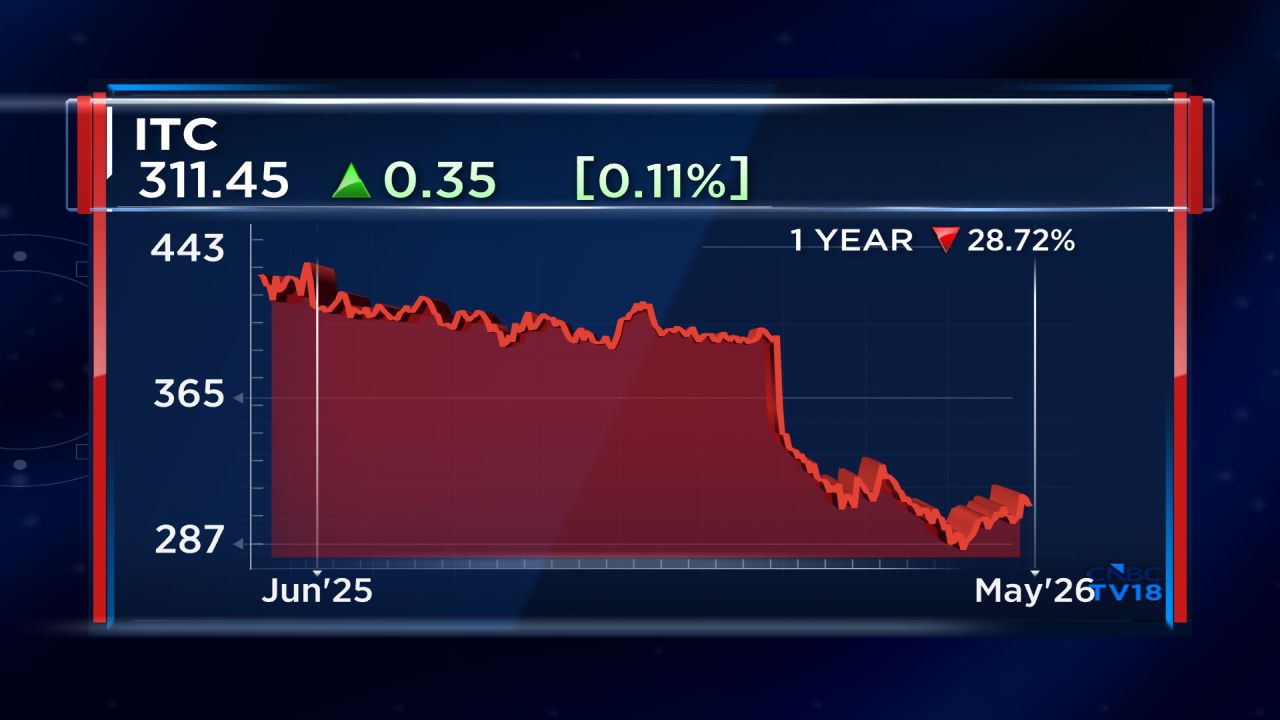
The stock closed at ₹310.35 in today’s trading session and has shed more than 28% over the last year.
Below are the excerpts of the conversation.Q: ITC is headquartered in Kolkata, one of the oldest companies to continue to maintain its roots in Kolkata. What does this very dramatic change, dramatic shift in politics in West Bengal mean for industry?
A: We have seen fair bit of changes in the elections. West Bengal is just one example. It's been also other states prior to that and what we really see is that the democracy in India is vibrant. It's very clearly a vote of confidence on the development vision of the Honourable Prime Minister. It's a very strong endorsement of his inclusive and growth policies. That's evidently clear, considering the number of states that BJP has been winning. Let me also take this opportunity to congratulate him for the for the performance, not only what we heard 24 hours back, but in the past as well.
We are headquartered in Kolkata, but we are a pan India company, and we have operations everywhere. I think change is always good, and we are hoping that we should get an accelerated pace of growth in the states where we have seen the change. We would be particularly happy to see that in West Bengal also.
you know, you were talking about the pace of growth, as well as how you operate pan India, across different states, and there's been a lot of focus on the ease of doing business, not just at the level of the centre, but at the level of individual state governments you operate across different states. Sanjeev, what is the tangible difference that you're seeing on the ground, and where do you believe the rubber still needs to hit the road? Well, there is, first of all, an overall difference in terms of intent to industrialised, intent to draw investments. I think there is certainly a positive momentum, and there is a very strong effort to facilitate the same.
Q: What kind of overall investments that you are making in agri, but also the other investments that you are looking at, what would the capex number be for the coming year?
A: For the group, one year is, capex investments tend to be lumpy. It's not that it's linear. We will really look at it in medium term. Medium term, we are talking about ₹20,000 crores for the group over the next four to five years.
Q: The cigarette business, that has seen a regulatory impact on account of the tax incidence. In fact, the tax incidence has been quite high. What is the outlook as far as volume growth is concerned, and how much have you been able to absorb? How much have you been able to pass on?
A: The tax increase is quite severe, and what we have seen is that every time the tax increases, it only gives the fillip to elicit and that's not just Indian experience. It is global experience. In fact, in in a country like Australia, there is discussion going around the fact that is the tax incidence on cigarettes overdone to the degree that it's created lot of unintended consequences of smuggling and social issues in the society.
In another geography, there was a royalty national that stopped manufacturing because illicit became 75% this is no more viable to produce. So, these are global experiences, and if you look at it in India already, it's just about 10% of the tobacco consumption in India accounts for 80% of the taxes. Therefore, it's many times taxed than other products. Our taxes are about 14 times, on a per capita GDP basis, higher than countries like the US, so that's just to give you data on the intensity of the taxation. Illicit is equal to 1/3 of the legal industry. So that's the magnitude. So that's the concern that all of us have, that every time the taxes go up, it gives a fillip. This is what worries us. That's what worries the industry.
The way that we are approaching it, at least, is that if we passed on, we have to ultimately, the tax increase is massive, we have to pass it on. There is no question of absorbing it. But if we were to do it at a single stroke, then it probably can lead to a larger shift to illicit. So we want to stagger it up so we are staggering it.
Q: How much have you already taken?
A: We have taken about 50-60% of it, something like that. I don't have an exact figure. It's ongoing. Some more will happen. Ultimately, we have to pass on the whole thing, and we are just cushioning it so that we can retain as much volume as is required. We are also concerned that when all these volumes drop, the requirement for Indian tobaccos goes down. There is also stress in the plantation and the tobacco economy that belt also. We will like to cushion it as much as possible, so the impact to the farmer is minimised.
Q: Quick commerce and e-commerce, how much is that now contributing in terms of ITC sales, and how much do you foresee that contributing to ITC sales using that that channel, and what is that meant for the company?
A: It is the new channels that we are looking at and in fact, we put all of them together, which is, quick commerce, e-commerce, modern trade. We also have this app - if you put all of that together, actually it's about 34% of our revenues come from through that route. So it's large chunk.
Q: And that will continue to be a focus area. What could that 34% number look like?
A: It will be continued to be a focus area. We are doing quite well in these channels. But for us is about its omni channel. You have to be aware where the consumer is going. And of course, we put in special effort for as far as the general trade is concerned, because those have been our partners and will remain our very strong partners. So lot of effort in strengthening the general trade also, while we continue to maximise our benefits out of the new generation channels.
Q: Do you have appetite for more acquisitions?
A: Appetite for more and it's not just, for example, just acquisitions also internal. What I didn't speak about, just to give you another example, internal it's not FMCG, but it's a new line of business. We went into what we call the fresh foods business. It's about a three-year-old business. We started doing just around the COVID time, through cloud kitchens. And we have made great progress. There we have about 70 kitchens, four different cuisines. So right from Aashirvaad Soul Creations which is comfort Indian, home cooked food. Then we have ITC Master Chef Creations, indulgent North Indian. We have Sansho by ITC Master Chef, Pan-Asian and we have Sunfeast Baked Creations.
Now ITC Master Chef is already the number one premium North Indian cuisine in South India. Aashirvaad is number one overall in the full segment in a short period of time. And we started in Bangalore, the progress has been remarkable in Bangalore, the unit economics are remarkable. And then we went into Chennai, into Hyderabad. Last year we went into Pune and Mumbai, and this year, the central kitchen is now under construction. We will be in Delhi also later half of this year. So that's an area that we will build up, and not just through cloud kitchens now we are also making that omni channel, whether it's corporate parks, whether it's physical outlets.
So all of these things are being modelled and piloted. We have a strong play there, because we have what it takes to win there. Cuisine expertise from hotels, solutions on food sciences from our foods business, and we have the FMCG brands. So brands are the mark of trust, and then these expertise coming together. So we have, what it takes to win there. We are going to develop this organically, and scale this up. And this is growing 100% year-on-year.
Q: On the hotel side.
A: On the hotel side, we listed some time back, and the progress is remarkable. We are now about 150 plus properties. We have added new brands to our portfolio. One is the Mementos by ITC Hotels. The first one opened in Udaipur, and these are luxury resorts. Then Storii which are boutique properties for leisure. Then we have the Epiq Collection and of course, our Welcome Hotel, the ITC prefixed hotel, Fortune and WelcomHeritage exist.
We are opening at least one hotel every month. Ours is an asset right approach a combination of managing and building our own hotels. We are right now going to be building three hotels, or in the process of building there is one in Puri, one in Vishakhapatnam, Yashobhoomi is the other one that we're going to build. And we're expanding the Bhubaneswar property and many others will come, because we are also looking for the place where to build some more properties.
Q: Overseas, Sri Lanka is done?
A: Sri Lanka is done. We are examining that. Right now, I would say our priority is India. We will probably do something outside India also, because there are certain things we are looking at. But I think the opportunity is India. If you look at the room density in India and tourism is just starting to take off in India, there's a huge headroom to grow. We rather focus our attention here. And something we will do also outside, but focus more on India.
Q: Let me end then by asking you, not for guidance, but what are you most excited about? You talked a little bit about everything in your portfolio today. What are you most excited about?
A: I am most excited about the enormous opportunity that India offers and what gives me great hope is that all the businesses that we are into are businesses which have got huge headroom to grow in India, whether it's hotels or agriculture or FMCG, even paperboard – our per capita consumption is really low. So, I am really excited about the fact that India has so much opportunity, so much headroom to grow, and all of our businesses are in spaces which have enormous headroom to grow.
For full interview, watch accompanying video


/images/ppid_59c68470-image-177797755956649816.webp)
/images/ppid_59c68470-image-177796506543523385.webp)