/images/ppid_59c68470-image-176737756168274897.webp)


/images/ppid_a911dc6a-image-177072742938547079.webp)
What is the story about?
With land acquisition emerging as one of the biggest impediments in the timely execution of infrastructure projects in the country, Cabinet Secretary T V Somanathan said the government has no plans to change its policy for acquiring land.
In a rare press briefing flanked by a host of secretaries of various ministries, the cabinet secretary said that in the over 3,300 projects worth ₹85 lakh crore that were taken up during review meetings of the Pro-Active Governance and Timely Implementation (PRAGATI), chaired by Prime Minister Narendra Modi, 7,735 issues were raised, and 7,156 of them were resolved.
PRAGATI is a review mechanism to expedite projects that have been delayed for various reasons. Regular issues are resolved at the ministry level, while complex and critical issues are escalated for review by it.
Somanathan said PRAGATI has a multi-tier follow-up mechanism that ensures the timely implementation of decisions. Projects are tracked and monitored by the Cabinet Secretariat, while schemes and grievances are reviewed at the ministry level, with continuous PMO oversight and finally at the level of the prime minister, he said.
Addressing a press conference, the country’s top bureaucrat said that of the 7,156 issues resolved through PRAGATI, 35% pertained to land acquisition, 20% were forest, wildlife and environment related issues, and 18% were about right of use/way, while other projects were delayed due law and order, construction, power utility approvals and financial matters.
Responding to questions on whether the government has plans to review its land acquisition policy, which has emerged as the biggest impediment in the timely execution of projects, the cabinet secretary said, “There is no plan to change the land acquisition policy.” He said all projects valued above ₹500 crore are reviewed by the PRAGATI platform, and states are keen to resolve their issues through this mechanism, which was devised almost a decade ago.
“All states, irrespective of their political dispensations, want to complete their projects and all chief secretaries have been very responsive in resolving issues,” Somanathan told reporters.
He said 61 government schemes like ‘One Nation-One Ration Card’, ‘PM Jan Aarogya Yojna’, ‘PM AWAS Yojna’, ‘PM SWANIDHI Yojna’, ‘Swachh Bharat Mission’ and grievances across 36 sectors were taken up for review.
Somanathan said as many as 382 projects have been reviewed by the prime minister under PRAGATI, and of the 3,187 issues raised in these projects, 2,958 have been resolved.
Of these 382 projects reviewed by the prime minister, 114 have been of roads and highways, 109 pertained to the railways, 54 related to electricity, 20 each of petroleum and coal, 17 were from housing and urban development and 13 from health and family welfare.
Asked about the most vexed project that the PRAGATI mechanism faced, Somanathan said the 272-km Jammu-Udhampur-Srinagar-Baramulla rail link project, worth ₹42,760 crore, was approved on March 31, 1994, and was commissioned on June 6, 2025. He said that on June 24, 2015, physical progress of the project was 40% and on November 6, 2019, it was 60%.
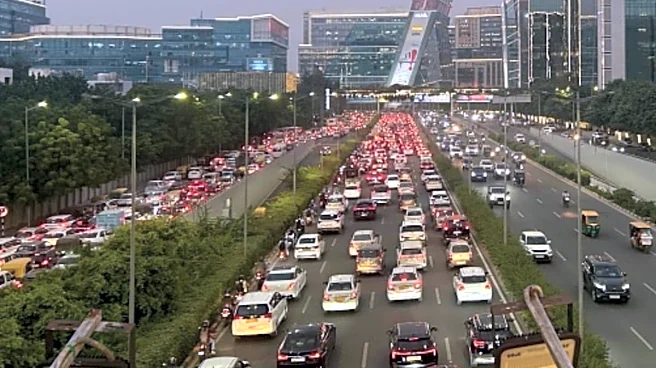
Transport Secretary V Umashankar said the New Delhi-Mumbai expressway was among the most vexed road projects that PRAGATI faced and was cleared after tackling a number of bottlenecks.
Railway Board Chairman Satish Kumar said following the completion of the Jammu-Srinagar rail link, a new type of travellers have emerged on the route, those who visit for the food and scenic beauty.
Somanathan said of the cases reviewed and resolved, 73% of the delays were due to land acquisition, forest/wildlife/environment issues and right of use/way. Among the projects reviewed by the prime minister, 71% pertained to land acquisition, forest/environment and right of use/way, he said.
On average, one issue was resolved every working day after review under PRAGATI, the cabinet secretary said.
He highlighted that initially, issues are addressed at the ministry level, while complex and critical issues are escalated through defined institutional mechanisms for higher-level review, culminating at PRAGATI meetings chaired by the prime minister.
The escalation framework ensures coordinated inter-ministerial action, timely decision-making, and focused resolution of implementation bottlenecks in projects of national importance, Somanathan said.
Also Read | PRAGATI has handled 3,300 projects worth ₹85 lakh crore: Cabinet Secy
The cabinet secretary said time and cost overruns have been a chronic problem in India’s public projects and schemes. Prime Minister Modi conceptualised PRAGATI in 2015 to tackle these problems, he said.
Somanathan cited a study by the Said Business School titled “From Gridlock to Growth — How Leadership Enables India’s PRAGATI Ecosystem to Power Progress”, which states that the PRAGATI platform offers a compelling case study in how digital governance can drive progress.
“This platform symbolises India’s commitment to overcoming bureaucratic inertia and fostering a team India mindset and culture of accountability and efficiency,” the study said. “This holistic approach ensures that India’s development is both inclusive and sustainable.” Secretary (Coordination) in the Cabinet Secretariat, Manoj Govil, Power Secretary Pankaj Aggarwal, Secretary for DPIIT Amardeep Singh Bhatia and Information and Broadcasting Secretary Sanjay Jaju were also present at the press conference.
In a rare press briefing flanked by a host of secretaries of various ministries, the cabinet secretary said that in the over 3,300 projects worth ₹85 lakh crore that were taken up during review meetings of the Pro-Active Governance and Timely Implementation (PRAGATI), chaired by Prime Minister Narendra Modi, 7,735 issues were raised, and 7,156 of them were resolved.
PRAGATI is a review mechanism to expedite projects that have been delayed for various reasons. Regular issues are resolved at the ministry level, while complex and critical issues are escalated for review by it.
Somanathan said PRAGATI has a multi-tier follow-up mechanism that ensures the timely implementation of decisions. Projects are tracked and monitored by the Cabinet Secretariat, while schemes and grievances are reviewed at the ministry level, with continuous PMO oversight and finally at the level of the prime minister, he said.
Addressing a press conference, the country’s top bureaucrat said that of the 7,156 issues resolved through PRAGATI, 35% pertained to land acquisition, 20% were forest, wildlife and environment related issues, and 18% were about right of use/way, while other projects were delayed due law and order, construction, power utility approvals and financial matters.
Responding to questions on whether the government has plans to review its land acquisition policy, which has emerged as the biggest impediment in the timely execution of projects, the cabinet secretary said, “There is no plan to change the land acquisition policy.” He said all projects valued above ₹500 crore are reviewed by the PRAGATI platform, and states are keen to resolve their issues through this mechanism, which was devised almost a decade ago.
“All states, irrespective of their political dispensations, want to complete their projects and all chief secretaries have been very responsive in resolving issues,” Somanathan told reporters.
He said 61 government schemes like ‘One Nation-One Ration Card’, ‘PM Jan Aarogya Yojna’, ‘PM AWAS Yojna’, ‘PM SWANIDHI Yojna’, ‘Swachh Bharat Mission’ and grievances across 36 sectors were taken up for review.
Somanathan said as many as 382 projects have been reviewed by the prime minister under PRAGATI, and of the 3,187 issues raised in these projects, 2,958 have been resolved.
Of these 382 projects reviewed by the prime minister, 114 have been of roads and highways, 109 pertained to the railways, 54 related to electricity, 20 each of petroleum and coal, 17 were from housing and urban development and 13 from health and family welfare.
Asked about the most vexed project that the PRAGATI mechanism faced, Somanathan said the 272-km Jammu-Udhampur-Srinagar-Baramulla rail link project, worth ₹42,760 crore, was approved on March 31, 1994, and was commissioned on June 6, 2025. He said that on June 24, 2015, physical progress of the project was 40% and on November 6, 2019, it was 60%.
Transport Secretary V Umashankar said the New Delhi-Mumbai expressway was among the most vexed road projects that PRAGATI faced and was cleared after tackling a number of bottlenecks.
Railway Board Chairman Satish Kumar said following the completion of the Jammu-Srinagar rail link, a new type of travellers have emerged on the route, those who visit for the food and scenic beauty.
Somanathan said of the cases reviewed and resolved, 73% of the delays were due to land acquisition, forest/wildlife/environment issues and right of use/way. Among the projects reviewed by the prime minister, 71% pertained to land acquisition, forest/environment and right of use/way, he said.
On average, one issue was resolved every working day after review under PRAGATI, the cabinet secretary said.
He highlighted that initially, issues are addressed at the ministry level, while complex and critical issues are escalated through defined institutional mechanisms for higher-level review, culminating at PRAGATI meetings chaired by the prime minister.
The escalation framework ensures coordinated inter-ministerial action, timely decision-making, and focused resolution of implementation bottlenecks in projects of national importance, Somanathan said.
Also Read | PRAGATI has handled 3,300 projects worth ₹85 lakh crore: Cabinet Secy
The cabinet secretary said time and cost overruns have been a chronic problem in India’s public projects and schemes. Prime Minister Modi conceptualised PRAGATI in 2015 to tackle these problems, he said.
Somanathan cited a study by the Said Business School titled “From Gridlock to Growth — How Leadership Enables India’s PRAGATI Ecosystem to Power Progress”, which states that the PRAGATI platform offers a compelling case study in how digital governance can drive progress.
“This platform symbolises India’s commitment to overcoming bureaucratic inertia and fostering a team India mindset and culture of accountability and efficiency,” the study said. “This holistic approach ensures that India’s development is both inclusive and sustainable.” Secretary (Coordination) in the Cabinet Secretariat, Manoj Govil, Power Secretary Pankaj Aggarwal, Secretary for DPIIT Amardeep Singh Bhatia and Information and Broadcasting Secretary Sanjay Jaju were also present at the press conference.



/images/ppid_a911dc6a-image-177089152458421393.webp)

/images/ppid_59c68470-image-177074753723033180.webp)