/images/ppid_59c68470-image-178661254109559639.webp)

/images/ppid_59c68470-image-178646006632112341.webp)
/images/ppid_59c68470-image-178647255237243009.webp)

What is the story about?
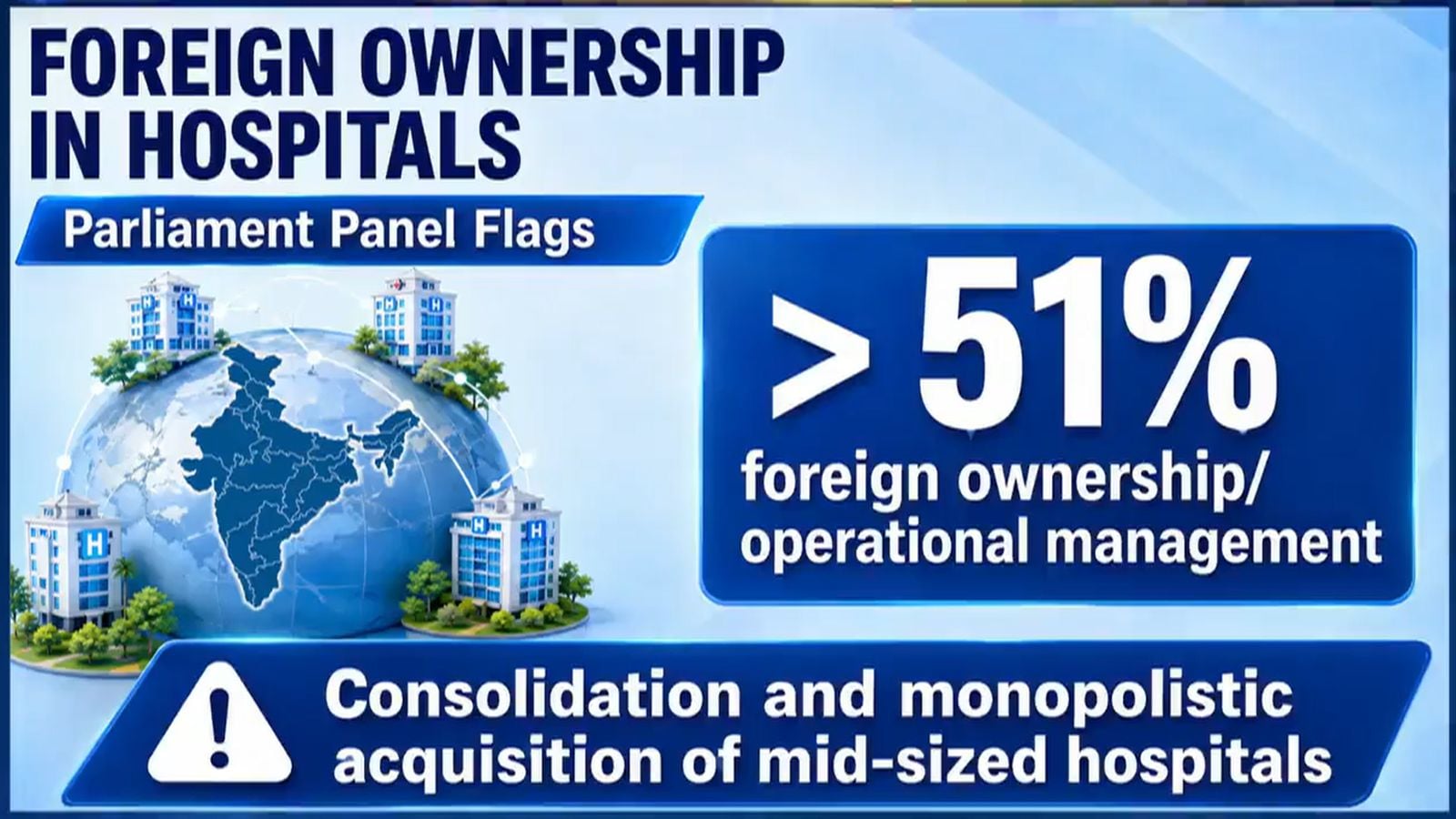
Suneeta Reddy, Managing Director of Chennai-based Apollo Hospitals Enterprise said it is too early to guage the impact of a parliamentary committee's recommendation to cap charges for private hospital rooms, surgeries and other procedures.
"We need to have a dialogue with the government... hospital services, it's not a linear equation where you can just add up the cost of consumables and room rent and come to a certain figure. It is, after all, a service," Reddy said.
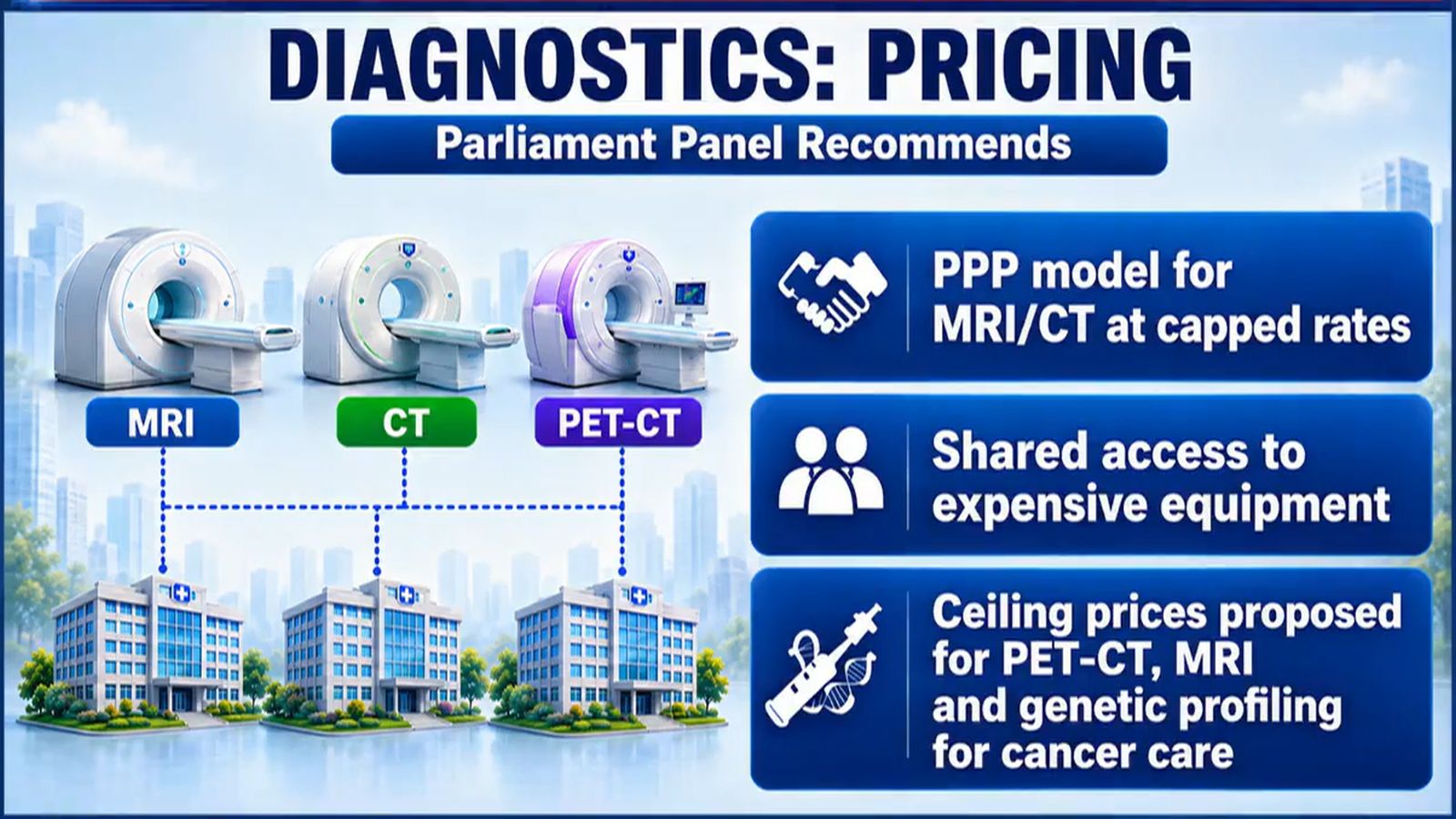
She pointed to potential offsets in the same policy proposal, including a move to zero-rate goods and services tax (GST) on select healthcare costs and remove customs duty and cess on certain items, alongside a stated government goal of raising healthcare spending from 3% to 5% of gross domestic product (GDP).
India remains short of hospital capacity by roughly 100,000 beds, Reddy said, and 80% of Indian patients who once travelled abroad for treatment now stay in the country, with Apollo drawing patients from 145 countries.
Expansion Plans
Despite the regulatory uncertainty, Apollo is proceeding with plans to add 5,000 beds over the next five years, largely in northern India, a region where the group has historically had limited presence.
The expansion will not rely on acquisitions or fresh borrowing. "In terms of free cash flow, we have ₹1,200 crore of free cash flow that will support this... Our balance sheet is well-positioned with only ₹200 crore of net debt," Reddy said, adding that internal funds are sufficient to carry the buildout.
Revenue and Occupancy
Apollo's revenue for the April-June 2026 quarter grew 21% to ₹5,053 crore (₹50.53 billion). Reddy attributed the growth to three drivers: a 13% rise in patient volumes, an 11% increase in average revenue per patient (a metric known as ARPOB), and repricing of certain treatments with insurance companies, which contributed 5 percentage points of that ARPOB growth.
Hospital occupancy currently stands at 70%.
Reddy maintained full-year revenue growth guidance of 20%, split between 13% and 14% from established hospitals and 6% from new units. The average earnings before interest, taxes, depreciation, and amortisation (EBITDA) margin currently stands at 24.2%, with mature hospitals at 26%. Apollo is targeting a structural cost reduction of 120 basis points (1.2 percentage points) and expects margins to trend toward 25% over the next 18 months.
Pharmacy and Digital Health
Apollo's healthcare arm, which includes its pharmacy and digital health businesses (Apollo Health and Lifestyle, or AHL), posted revenue of ₹2,977 crore (₹29.77 billion), EBITDA of ₹171 crore and profit of ₹101 crore, up 86% from the prior period.
Offline pharmacy revenue grew 22% after the company added 151 new stores. Gross merchandise value from the online channel rose 25% to ₹535 crore. Reddy said the digital health segment's remaining loss, around ₹20 crore, is expected to close out by the next quarter.
Indraprastha Medical Corporation
On earlier reports that Apollo was in talks to acquire the government's 26% stake in Indraprastha Medical Corporation, a separately listed entity, Reddy said no such transaction is on the table. The current focus, she said, is on improving facilities at the existing operation.
For the full interview, watch the accompanying video
Catch all the latest updates from the stock market here
"We need to have a dialogue with the government... hospital services, it's not a linear equation where you can just add up the cost of consumables and room rent and come to a certain figure. It is, after all, a service," Reddy said.
She pointed to potential offsets in the same policy proposal, including a move to zero-rate goods and services tax (GST) on select healthcare costs and remove customs duty and cess on certain items, alongside a stated government goal of raising healthcare spending from 3% to 5% of gross domestic product (GDP).
India remains short of hospital capacity by roughly 100,000 beds, Reddy said, and 80% of Indian patients who once travelled abroad for treatment now stay in the country, with Apollo drawing patients from 145 countries.
Expansion Plans
Despite the regulatory uncertainty, Apollo is proceeding with plans to add 5,000 beds over the next five years, largely in northern India, a region where the group has historically had limited presence.
The expansion will not rely on acquisitions or fresh borrowing. "In terms of free cash flow, we have ₹1,200 crore of free cash flow that will support this... Our balance sheet is well-positioned with only ₹200 crore of net debt," Reddy said, adding that internal funds are sufficient to carry the buildout.
Revenue and Occupancy
Apollo's revenue for the April-June 2026 quarter grew 21% to ₹5,053 crore (₹50.53 billion). Reddy attributed the growth to three drivers: a 13% rise in patient volumes, an 11% increase in average revenue per patient (a metric known as ARPOB), and repricing of certain treatments with insurance companies, which contributed 5 percentage points of that ARPOB growth.
Hospital occupancy currently stands at 70%.
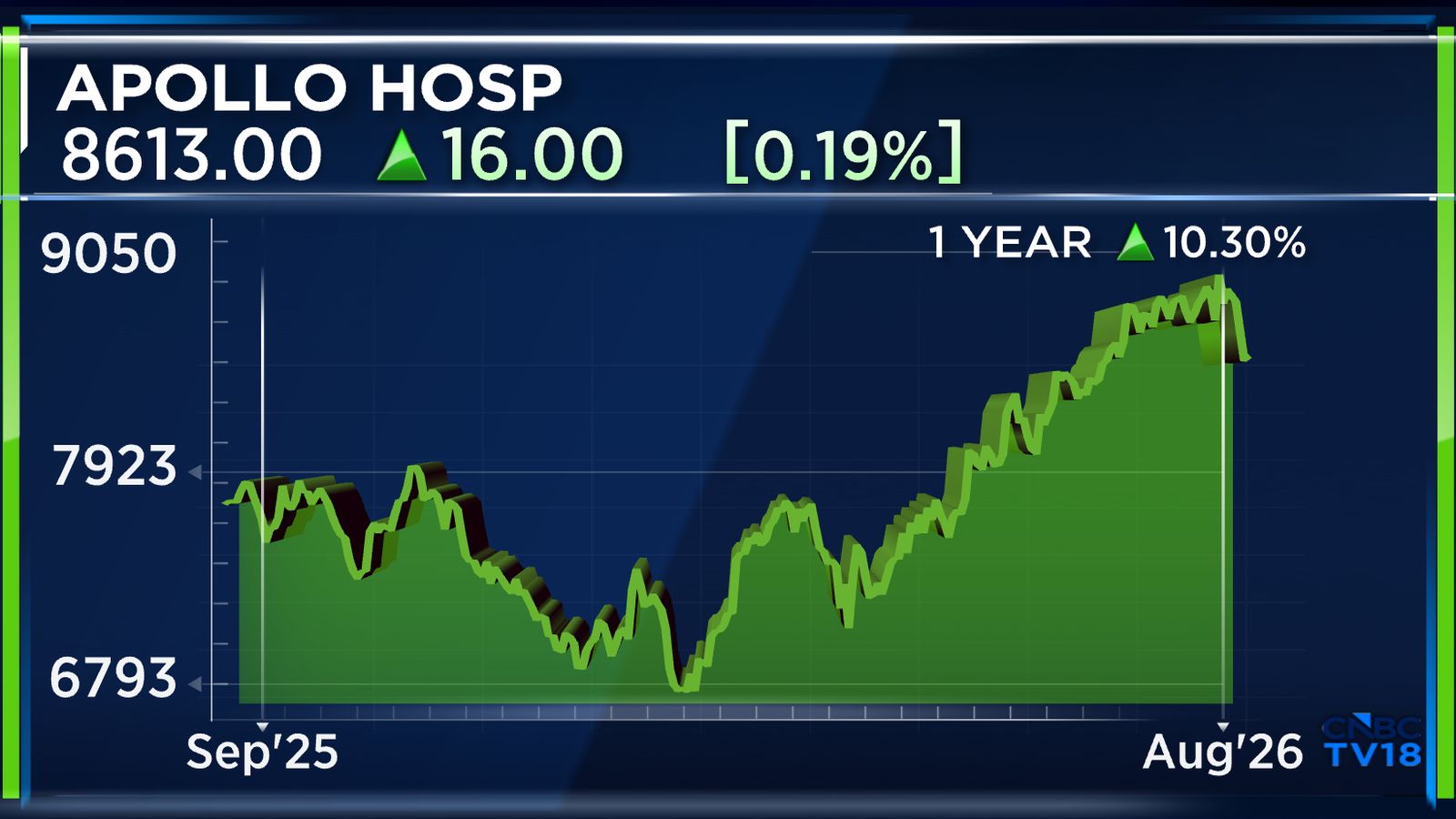
Apollo Hospitals shares were trading at ₹8,659 as of 10:29 am on the NSE. The company's market capitalisation stands at ₹1,24,529.73 crore, with shares up more than 10% over the past year.
Reddy maintained full-year revenue growth guidance of 20%, split between 13% and 14% from established hospitals and 6% from new units. The average earnings before interest, taxes, depreciation, and amortisation (EBITDA) margin currently stands at 24.2%, with mature hospitals at 26%. Apollo is targeting a structural cost reduction of 120 basis points (1.2 percentage points) and expects margins to trend toward 25% over the next 18 months.
Pharmacy and Digital Health
Apollo's healthcare arm, which includes its pharmacy and digital health businesses (Apollo Health and Lifestyle, or AHL), posted revenue of ₹2,977 crore (₹29.77 billion), EBITDA of ₹171 crore and profit of ₹101 crore, up 86% from the prior period.
Offline pharmacy revenue grew 22% after the company added 151 new stores. Gross merchandise value from the online channel rose 25% to ₹535 crore. Reddy said the digital health segment's remaining loss, around ₹20 crore, is expected to close out by the next quarter.
Indraprastha Medical Corporation
On earlier reports that Apollo was in talks to acquire the government's 26% stake in Indraprastha Medical Corporation, a separately listed entity, Reddy said no such transaction is on the table. The current focus, she said, is on improving facilities at the existing operation.
For the full interview, watch the accompanying video
Catch all the latest updates from the stock market here
/images/ppid_59c68470-image-178655005659485747.webp)



/images/ppid_59c68470-image-178647008009727033.webp)

/images/ppid_59c68470-image-178637759240819938.webp)
/images/ppid_59c68470-image-17864625580422325.webp)