/images/ppid_59c68470-image-178824758729595273.webp)




What is the story about?
Anil Satwani, Chairman and Managing Director of Symbiotec Pharmalab, said the company's newer businesses are set to start contributing to revenue this year and next, even as he stopped short of giving specific numbers, citing listing-related regulations.
"There is a revenue growth expectation from our base API business in this current fiscal year," Satwani said, adding that revenue from the company's fermentation-based CDMO business will also begin this year. He said the injectables business will only start contributing from the next fiscal year.
Symbiotec Pharmalab, headquartered in Indore, Madhya Pradesh, develops and manufactures active pharmaceutical ingredients, or APIs — the raw chemical compounds that give a medicine its therapeutic effect. The company made a soft debut on the stock exchanges, listing at a roughly 1% discount to its issue price, before recovering to trade about 6% higher at around ₹1,040 a share. Its market capitalisation stood at approximately ₹6,200 crore after listing.
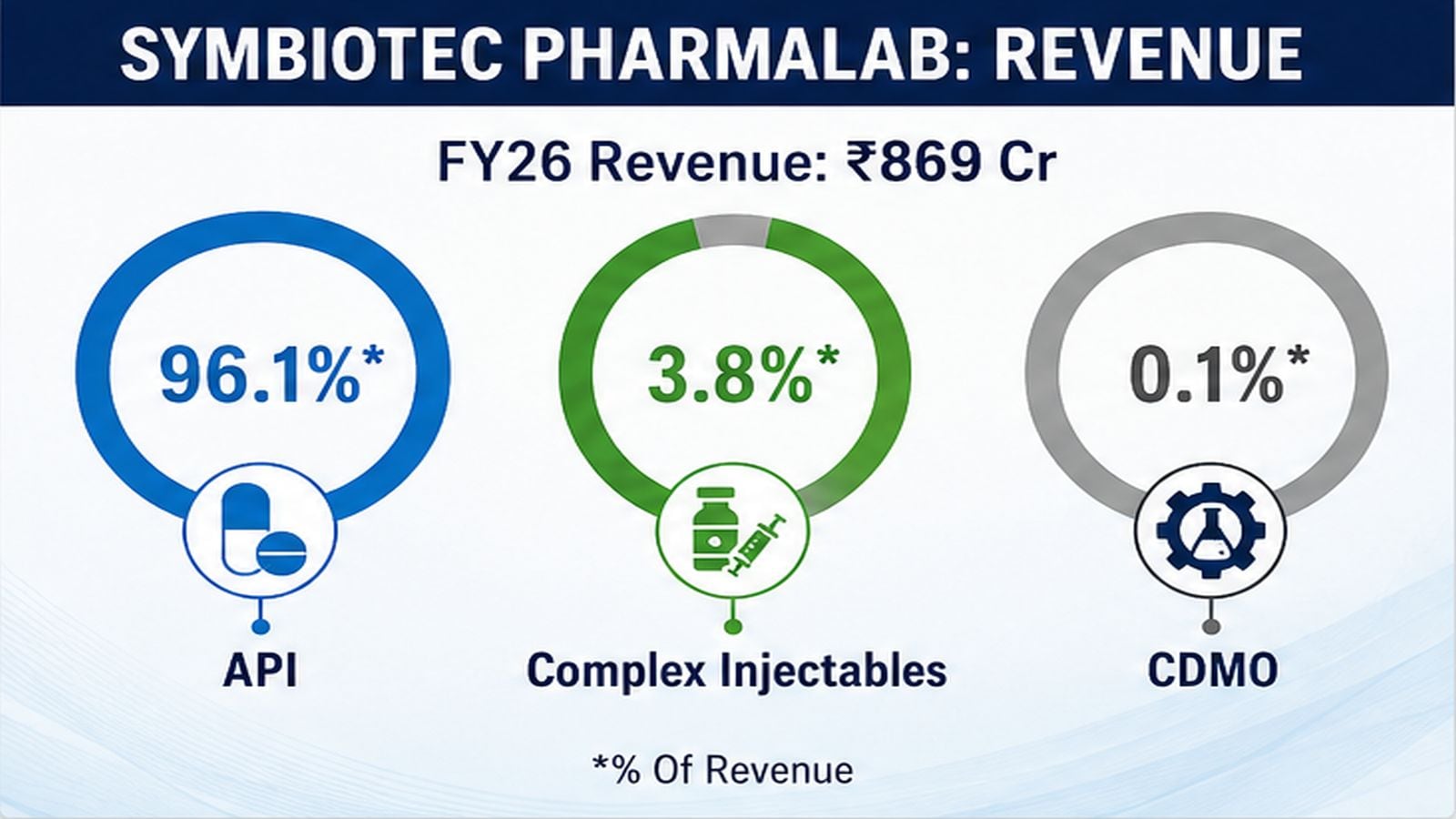
Satwani said the company has invested more than ₹850 crore over the past few years in two new growth engines: a complex injectables unit and a fermentation-based contract development and manufacturing organisation (CDMO) business, where a company manufactures drugs or ingredients on behalf of another firm. Until now, nearly all of Symbiotec's revenue has come from its API segment.
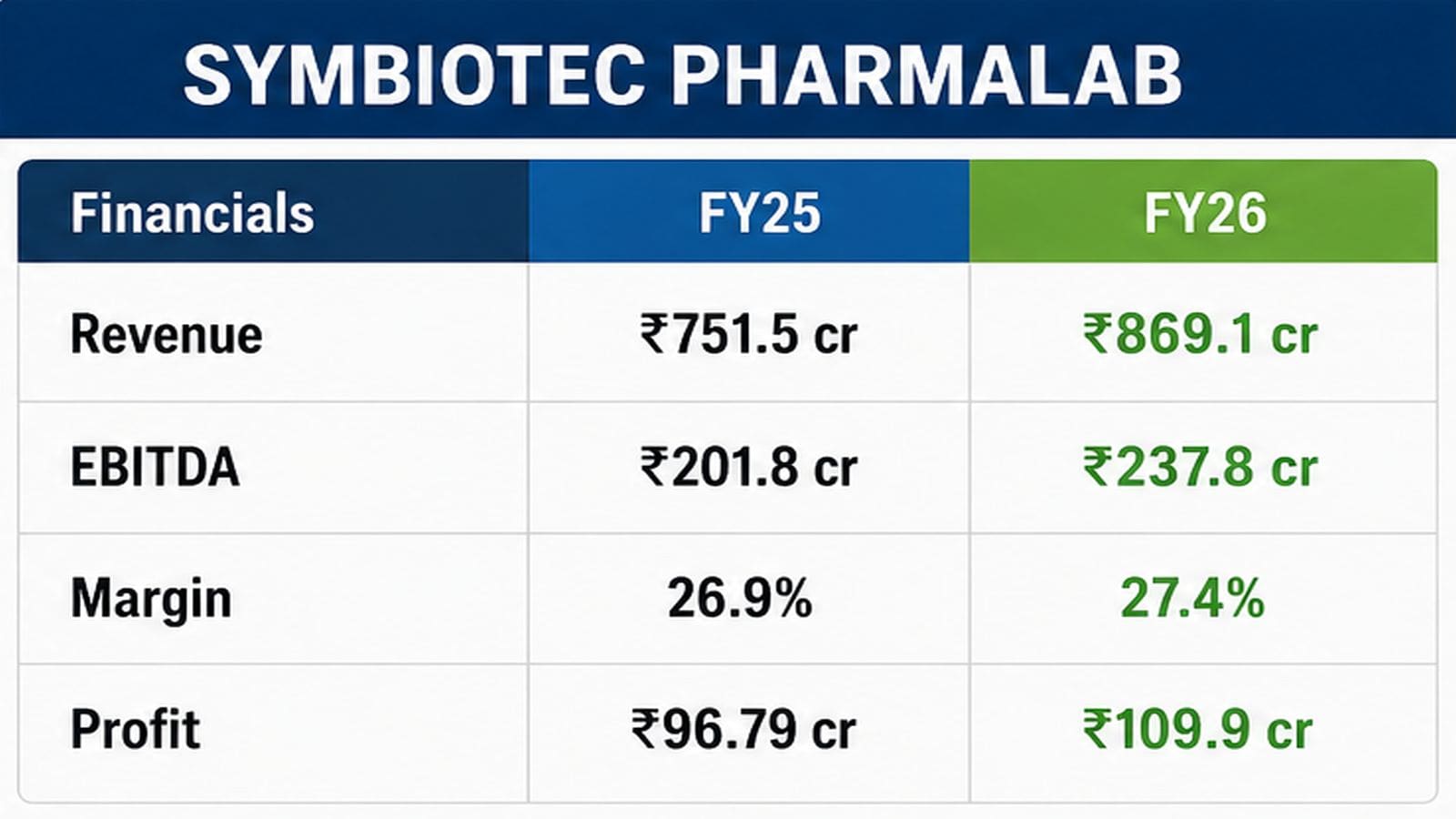
Asked to project where the revenue mix could settle once the new investments mature, Satwani said the API business — currently generating close to ₹1,000 crore — would remain the largest single contributor, but its share would fall as the other two segments scale up. "I think 5 to 7 years down the line, you would definitely see, if not one-third, maybe likely 40% coming from our base API business and 30% around from each of the new two verticals," he said.
Satwani said the company's current gross margin is between 60% and 65%, and argued that the newer, more complex businesses should be more profitable. "Generally the industry trend... usually the gross margins are 70-75%, and EBITDA margins clock in between 35% and 45%. And why would we be different in these differentiated new segments?" he said.
Satwani declined to give a figure for a specific revenue growth number for the coming fiscal year, citing regulatory restrictions on forward-looking statements ahead of the listing, but said growth was likely. He said companies typically take about three years for new capacity to reach optimal sales, based on a sales-to-asset ratio the company has historically maintained above 1.5 times.
For the full interview, watch the accompanying video
Catch all the latest updates from the stock market here
"There is a revenue growth expectation from our base API business in this current fiscal year," Satwani said, adding that revenue from the company's fermentation-based CDMO business will also begin this year. He said the injectables business will only start contributing from the next fiscal year.
Symbiotec Pharmalab, headquartered in Indore, Madhya Pradesh, develops and manufactures active pharmaceutical ingredients, or APIs — the raw chemical compounds that give a medicine its therapeutic effect. The company made a soft debut on the stock exchanges, listing at a roughly 1% discount to its issue price, before recovering to trade about 6% higher at around ₹1,040 a share. Its market capitalisation stood at approximately ₹6,200 crore after listing.
Satwani said the company has invested more than ₹850 crore over the past few years in two new growth engines: a complex injectables unit and a fermentation-based contract development and manufacturing organisation (CDMO) business, where a company manufactures drugs or ingredients on behalf of another firm. Until now, nearly all of Symbiotec's revenue has come from its API segment.
Asked to project where the revenue mix could settle once the new investments mature, Satwani said the API business — currently generating close to ₹1,000 crore — would remain the largest single contributor, but its share would fall as the other two segments scale up. "I think 5 to 7 years down the line, you would definitely see, if not one-third, maybe likely 40% coming from our base API business and 30% around from each of the new two verticals," he said.
Satwani said the company's current gross margin is between 60% and 65%, and argued that the newer, more complex businesses should be more profitable. "Generally the industry trend... usually the gross margins are 70-75%, and EBITDA margins clock in between 35% and 45%. And why would we be different in these differentiated new segments?" he said.
Satwani declined to give a figure for a specific revenue growth number for the coming fiscal year, citing regulatory restrictions on forward-looking statements ahead of the listing, but said growth was likely. He said companies typically take about three years for new capacity to reach optimal sales, based on a sales-to-asset ratio the company has historically maintained above 1.5 times.
For the full interview, watch the accompanying video
Catch all the latest updates from the stock market here
/images/ppid_59c68470-image-178831755164356108.webp)


/images/ppid_59c68470-image-178832755906984284.webp)


/images/ppid_59c68470-image-178817008990549529.webp)
/images/ppid_59c68470-image-178823512448422647.webp)
/images/ppid_59c68470-image-178819755373457211.webp)
/images/ppid_59c68470-image-178825006893811557.webp)