/images/ppid_59c68470-image-177805756776551057.webp)



/images/ppid_59c68470-image-177805764101117816.webp)
What is the story about?
Even as global regulators look at easing disclosure rules, companies are unlikely to move away from quarterly earnings, as investors prefer frequent updates.
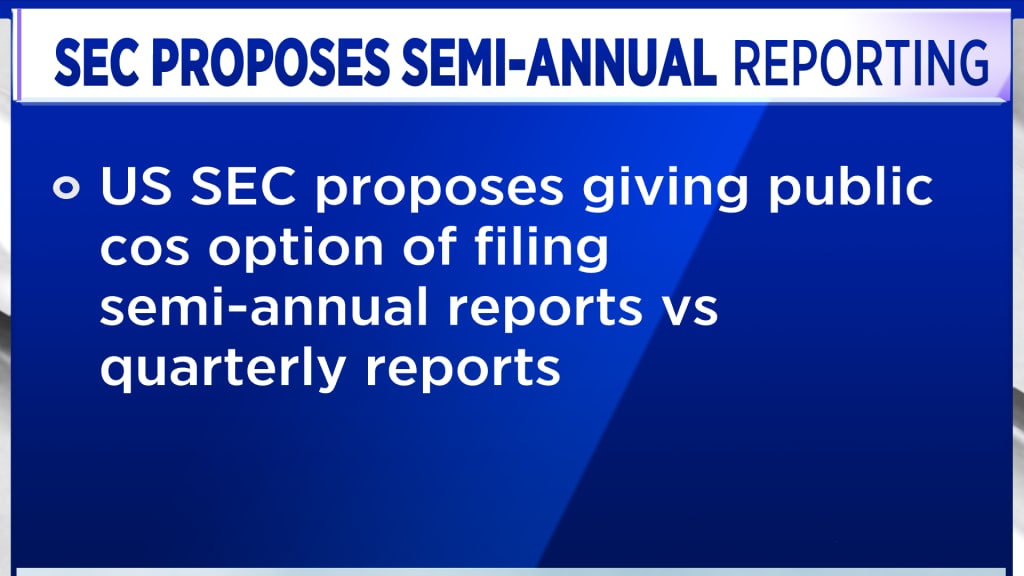
The debate has gained traction after the United States Securities and Exchange Commission proposed allowing companies to move from quarterly to half-yearly reporting. While the idea is to reduce compliance burden and let management focus more on business performance, experts says concerns around transparency and information gaps could limit how far such a shift goes.
Sandeep Parekh, Managing Partner at Finsec Law Advisors, believes the debate ultimately comes down to balancing management efficiency with shareholder disclosure standards. While he sees merit in reducing compliance pressure and short-termism, he expects large companies to continue reporting quarterly even if regulators eventually make half-yearly disclosures optional.
Shriram Subramanian, Founder & MD at InGovern, said institutional investors are unlikely to support reduced reporting frequency because regular disclosures help limit information gaps between management, analysts and public market investors. Both experts believe India’s largest listed companies would likely stick to quarterly reporting even if global disclosure norms begin to evolve.
Watch the full conversation here or scroll for edited excerpts.These are edited excerpts from the interview.Q: There’s a lot of discussion around the United States Securities and Exchange Commission (US SEC) proposal to allow companies to shift from quarterly reporting to semi-annual reporting. Some argue it is anti-shareholder, while others say it could encourage longer-term thinking. What are your first thoughts? Parekh: First of all, this is just a proposal and is still at the consultation stage. It is not definite yet. There will be feedback, and even if it moves ahead, it is still some time away.
Personally, I don’t have a very strong view because there are good arguments on both sides.
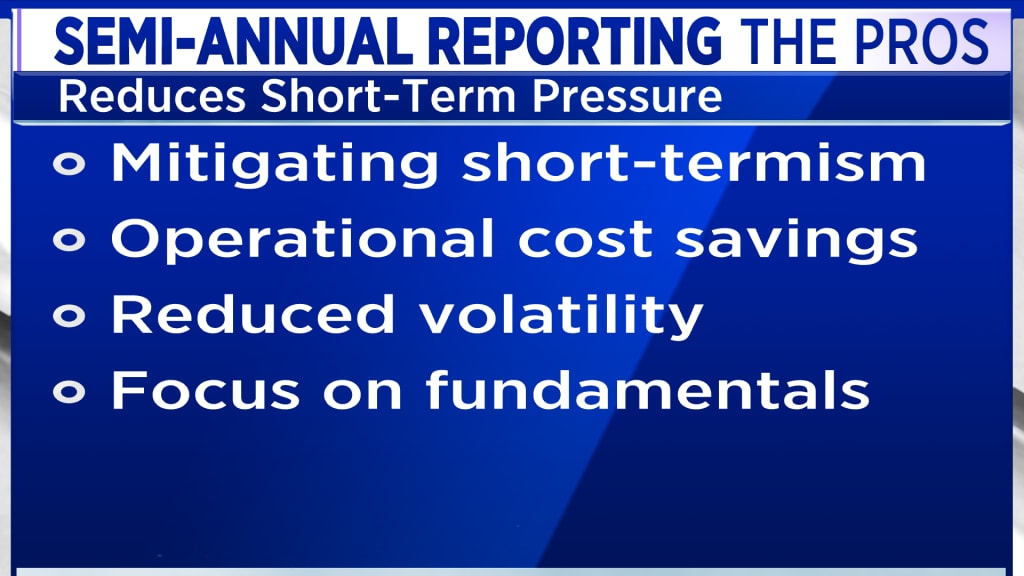
On the positive side, it reduces compliance burden and costs. More importantly, it reduces the management’s constant focus on preparing quarterly numbers and allows them to focus more on actual business performance.
The biggest argument in favour of half-yearly reporting is that management distraction is reduced. Some also argue it can reduce short-termism, though that is debatable.
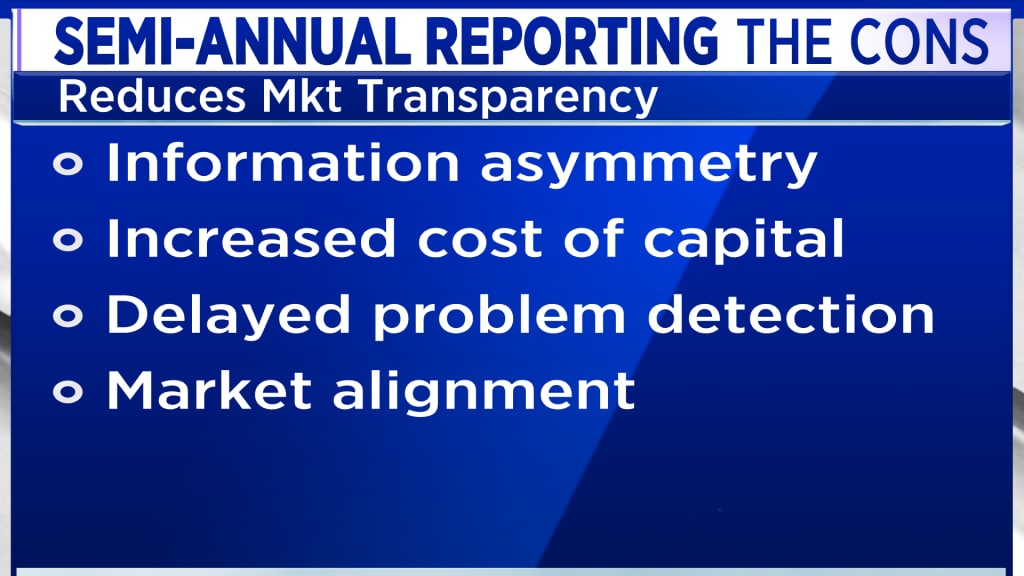
The downside, of course, is a bigger information gap between disclosures.
I would support it if it happens, especially since it would remain optional. Companies that want to continue quarterly reporting would still be free to do so.
Also, this is not unprecedented. Countries like Australia and the United Kingdom rely more on half-yearly reporting than quarterly reporting.
Q: Analysts probably won’t support this because they want numbers all the time.Parekh: They won’t, for sure.
Also Read: US SEC proposes allowing public companies to opt out of quarterly earnings reports
Q: What is your view on this proposal?Subramanian: Investors and analysts would definitely want quarterly numbers. Otherwise, there could be information asymmetry.
Especially hedge funds and momentum-driven investors rely on information flow. Their concern is that management may engage privately with analysts and investors, leading to wider information gaps for the broader market.
That is where most of the pushback is likely to come from — hedge funds, pension funds and institutional investors.
That said, the US already allows foreign companies to file semi-annual reports, so this is not entirely new.
A measured approach could be possible — for example, allowing companies outside the top S&P 500 to move to semi-annual reporting first, before extending it to larger companies.
 Q: Longer information gaps could make management access more important and potentially disadvantage smaller investors. Is that a fair concern, especially in markets like India?Parekh: Let me answer indirectly.
If such a law were introduced in India, I guess that the top 100 companies would continue with quarterly reporting.
Large investors, not just hedge funds, but all institutional investors, would still want quarterly disclosures. So, moving away from quarterly reporting would be unpopular with the investor community.
Perhaps regulators could keep quarterly reporting mandatory for the top 500 companies while allowing smaller firms to shift to half-yearly reporting.
Also Read: Nuvama prefers FMCG staples over liquor as packaging costs rise
Q: But if the top companies continue quarterly reporting, wouldn’t that create a strong signalling effect for everyone else as well?Parekh: Historically, mandatory disclosure itself is a relatively new concept.
About 100 years ago in the US, even blue-chip companies did not issue annual reports regularly. Some disclosures happen every three, four or five years.
So, I don’t think everyone would necessarily fall in line immediately. Some companies may still prefer the half-yearly system, though probably not the largest companies.
 Q: One viewer says employees may actually welcome this because trading window closures would be reduced. Your thoughts?Subramanian: Historically, even sales numbers were treated as competitive information. Today, companies disclose operating metrics, monthly auto sales, employee benchmarks and much more.
Also, with technology and enterprise-wide systems, the compliance burden has already been reduced significantly for large companies.
That is why I believe companies already reporting quarterly may find it difficult to shift to half-yearly reporting. Investor pressure will continue to remain strong.
If the system becomes optional, most established companies are still likely to continue quarterly reporting. Perhaps only newly listed companies may experiment with semi-annual reporting.
Catch all the latest updates from the stock market here
The debate has gained traction after the United States Securities and Exchange Commission proposed allowing companies to move from quarterly to half-yearly reporting. While the idea is to reduce compliance burden and let management focus more on business performance, experts says concerns around transparency and information gaps could limit how far such a shift goes.
Sandeep Parekh, Managing Partner at Finsec Law Advisors, believes the debate ultimately comes down to balancing management efficiency with shareholder disclosure standards. While he sees merit in reducing compliance pressure and short-termism, he expects large companies to continue reporting quarterly even if regulators eventually make half-yearly disclosures optional.
Shriram Subramanian, Founder & MD at InGovern, said institutional investors are unlikely to support reduced reporting frequency because regular disclosures help limit information gaps between management, analysts and public market investors. Both experts believe India’s largest listed companies would likely stick to quarterly reporting even if global disclosure norms begin to evolve.
Watch the full conversation here or scroll for edited excerpts.These are edited excerpts from the interview.Q: There’s a lot of discussion around the United States Securities and Exchange Commission (US SEC) proposal to allow companies to shift from quarterly reporting to semi-annual reporting. Some argue it is anti-shareholder, while others say it could encourage longer-term thinking. What are your first thoughts? Parekh: First of all, this is just a proposal and is still at the consultation stage. It is not definite yet. There will be feedback, and even if it moves ahead, it is still some time away.
Personally, I don’t have a very strong view because there are good arguments on both sides.
On the positive side, it reduces compliance burden and costs. More importantly, it reduces the management’s constant focus on preparing quarterly numbers and allows them to focus more on actual business performance.
The biggest argument in favour of half-yearly reporting is that management distraction is reduced. Some also argue it can reduce short-termism, though that is debatable.
The downside, of course, is a bigger information gap between disclosures.
I would support it if it happens, especially since it would remain optional. Companies that want to continue quarterly reporting would still be free to do so.
Also, this is not unprecedented. Countries like Australia and the United Kingdom rely more on half-yearly reporting than quarterly reporting.
Q: Analysts probably won’t support this because they want numbers all the time.Parekh: They won’t, for sure.
Also Read: US SEC proposes allowing public companies to opt out of quarterly earnings reports
Q: What is your view on this proposal?Subramanian: Investors and analysts would definitely want quarterly numbers. Otherwise, there could be information asymmetry.
Especially hedge funds and momentum-driven investors rely on information flow. Their concern is that management may engage privately with analysts and investors, leading to wider information gaps for the broader market.
That is where most of the pushback is likely to come from — hedge funds, pension funds and institutional investors.
That said, the US already allows foreign companies to file semi-annual reports, so this is not entirely new.
A measured approach could be possible — for example, allowing companies outside the top S&P 500 to move to semi-annual reporting first, before extending it to larger companies.
Q: Longer information gaps could make management access more important and potentially disadvantage smaller investors. Is that a fair concern, especially in markets like India?Parekh: Let me answer indirectly.
If such a law were introduced in India, I guess that the top 100 companies would continue with quarterly reporting.
Large investors, not just hedge funds, but all institutional investors, would still want quarterly disclosures. So, moving away from quarterly reporting would be unpopular with the investor community.
Perhaps regulators could keep quarterly reporting mandatory for the top 500 companies while allowing smaller firms to shift to half-yearly reporting.
Also Read: Nuvama prefers FMCG staples over liquor as packaging costs rise
Q: But if the top companies continue quarterly reporting, wouldn’t that create a strong signalling effect for everyone else as well?Parekh: Historically, mandatory disclosure itself is a relatively new concept.
About 100 years ago in the US, even blue-chip companies did not issue annual reports regularly. Some disclosures happen every three, four or five years.
So, I don’t think everyone would necessarily fall in line immediately. Some companies may still prefer the half-yearly system, though probably not the largest companies.
Q: One viewer says employees may actually welcome this because trading window closures would be reduced. Your thoughts?Subramanian: Historically, even sales numbers were treated as competitive information. Today, companies disclose operating metrics, monthly auto sales, employee benchmarks and much more.
Also, with technology and enterprise-wide systems, the compliance burden has already been reduced significantly for large companies.
That is why I believe companies already reporting quarterly may find it difficult to shift to half-yearly reporting. Investor pressure will continue to remain strong.
If the system becomes optional, most established companies are still likely to continue quarterly reporting. Perhaps only newly listed companies may experiment with semi-annual reporting.
Catch all the latest updates from the stock market here





/images/ppid_59c68470-image-177797258609595616.webp)


/images/ppid_59c68470-image-177804011333459103.webp)



/images/ppid_59c68470-image-177799004096725447.webp)