/images/ppid_59c68470-image-1782297567827874.webp)



/images/ppid_59c68470-image-17821076159803596.webp)


What is the story about?
India has yet to emerge as a major beneficiary of the artificial intelligence (AI) boom, but its economic growth outlook remains solid thanks to strong domestic demand, according to Louis Kuijs, Chief APAC Economist at S&P Global Ratings.
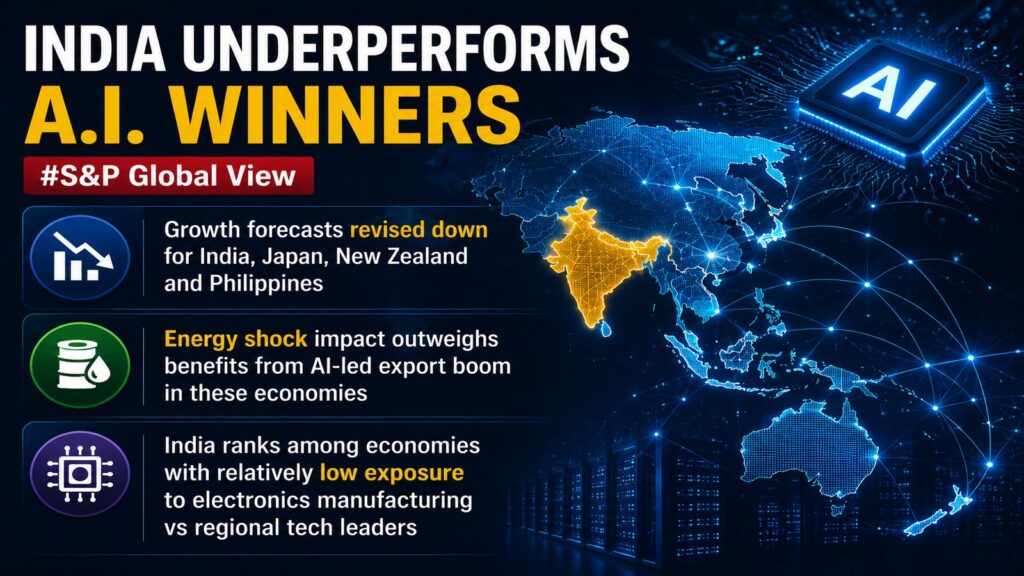
Kuijs said the biggest gains from the AI-driven investment cycle are currently flowing to economies that play a direct role in semiconductor manufacturing and the broader chip supply chain. These include Taiwan and South Korea, which have seen some of the largest upgrades to their economic outlooks in recent months.
"When we look at how have our forecasts changed over the last half a year or so, we noticed that where we have upgrades, those are the economies that are fitting in a particular part of this whole AI story," he said.
S&P Global Ratings sees similar trends in other economies linked to semiconductor production, including Malaysia, China and Japan. By contrast, countries that are less active in chip manufacturing are still growing but have not seen the same improvement in growth prospects.
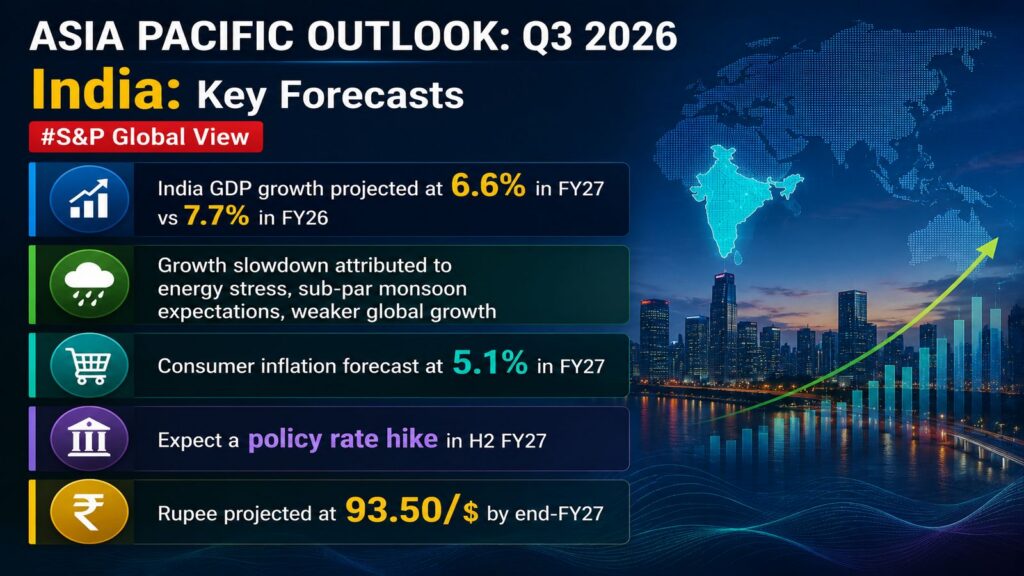
That does not mean India is falling behind. Kuijs said India's economy continues to benefit from a strong domestic demand story, which remains one of the country's biggest strengths. S&P expects India to grow about 6.6%, broadly in line with the Reserve Bank of India's forecast.
At the same time, Kuijs cautioned that the AI boom rests on a relatively narrow foundation. Much of the current optimism depends on spending by a handful of US technology giants that are investing heavily in artificial intelligence infrastructure and data centres.
"It is all based on a fairly narrow foundation of the decisions" taken by US hyperscalers, he said. If those companies struggle to monetise their AI investments and slow spending, the impact could ripple through the semiconductor supply chain and affect economies that have benefited the most from the AI trade.
While that remains a risk, Kuijs believes India's growth drivers are more diversified. Domestic consumption continues to support economic activity, even as exports face some uncertainty.
The export outlook remains tied to ongoing trade negotiations with the United States. According to Kuijs, greater clarity on tariffs and trade policy could help businesses make investment decisions and provide support to export growth.
Watch the full conversation here
On monetary policy, S&P has become less concerned about aggressive rate hikes after oil prices eased from recent highs. The agency had earlier expected two RBI rate hikes later in the fiscal year but now expects only one.
"We will probably be able to consolidate the economy and start to see that resumption of domestically led growth, which continues to be a pillar of the Indian economy," Kuijs said.
Catch all the latest updates from the stock market here
Kuijs said the biggest gains from the AI-driven investment cycle are currently flowing to economies that play a direct role in semiconductor manufacturing and the broader chip supply chain. These include Taiwan and South Korea, which have seen some of the largest upgrades to their economic outlooks in recent months.
"When we look at how have our forecasts changed over the last half a year or so, we noticed that where we have upgrades, those are the economies that are fitting in a particular part of this whole AI story," he said.
S&P Global Ratings sees similar trends in other economies linked to semiconductor production, including Malaysia, China and Japan. By contrast, countries that are less active in chip manufacturing are still growing but have not seen the same improvement in growth prospects.
That does not mean India is falling behind. Kuijs said India's economy continues to benefit from a strong domestic demand story, which remains one of the country's biggest strengths. S&P expects India to grow about 6.6%, broadly in line with the Reserve Bank of India's forecast.
At the same time, Kuijs cautioned that the AI boom rests on a relatively narrow foundation. Much of the current optimism depends on spending by a handful of US technology giants that are investing heavily in artificial intelligence infrastructure and data centres.
"It is all based on a fairly narrow foundation of the decisions" taken by US hyperscalers, he said. If those companies struggle to monetise their AI investments and slow spending, the impact could ripple through the semiconductor supply chain and affect economies that have benefited the most from the AI trade.
While that remains a risk, Kuijs believes India's growth drivers are more diversified. Domestic consumption continues to support economic activity, even as exports face some uncertainty.
The export outlook remains tied to ongoing trade negotiations with the United States. According to Kuijs, greater clarity on tariffs and trade policy could help businesses make investment decisions and provide support to export growth.
Watch the full conversation here
On monetary policy, S&P has become less concerned about aggressive rate hikes after oil prices eased from recent highs. The agency had earlier expected two RBI rate hikes later in the fiscal year but now expects only one.
"We will probably be able to consolidate the economy and start to see that resumption of domestically led growth, which continues to be a pillar of the Indian economy," Kuijs said.
Catch all the latest updates from the stock market here



/images/ppid_59c68470-image-178229009023738865.webp)
/images/ppid_a911dc6a-image-178218303166121237.webp)

/images/ppid_59c68470-image-178219002564420953.webp)


/images/ppid_59c68470-image-178214508072482475.webp)
/images/ppid_59c68470-image-178210255520987451.webp)
/images/ppid_59c68470-image-178210752301867473.webp)