/images/ppid_59c68470-image-176959503889661697.webp)

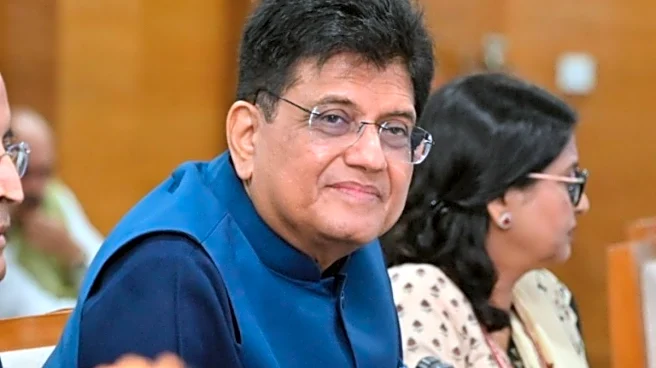
In his note, Birla said telecom has been among the most volatile sectors over the past two decades, facing repeated shocks and structural challenges.
He said that Vodafone Idea, the group's joint venture, has remained at the centre of this turbulence, navigating one of the most prolonged periods of uncertainty in the industry's history.
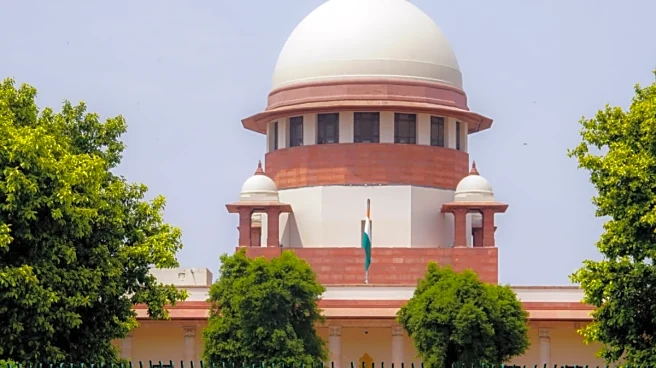
According to Birla, the recent resolution of the AGR (adjusted gross revenue) issue marks a decisive turning point for the sector. With long standing uncertainty addressed through the Supreme Court's judgment and the government's intervention, he said the operating environment has fundamentally changed.
For the first time in years, the company can look beyond survival and shift its focus to sustainable growth.
Emphasising the sector's importance, Birla said a healthy and competitive telecom industry is critical to India's digital future. He added that India deserves three private telecom players and that it also deserves a successful Vodafone Idea, calling it an idea whose time has come once again.
The AGR dues for the company have been frozen at ₹87,695 crore. There is a five-year moratorium, post which, payments will begin from financial year 2031, and will be staggered up to financial year 2042.
Vodafone Idea has to pay the AGR dues pertaining to financial year 2017-18 and financial year 2018-19 without any change over financial year 2026 to financial year 2031.
The government has a 49% stake in Vodafone Idea and is its largest public shareholder. The official cabinet document states that these steps will enable orderly payment of dues to the government and also protect the interest of 20 crore customers of the company.
The AGR dues, which have now been frozen, will be reassessed by the Department of Telecom, based on Deduction Verification Guidelines dated February 3, 2020. The outcome will be decided by a committee appointed by the Government and that will be binding on both parties.
Birla's comments come even as Vodafone Idea reported a mixed set of earnings for the December quarter. On a sequential basis, revenue rose 1.1% to ₹11,323 crore from ₹11,194.7 crore in the September quarter.
The company reported a net loss of ₹5,286 crore, narrower than the ₹5,524.2 crore loss in the previous quarter, aided by an exceptional profit of ₹1,078 crore. However, adjusted losses widened to ₹6,368 crore from ₹5,565 crore QoQ.
EBITDA improved to ₹4,816 crore from ₹4,685.1 crore, with margins expanding to 42.5% from 41.9%. Average revenue per user rose 3% QoQ to ₹172 from ₹167, while capital expenditure increased to ₹2,250 crore from ₹1,750 crore in the previous quarter.
Subscriber trends remained a concern, with Vodafone Idea losing 3.8 million subscribers sequentially, the steepest decline in several quarters.
At the end of the quarter, gross debt, including accrued interest, stood at ₹2.098 lakh crore. This includes deferred spectrum liabilities of ₹1,24,877 crore, AGR liabilities of ₹80,502 crore, subject to revision based on the Department of Telecommunications’ assessment, and borrowings of ₹4,424 crore from banks and financial institutions.
Cash balance stood at ₹6,960 crore, while net debt rose by nearly ₹3,000 crore QoQ to ₹2.028 lakh crore.
The company said it has obligations of ₹1,126 crore towards banks and ₹7,001 crore towards spectrum payments over the next 12 months and remains confident of meeting these commitments.
Vodafone Idea also clarified that no AGR relief has been accounted for in the December quarter, as the relief was received in January 2026.
/images/ppid_59c68470-image-17706325339595308.webp)
/images/ppid_59c68470-image-177060263036020993.webp)
/images/ppid_59c68470-image-177061006307290503.webp)

/images/ppid_59c68470-image-17706076747273736.webp)
/images/ppid_59c68470-image-177060752986769970.webp)
/images/ppid_59c68470-image-177065016592864742.webp)
/images/ppid_a911dc6a-image-177064312736958527.webp)