/images/ppid_59c68470-image-176951262666880785.webp)

/images/ppid_a911dc6a-image-177072742938547079.webp)
What is the story about?
The India–European Union free trade agreement (FTA) is unlikely to lead to any immediate reduction in Audi car prices in India, with the luxury carmaker indicating that the vast majority of its vehicles sold in the country are already assembled locally.
Speaking to CNBC-TV18, Balbir Singh Dhillon, Brand Director, Audi India, said that nearly 90–95% of Audi cars sold in India are made in India, which means they do not fall under the high import duty structure that the FTA seeks to address.
“If you look at our portfolio, most of the cars that we sell in India are already assembled in India. From that point of view, this FTA does not have any impact,” Dhillon said, adding that only around 5–7% of Audi’s sales currently come from completely built units (CBUs) imported from overseas.
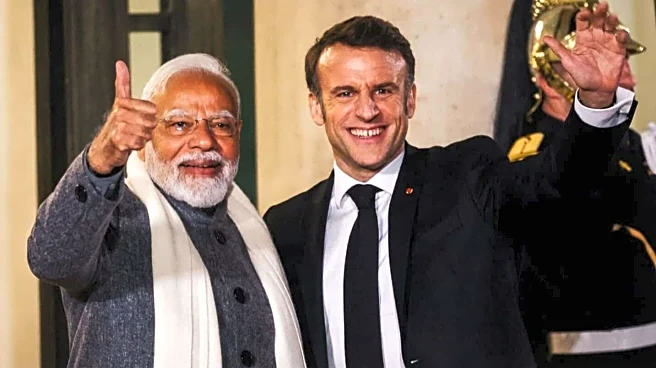
Prime Minister Narendra Modi and European Commission President Ursula von der Leyen on Tuesday announced the conclusion of negotiations on the India–EU FTA, describing it as a landmark agreement covering nearly 25% of global GDP and close to one-third of global trade. Market chatter following the announcement had centred on expectations of lower prices for imported luxury cars, driven by potential cuts in steep import duties.
However, Dhillon cautioned against such assumptions, noting that even for luxury cars, pricing is influenced by multiple layers of taxation beyond customs duties. “It’s not only about import duties. You also have GST of around 40% and registration costs, which apply equally to everyone,” he said.
As a result, Dhillon said prices of Audi cars currently on Indian roads—typically in the ₹80–90 lakh range—are unlikely to see any change purely due to the FTA. “By and large, what we are selling right now is made in India. From that point of view, pricing will remain the same,” he said.
The view is broadly reflective of the wider luxury car industry in India, where most German brands assemble their vehicles locally to remain competitive in a relatively small market. Dhillon pointed out that the luxury car segment in India is limited to about 50,000 units annually, accounting for just over 1% of the overall passenger vehicle market.
While the FTA may not provide an immediate pricing trigger, Dhillon said it could still have longer-term benefits for the sector. Once the agreement is operationalised and the fine print is clear, there may be potential to introduce more imported models into India, especially if the overall luxury car market expands.
Also Read | India-EU FTA: PM Modi, Ursula Leyen announce 'mother of all trade deals', draw US ire
“There is potential to launch more cars into the country. When volumes are low and competition is high, you tend to launch limited products. As taxation improves and the industry grows, we will potentially be able to launch new products,” he said.
For now, though, Dhillon acknowledged that the agreement does not provide a fresh demand impulse for existing Audi customers. “For 90–95% of the cars sold, things remain the same,” he said, underscoring that any meaningful impact from the India–EU FTA on luxury car pricing will be gradual rather than immediate.
Watch accompanying video for entire conversation.
Speaking to CNBC-TV18, Balbir Singh Dhillon, Brand Director, Audi India, said that nearly 90–95% of Audi cars sold in India are made in India, which means they do not fall under the high import duty structure that the FTA seeks to address.
“If you look at our portfolio, most of the cars that we sell in India are already assembled in India. From that point of view, this FTA does not have any impact,” Dhillon said, adding that only around 5–7% of Audi’s sales currently come from completely built units (CBUs) imported from overseas.
Prime Minister Narendra Modi and European Commission President Ursula von der Leyen on Tuesday announced the conclusion of negotiations on the India–EU FTA, describing it as a landmark agreement covering nearly 25% of global GDP and close to one-third of global trade. Market chatter following the announcement had centred on expectations of lower prices for imported luxury cars, driven by potential cuts in steep import duties.
However, Dhillon cautioned against such assumptions, noting that even for luxury cars, pricing is influenced by multiple layers of taxation beyond customs duties. “It’s not only about import duties. You also have GST of around 40% and registration costs, which apply equally to everyone,” he said.
As a result, Dhillon said prices of Audi cars currently on Indian roads—typically in the ₹80–90 lakh range—are unlikely to see any change purely due to the FTA. “By and large, what we are selling right now is made in India. From that point of view, pricing will remain the same,” he said.
The view is broadly reflective of the wider luxury car industry in India, where most German brands assemble their vehicles locally to remain competitive in a relatively small market. Dhillon pointed out that the luxury car segment in India is limited to about 50,000 units annually, accounting for just over 1% of the overall passenger vehicle market.
While the FTA may not provide an immediate pricing trigger, Dhillon said it could still have longer-term benefits for the sector. Once the agreement is operationalised and the fine print is clear, there may be potential to introduce more imported models into India, especially if the overall luxury car market expands.
Also Read | India-EU FTA: PM Modi, Ursula Leyen announce 'mother of all trade deals', draw US ire
“There is potential to launch more cars into the country. When volumes are low and competition is high, you tend to launch limited products. As taxation improves and the industry grows, we will potentially be able to launch new products,” he said.
For now, though, Dhillon acknowledged that the agreement does not provide a fresh demand impulse for existing Audi customers. “For 90–95% of the cars sold, things remain the same,” he said, underscoring that any meaningful impact from the India–EU FTA on luxury car pricing will be gradual rather than immediate.
Watch accompanying video for entire conversation.



/images/ppid_a911dc6a-image-177098224616495837.webp)




/images/ppid_59c68470-image-177074263586952695.webp)
/images/ppid_59c68470-image-177074755392764491.webp)