/images/ppid_59c68470-image-178454755954034822.webp)


/images/ppid_59c68470-image-178435252842474239.webp)
/images/ppid_59c68470-image-178428505789338849.webp)


What is the story about?
Turtlemint Fintech Solutions expects profitability to improve further in 2026-27 (FY27) as operating leverage continues to strengthen and corporate overheads remain largely unchanged in absolute terms, according to Dhirendra Mahyavanshi, Chairman, Managing Director & CEO of Turtlemint Fintech Solutions. After reporting its first-ever profitable quarter in January-March quarter of 2026 (Q4FY26), the company expects to remain profitable for the full year despite normal seasonality in the insurance business.
Mahyavanshi said Turtlemint will continue growing at historical rates, supported by expansion in service earnings before interest, taxes, depreciation and amortisation (EBITDA), a lower corporate overhead as a share of revenue and a rising number of active insurance partners. The company plans to add 1.45-1.5 lakh new partners in FY27 while maintaining steady monetisation and sees regulatory initiatives such as Insurance for All by 2047 as long-term growth drivers.
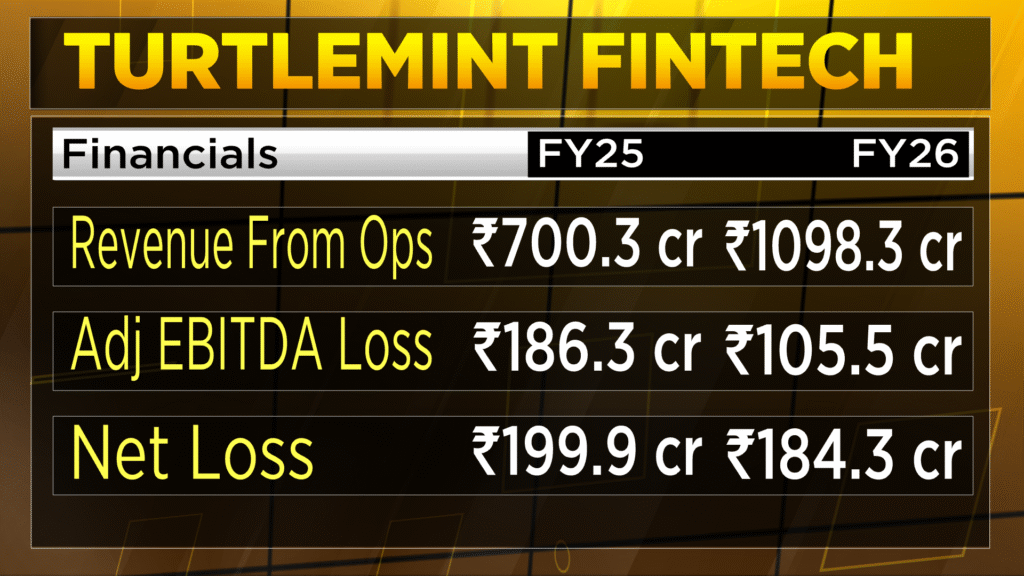
In Q4FY26, Turtlemint FinTech reported its first-ever profitable quarter, posting a net profit of ₹3.1 crore compared with a ₹39.4 crore loss a year earlier. Revenue rose 42% year-on-year to ₹357 crore, while the EBITDA loss narrowed sharply to ₹4.1 crore from ₹37.3 crore. Service EBITDA grew 60% to ₹60 crore, reflecting the company's improving operating leverage.
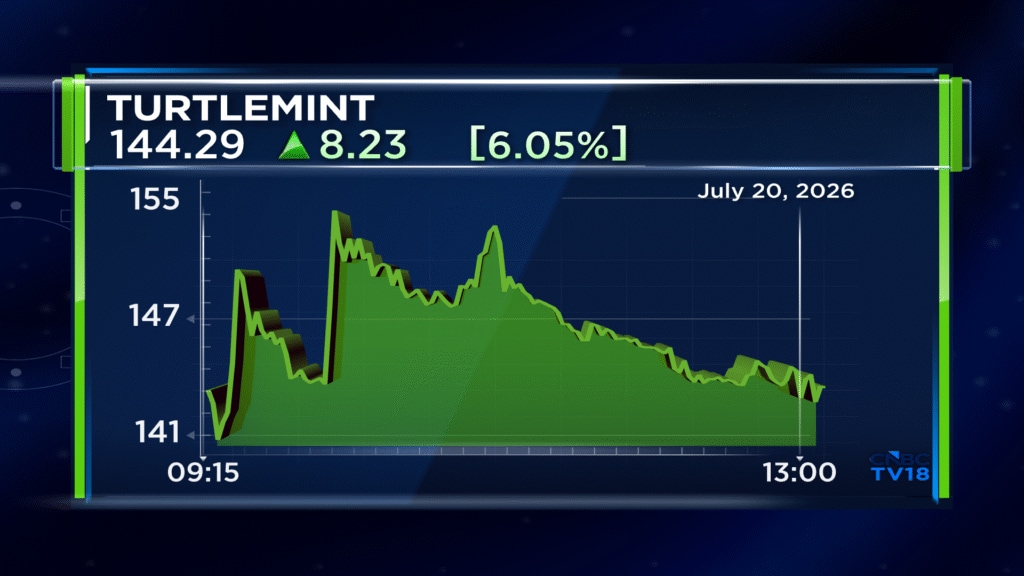
Shares of the Mumbai-based insurtech firm have gained nearly 5% over the past five trading days, taking its market capitalisation to around ₹4,224.30 crore. Turtlemint made its stock market debut on the BSE and NSE on June 29, 2026.
This is an edited transcript of the interview.Q: It is the first quarter that you have reported post listing. We are talking about your January-March 2026 (Q4FY26) numbers. Revenue from operations grew around 42%. Since the April-June quarter of 2026 (Q1FY27) has now ended and you will soon report those numbers, can you give us a sense of how the quarter has been? Was it as good as Q4?
A: This was our first set of results after listing, so we were also going through the reporting process. Q4 was a great quarter for us. Revenue grew about 42%, service EBITDA expanded by more than 60%, and for the full year service EBITDA grew over 70%.
To explain our business, service EBITDA gives us operating leverage. As it expands, margins improve. The second lever is corporate overhead. Since the platform has already been built, corporate overhead remains largely stable. As revenue grows, corporate overhead as a share of revenue keeps declining, which improves EBITDA.
Q4 delivered on both these levers. It was the first quarter in the company's 11-year history in which we turned profitable. This has been built over the last five to six years, during which revenue, service EBITDA and EBITDA have consistently improved. Another key, key performance indicator (KPI) is the number of active partners on the platform, which has grown at a compound annual growth rate (CAGR) of over 45%.
From a Q1 perspective, we will continue executing the business the way we have historically. The same growth rates across key parameters will continue. Both operating leverage and service EBITDA expansion will keep delivering better value.
Q: You mentioned service EBITDA and corporate overhead. These two factors supported your numbers. In 2025-26 (FY26), service EBITDA grew over 70% while corporate overhead reduced by about 8%. What are you targeting for FY27? Can you improve on these numbers?
A: Corporate overhead as a share of revenue will continue to decline. However, in absolute terms it will largely remain the same, apart from a marginal inflationary impact.
This ensures that revenue growth directly improves profitability. Profitability improved by more than 50% last year, and we expect further improvement this year. For the full year, we expect to remain profitable.
There will, however, be some seasonality. Q4 is typically a strong quarter for the insurance industry, so that pattern will continue. But on a year-on-year basis, we expect to continue delivering in line with our historical performance.
Q: So, should we expect service EBITDA growth of around 70% in FY27 as well?
A: Yes.
Q: If service EBITDA continues growing at that pace while corporate overhead remains stable, it should reduce adjusted EBITDA losses significantly. What should one expect for FY27?
A: In Q4FY26, we moved from an adjusted EBITDA loss of ₹34 crore to profitability. For the full FY26, adjusted EBITDA loss was ₹105 crore.
The same operating leverage will continue in FY27. Corporate overhead as a share of revenue will decline while service EBITDA expands. Together, these will significantly improve the company's profitability.
Q: Does that mean Turtlemint will become adjusted EBITDA profitable?
A: Yes, for the year we will.
 Q: In Q4FY26, net profit was ₹3.1 crore compared with a loss of ₹39 crore a year ago. Adjusted EBITDA margin was about 1%. What kind of exit rate should we expect for FY27?
A: It will be similar to how Q4FY26 performed compared with the previous year. Over the last four to five years, we have consistently grown at over 40% annually. The biggest driver has been our key KPI— Past 3 Months (P3m) Active. As long as P3M Active continues to grow, we expect similar operating leverage across revenue and EBITDA.
Q: So, should we assume double-digit profitability for FY27?
A: For the FY27 exit quarter, we expect similar growth to what we delivered last year. For the full year, we expect to remain profitable.
Q: You mentioned P3M Active as your third key KPI. How has it grown, and what do you expect in FY27?
A: P3M Active represents the rolling three-month number of partners actively transacting on the platform.
Over the last four to five years, it has grown at a CAGR of around 46%, and we expect a similar growth rate in FY27.
Growth comes from two sources. Existing POSPs become more productive every year as they move up the learning curve. Through the Turtlemint Academy, we train and support them to improve productivity.
The second source is new partner additions. Last year, we added about 1.15 lakh new partners. This year, we expect to recruit 1.45-1.5 lakh new partners. Together, both cohorts will continue driving growth.
Q: Revenue as a percentage of platform premium has improved to around 20.8%. Where do you see this moving in FY27?
A: We expect it to remain in a similar range.
One point to note is that we also have a technology services business where we license our technology to large distributors. Therefore, revenue is not entirely linked to platform premium because it includes both point of sales person (POSP) commissions and technology licence income.
Watch the full conversation hereQ: Will Insurance Regulatory and Development Authority of India’s (IRDAI) distribution regulations or BIMA Sugam impact your guidance?
A: The government's mission is to increase insurance penetration, and technology platforms are the best way to achieve that.
Any regulatory changes will be aimed at improving insurance penetration and affordability. Our role is to enable more participants to distribute insurance through our platform, and we will continue doing that.
Historically, regulations such as digitisation, the POSP framework and expansion of products under the POSP model have been major enablers for our business. We expect the same trend to continue as the government pursues its Insurance for All by 2047 vision.
Catch all the latest updates from the stock market here
Mahyavanshi said Turtlemint will continue growing at historical rates, supported by expansion in service earnings before interest, taxes, depreciation and amortisation (EBITDA), a lower corporate overhead as a share of revenue and a rising number of active insurance partners. The company plans to add 1.45-1.5 lakh new partners in FY27 while maintaining steady monetisation and sees regulatory initiatives such as Insurance for All by 2047 as long-term growth drivers.
In Q4FY26, Turtlemint FinTech reported its first-ever profitable quarter, posting a net profit of ₹3.1 crore compared with a ₹39.4 crore loss a year earlier. Revenue rose 42% year-on-year to ₹357 crore, while the EBITDA loss narrowed sharply to ₹4.1 crore from ₹37.3 crore. Service EBITDA grew 60% to ₹60 crore, reflecting the company's improving operating leverage.
Shares of the Mumbai-based insurtech firm have gained nearly 5% over the past five trading days, taking its market capitalisation to around ₹4,224.30 crore. Turtlemint made its stock market debut on the BSE and NSE on June 29, 2026.
This is an edited transcript of the interview.Q: It is the first quarter that you have reported post listing. We are talking about your January-March 2026 (Q4FY26) numbers. Revenue from operations grew around 42%. Since the April-June quarter of 2026 (Q1FY27) has now ended and you will soon report those numbers, can you give us a sense of how the quarter has been? Was it as good as Q4?
A: This was our first set of results after listing, so we were also going through the reporting process. Q4 was a great quarter for us. Revenue grew about 42%, service EBITDA expanded by more than 60%, and for the full year service EBITDA grew over 70%.
To explain our business, service EBITDA gives us operating leverage. As it expands, margins improve. The second lever is corporate overhead. Since the platform has already been built, corporate overhead remains largely stable. As revenue grows, corporate overhead as a share of revenue keeps declining, which improves EBITDA.
Q4 delivered on both these levers. It was the first quarter in the company's 11-year history in which we turned profitable. This has been built over the last five to six years, during which revenue, service EBITDA and EBITDA have consistently improved. Another key, key performance indicator (KPI) is the number of active partners on the platform, which has grown at a compound annual growth rate (CAGR) of over 45%.
From a Q1 perspective, we will continue executing the business the way we have historically. The same growth rates across key parameters will continue. Both operating leverage and service EBITDA expansion will keep delivering better value.
Q: You mentioned service EBITDA and corporate overhead. These two factors supported your numbers. In 2025-26 (FY26), service EBITDA grew over 70% while corporate overhead reduced by about 8%. What are you targeting for FY27? Can you improve on these numbers?
A: Corporate overhead as a share of revenue will continue to decline. However, in absolute terms it will largely remain the same, apart from a marginal inflationary impact.
This ensures that revenue growth directly improves profitability. Profitability improved by more than 50% last year, and we expect further improvement this year. For the full year, we expect to remain profitable.
There will, however, be some seasonality. Q4 is typically a strong quarter for the insurance industry, so that pattern will continue. But on a year-on-year basis, we expect to continue delivering in line with our historical performance.
Q: So, should we expect service EBITDA growth of around 70% in FY27 as well?
A: Yes.
Q: If service EBITDA continues growing at that pace while corporate overhead remains stable, it should reduce adjusted EBITDA losses significantly. What should one expect for FY27?
A: In Q4FY26, we moved from an adjusted EBITDA loss of ₹34 crore to profitability. For the full FY26, adjusted EBITDA loss was ₹105 crore.
The same operating leverage will continue in FY27. Corporate overhead as a share of revenue will decline while service EBITDA expands. Together, these will significantly improve the company's profitability.
Q: Does that mean Turtlemint will become adjusted EBITDA profitable?
A: Yes, for the year we will.
Q: In Q4FY26, net profit was ₹3.1 crore compared with a loss of ₹39 crore a year ago. Adjusted EBITDA margin was about 1%. What kind of exit rate should we expect for FY27?
A: It will be similar to how Q4FY26 performed compared with the previous year. Over the last four to five years, we have consistently grown at over 40% annually. The biggest driver has been our key KPI— Past 3 Months (P3m) Active. As long as P3M Active continues to grow, we expect similar operating leverage across revenue and EBITDA.
Q: So, should we assume double-digit profitability for FY27?
A: For the FY27 exit quarter, we expect similar growth to what we delivered last year. For the full year, we expect to remain profitable.
Q: You mentioned P3M Active as your third key KPI. How has it grown, and what do you expect in FY27?
A: P3M Active represents the rolling three-month number of partners actively transacting on the platform.
Over the last four to five years, it has grown at a CAGR of around 46%, and we expect a similar growth rate in FY27.
Growth comes from two sources. Existing POSPs become more productive every year as they move up the learning curve. Through the Turtlemint Academy, we train and support them to improve productivity.
The second source is new partner additions. Last year, we added about 1.15 lakh new partners. This year, we expect to recruit 1.45-1.5 lakh new partners. Together, both cohorts will continue driving growth.
Q: Revenue as a percentage of platform premium has improved to around 20.8%. Where do you see this moving in FY27?
A: We expect it to remain in a similar range.
One point to note is that we also have a technology services business where we license our technology to large distributors. Therefore, revenue is not entirely linked to platform premium because it includes both point of sales person (POSP) commissions and technology licence income.
Watch the full conversation hereQ: Will Insurance Regulatory and Development Authority of India’s (IRDAI) distribution regulations or BIMA Sugam impact your guidance?
A: The government's mission is to increase insurance penetration, and technology platforms are the best way to achieve that.
Any regulatory changes will be aimed at improving insurance penetration and affordability. Our role is to enable more participants to distribute insurance through our platform, and we will continue doing that.
Historically, regulations such as digitisation, the POSP framework and expansion of products under the POSP model have been major enablers for our business. We expect the same trend to continue as the government pursues its Insurance for All by 2047 vision.
Catch all the latest updates from the stock market here

/images/ppid_59c68470-image-178454752736563691.webp)
/images/ppid_59c68470-image-178430253181614817.webp)
/images/ppid_59c68470-image-178436752725149239.webp)

/images/ppid_59c68470-image-178428503543760768.webp)