/images/ppid_59c68470-image-17785625349498847.webp)

/images/ppid_59c68470-image-177856009552961064.webp)
/images/ppid_59c68470-image-177848253517648105.webp)
What is the story about?
Former Reserve Bank of India Governor Duvvuri Subbarao said markets may be able to absorb further depreciation in the rupee, but warned that persistent weakness in the currency could eventually prompt interest rate hikes by the central bank.
Speaking to CNBC Asia on Tuesday (May 12), Subbarao said the rupee remains under pressure due to sustained foreign institutional investor (FII) outflows, elevated crude oil prices and concerns around India’s current account deficit (CAD).
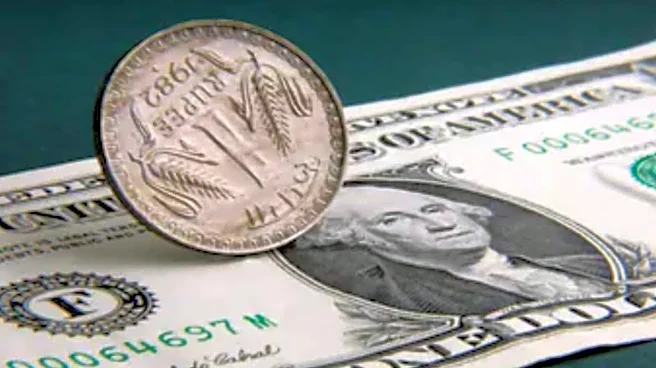
The Indian rupee fell to a fresh record low of 95.63 against the US dollar in early trade on Tuesday (May 12) after US President Donald Trump said the ceasefire with Iran was on “massive life support,” dampening hopes of a quick resolution to the conflict and pushing crude oil prices higher.
At the interbank foreign exchange market, the rupee opened at 95.57 per dollar before weakening further to 95.63, down 35 paise from Monday’s (May 11's) close of 95.28.
Brent crude futures rose around 0.85% to $105.10 per barrel, while the dollar index strengthened 0.19% to 98.14. Analysts said fears of prolonged supply disruptions in the Persian Gulf continue to weigh on global markets and emerging market currencies.
Subbarao described the current environment as a “classic supply shock” for India, warning that persistent external pressures could spill over into domestic demand conditions and create additional challenges for policymakers.
“Persistent shock may trigger concerns for the RBI,” he said, noting that the central bank would find it difficult to disentangle foreign exchange management from inflation control if the rupee weakens further.
He added that the Reserve Bank of India may have to consider rate hikes if currency depreciation intensifies and starts feeding into inflation.
However, Subbarao said the current macroeconomic backdrop does not yet point toward stagflation, highlighting that inflation at 3.4% remains well below the RBI’s target level.
He also said the market could withstand additional depreciation in the rupee, though the 100-per-dollar mark would act as a “psychological chokepoint” for investors and policymakers.
Speaking to CNBC Asia on Tuesday (May 12), Subbarao said the rupee remains under pressure due to sustained foreign institutional investor (FII) outflows, elevated crude oil prices and concerns around India’s current account deficit (CAD).
The Indian rupee fell to a fresh record low of 95.63 against the US dollar in early trade on Tuesday (May 12) after US President Donald Trump said the ceasefire with Iran was on “massive life support,” dampening hopes of a quick resolution to the conflict and pushing crude oil prices higher.
At the interbank foreign exchange market, the rupee opened at 95.57 per dollar before weakening further to 95.63, down 35 paise from Monday’s (May 11's) close of 95.28.
Brent crude futures rose around 0.85% to $105.10 per barrel, while the dollar index strengthened 0.19% to 98.14. Analysts said fears of prolonged supply disruptions in the Persian Gulf continue to weigh on global markets and emerging market currencies.
Subbarao described the current environment as a “classic supply shock” for India, warning that persistent external pressures could spill over into domestic demand conditions and create additional challenges for policymakers.
“Persistent shock may trigger concerns for the RBI,” he said, noting that the central bank would find it difficult to disentangle foreign exchange management from inflation control if the rupee weakens further.
He added that the Reserve Bank of India may have to consider rate hikes if currency depreciation intensifies and starts feeding into inflation.
However, Subbarao said the current macroeconomic backdrop does not yet point toward stagflation, highlighting that inflation at 3.4% remains well below the RBI’s target level.
He also said the market could withstand additional depreciation in the rupee, though the 100-per-dollar mark would act as a “psychological chokepoint” for investors and policymakers.
/images/ppid_59c68470-image-17784726050307241.webp)
/images/ppid_59c68470-image-177847511410596188.webp)
/images/ppid_59c68470-image-177847756530847486.webp)
/images/ppid_59c68470-image-177855755602476597.webp)


/images/ppid_59c68470-image-177855014750942033.webp)
/images/ppid_59c68470-image-177851753311348026.webp)
/images/ppid_59c68470-image-177855007564296775.webp)