/images/ppid_59c68470-image-176954006268164715.webp)




What is the story about?
The Commerce Ministry has said that India's long-term interests will be protected despite no carve-out in the India-EU Free Trade Agreement (FTA) from the Carbon Border Adjustment Mechanism (CBAM) or the carbon tax, as any flexibility given to any country under CBAM will be extended to India to ensure an equal footing. Stating that a technical group to be set up under the FTA for accreditation of Indian verifiers for valuation of carbon footprint, and any carbon pricing or trading regime by India in future to factored in as part of CBAM.
As part of the FTA, the EU will provide technical assistance to reduce carbon emissions in India's industrial sector. A non-violation clause in the FTA will protect India's interests in case any future rules impact concessions already given under the FTA. The Commerce Ministry added that a joint statement is likely on decarbonisation. The EU had proposed CBAM's expansion to 180 downstream goods, with CBAM certificates slated to be sold from 1st February 2027 for goods imported in 2026.
Trade safeguards, scope of FTA
The India-EU FTA is India's largest trade pact in terms of both economic size and regulatory scope, with an unprecedented market access offered. The Commerce Ministry said that the FTA currently has 21 chapters, and though the number may change after legal scrubbing, 23 areas have been covered including goods, services, Sanitary and Phyto-sanitary Measures (SPS), Technical Barriers to Trade (TBT), Intellectual Property Rights (IPR), sustainability, legal issues, subsidies, anti-fraud measures, MSMEs and rules of origin. The Ministry added that there's no chapter, for now, on government procurement, energy, and critical minerals.
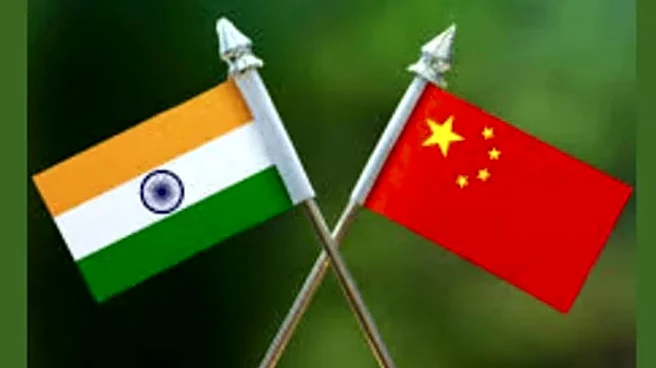
Amidst fears expressed by the Indian industry on dumping from China, the Commerce Ministry said that "both the sides understand each other's sensitivities", with "enough in the contract to check dumping" via regular bilateral safeguards and trade remedies as part of the agreement. The FTA also has commitments on post-study work visa apart from existing arrangements, with no cap on student visas.
Stating that social security agreements (SSAs) are within the remit of individual EU member countries, the Commerce Ministry said that states remit, 13 out of 27 member states already have concluded SSAs with India.
Bilateral investment
The Commerce Ministry indicated that talks between India and the EU for a deal on GI products and for a Bilateral Investment Treaty (BIT) are progressing in a positive direction. The Commerce Ministry said that investment liberalization in the non-services sector will remain under negotiation for 2 years after the FTA comes into force.
While India's FDI outflows to the EU clocked about $40.04 billion from April 2000 to March 2024, the cumulative FDI inflows from the EU from April 2000 to September 2024 was around $117.4 billion. With over 6,000 companies from the EU currently present in India, FDI from the EU represented over 16.5% of the cumulative FDI equity inflow from all countries.
As part of the FTA, the EU will provide technical assistance to reduce carbon emissions in India's industrial sector. A non-violation clause in the FTA will protect India's interests in case any future rules impact concessions already given under the FTA. The Commerce Ministry added that a joint statement is likely on decarbonisation. The EU had proposed CBAM's expansion to 180 downstream goods, with CBAM certificates slated to be sold from 1st February 2027 for goods imported in 2026.
Trade safeguards, scope of FTA
The India-EU FTA is India's largest trade pact in terms of both economic size and regulatory scope, with an unprecedented market access offered. The Commerce Ministry said that the FTA currently has 21 chapters, and though the number may change after legal scrubbing, 23 areas have been covered including goods, services, Sanitary and Phyto-sanitary Measures (SPS), Technical Barriers to Trade (TBT), Intellectual Property Rights (IPR), sustainability, legal issues, subsidies, anti-fraud measures, MSMEs and rules of origin. The Ministry added that there's no chapter, for now, on government procurement, energy, and critical minerals.
Amidst fears expressed by the Indian industry on dumping from China, the Commerce Ministry said that "both the sides understand each other's sensitivities", with "enough in the contract to check dumping" via regular bilateral safeguards and trade remedies as part of the agreement. The FTA also has commitments on post-study work visa apart from existing arrangements, with no cap on student visas.
Stating that social security agreements (SSAs) are within the remit of individual EU member countries, the Commerce Ministry said that states remit, 13 out of 27 member states already have concluded SSAs with India.
Bilateral investment
The Commerce Ministry indicated that talks between India and the EU for a deal on GI products and for a Bilateral Investment Treaty (BIT) are progressing in a positive direction. The Commerce Ministry said that investment liberalization in the non-services sector will remain under negotiation for 2 years after the FTA comes into force.
While India's FDI outflows to the EU clocked about $40.04 billion from April 2000 to March 2024, the cumulative FDI inflows from the EU from April 2000 to September 2024 was around $117.4 billion. With over 6,000 companies from the EU currently present in India, FDI from the EU represented over 16.5% of the cumulative FDI equity inflow from all countries.
/images/ppid_59c68470-image-17706575780372121.webp)
/images/ppid_a911dc6a-image-177066002286370480.webp)


/images/ppid_59c68470-image-177074753723033180.webp)
/images/ppid_a911dc6a-image-177064308461686397.webp)
/images/ppid_a911dc6a-image-177065207064690431.webp)
/images/ppid_59c68470-image-177069008086153671.webp)

/images/ppid_59c68470-image-177062509785292817.webp)