


What is the story about?
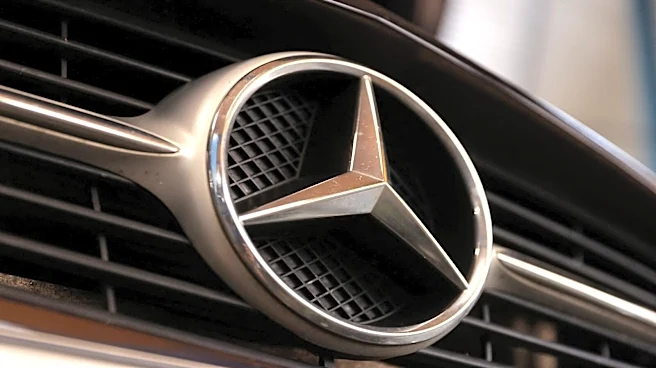
Mercedes-Benz Group is betting on India’s growth potential even as it navigates a challenging global environment, with the luxury carmaker expecting a record year in the country and planning to launch 12 new models in 2026.
The company sold more than 5,400 vehicles in India in the third quarter, marking its best-ever quarterly performance in the market, Chairman Ola Källenius said in an interview with CNBC-TV18. The performance has strengthened the company’s confidence in India, he said.
“I think this is going to be a record year, and there is no doubt that India has more potential for us,” Källenius said.
The company is in the middle of what he described as the biggest product launch offensive in its history, with 12 new models planned for India this year. Mercedes-Benz is also set to introduce the all-electric GLC in Pune, with Källenius saying pre-orders have been stronger than expected.
The India push comes as Mercedes-Benz faces pressure in other markets. The company’s revenue fell 9% last year, while adjusted operating profit declined 15% in the third quarter. It has also lowered its full-year outlook, with China facing a downturn in demand for luxury goods and vehicles.
Källenius said Mercedes-Benz had grown outside China in each of the first three quarters of 2026, supported by new products. The company is responding to the slowdown in China by adapting its products to local demand and expanding research and development activity, rather than retreating from the market.
India strategy spans manufacturing, R&D and technology
Mercedes-Benz’s strategy for India extends beyond selling cars, Källenius said. The company plans to add more models to its manufacturing facility in Pune and grow production in line with market demand.
The company has invested more than ₹3,000 crore in India, according to CNBC-TV18’s interview. Källenius said its current vehicle assembly plans remain focused on serving the Indian market, though the company is already working with Indian suppliers and technology partners for global operations.
“It's not just India for India; it's India for the world, as far as Mercedes is concerned,” he said.
The company’s Bengaluru research and development centre, which is marking 30 years of operations, has become a key part of its global engineering network. The centre has around 10,000 employees and contributes to components and systems used in Mercedes-Benz vehicles worldwide, Källenius said.
He said the company would recruit more talent in artificial intelligence and work with Indian technology partners and start-ups. Technologies developed in India could be tested locally and then deployed across Mercedes-Benz’s global operations.
Källenius also highlighted the role of the Bengaluru team in supporting Mercedes-Benz’s Formula One operations in the UK.
AI to accelerate product development and factory automation
Artificial intelligence is expected to play a growing role in vehicle development and manufacturing, Källenius said.
Mercedes-Benz is working on AI-based tools that could reduce product creation time by up to 30%, allowing engineers to spend more time testing vehicles and factories in virtual environments before physical production begins.
The company is also moving from automation towards what Källenius described as “robotization”, with AI-enabled robots taking on increasingly complex tasks. Initial applications are in logistics, while more sophisticated uses in assembly could expand over the next two to four years.
Källenius rejected the idea that such technologies would simply eliminate jobs, saying workers would move to other tasks as technology changes the nature of work.
EV transition to vary by market
Mercedes-Benz remains committed to zero-emission vehicles, but Källenius said the pace of electrification would differ across markets depending on charging infrastructure, policy and consumer adoption.
The company had previously said it wanted to be ready to go all-electric in markets where conditions allowed by 2030. It will continue to offer electrified combustion-engine vehicles alongside electric models for the foreseeable future, he said.
In India, the company is encouraged by demand for its newer electric vehicles, including the electric CLA and the upcoming electric GLC. Källenius said pre-orders for the models had exceeded expectations.
India-EU trade deal seen as a growth driver
Källenius described the India-European Union free trade agreement as positive for both regions, saying closer economic ties could support business growth.
However, he said the agreement would not fundamentally alter Mercedes-Benz’s strategy for India, which the company already regards as a growth market. Any opportunity for greater cross-border trade would be welcome, he said.
The company’s vehicle assembly plans in Pune remain focused on the Indian market, while its supplier and technology partnerships have already expanded beyond it.
“If and when the premium luxury market takes a step up to the next level, we are prepared with our operations to grow with the market,” Källenius said.