/images/ppid_59c68470-image-177873263865957182.webp)

/images/ppid_59c68470-image-177863753043333509.webp)
/images/ppid_59c68470-image-177869003540399729.webp)
What is the story about?
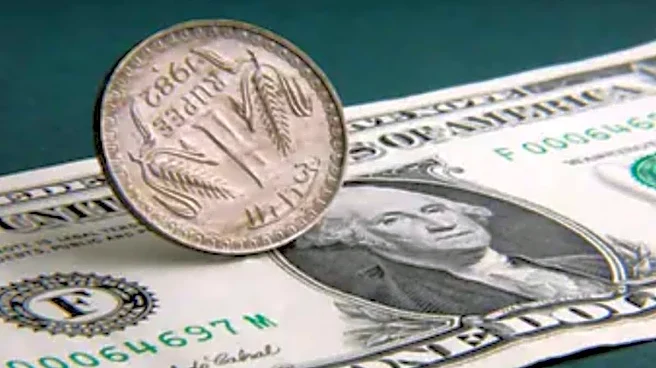
The Indian rupee opened marginally weaker on Thursday, May 14, at 95.73 against the US dollar, compared with Wednesday’s (May 13's) close of 95.71, as elevated crude oil prices and uncertainty around the Iran conflict continued to weigh on sentiment.
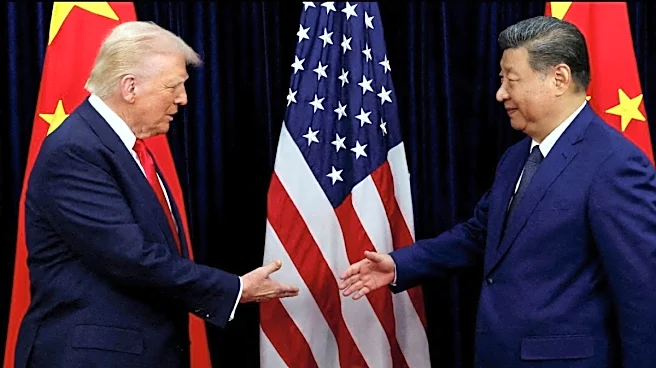
The domestic currency fell by 2 paise in early trade amid persistent oil-linked headwinds that have pressured the rupee for several weeks. Traders said developments related to the Iran war emerging from US President Donald Trump’s visit to China are likely to influence
global crude prices and,
in turn, drive the rupee’s near-term direction.
Brent crude remained largely steady near $106 a barrel as investors awaited a meeting between Trump and Chinese President Xi Jinping, with the Iran conflict expected to dominate discussions.
While Trump has indicated that US efforts to resolve the 11-week-long conflict may not necessarily require China’s support, markets are watching whether Beijing could play a role in easing tensions.
Analysts at ING said the key question for markets is whether the Trump-Xi meeting produces any progress on the Iran issue. According to the brokerage, there is some optimism that China could pressure Tehran to reach an agreement with the US, potentially helping restore energy flows through the Strait of Hormuz.
Any easing in oil prices could provide relief to the rupee, which has come under sustained pressure from India’s rising import bill due to elevated crude prices. The strain has also prompted the Indian government to take measures aimed at conserving foreign exchange reserves.
Prime Minister Narendra Modi has urged restraint on non-essential foreign travel and gold imports, while the government has also increased import duties on bullion to help contain the widening trade deficit.
Analysts warned that persistently high oil prices could significantly expand India’s current account deficit due to higher energy import costs.
Nomura said additional policy measures may be announced in the coming weeks and months to curb imports and reduce pressure on the external account. These could include steps to discourage imports of electronics, tighter rules under the Liberalised Remittance Scheme (LRS), and the possible issuance of diaspora bonds, the brokerage noted.
-With Reuters inputs
The domestic currency fell by 2 paise in early trade amid persistent oil-linked headwinds that have pressured the rupee for several weeks. Traders said developments related to the Iran war emerging from US President Donald Trump’s visit to China are likely to influence
Brent crude remained largely steady near $106 a barrel as investors awaited a meeting between Trump and Chinese President Xi Jinping, with the Iran conflict expected to dominate discussions.
While Trump has indicated that US efforts to resolve the 11-week-long conflict may not necessarily require China’s support, markets are watching whether Beijing could play a role in easing tensions.
Analysts at ING said the key question for markets is whether the Trump-Xi meeting produces any progress on the Iran issue. According to the brokerage, there is some optimism that China could pressure Tehran to reach an agreement with the US, potentially helping restore energy flows through the Strait of Hormuz.
Any easing in oil prices could provide relief to the rupee, which has come under sustained pressure from India’s rising import bill due to elevated crude prices. The strain has also prompted the Indian government to take measures aimed at conserving foreign exchange reserves.
Prime Minister Narendra Modi has urged restraint on non-essential foreign travel and gold imports, while the government has also increased import duties on bullion to help contain the widening trade deficit.
Analysts warned that persistently high oil prices could significantly expand India’s current account deficit due to higher energy import costs.
Nomura said additional policy measures may be announced in the coming weeks and months to curb imports and reduce pressure on the external account. These could include steps to discourage imports of electronics, tighter rules under the Liberalised Remittance Scheme (LRS), and the possible issuance of diaspora bonds, the brokerage noted.
-With Reuters inputs
/images/ppid_59c68470-image-177873516754756331.webp)

/images/ppid_59c68470-image-177882502920381447.webp)
/images/ppid_59c68470-image-177872253423222771.webp)
/images/ppid_59c68470-image-17787450354865433.webp)
/images/ppid_59c68470-image-177886507037891146.webp)
/images/ppid_59c68470-image-177881259940588197.webp)
/images/ppid_59c68470-image-177874763508625688.webp)
/images/ppid_59c68470-image-177874009243914717.webp)