/images/ppid_59c68470-image-178004008927449014.webp)


/images/ppid_59c68470-image-178004009964417782.webp)

What is the story about?
Shares of Wockhardt
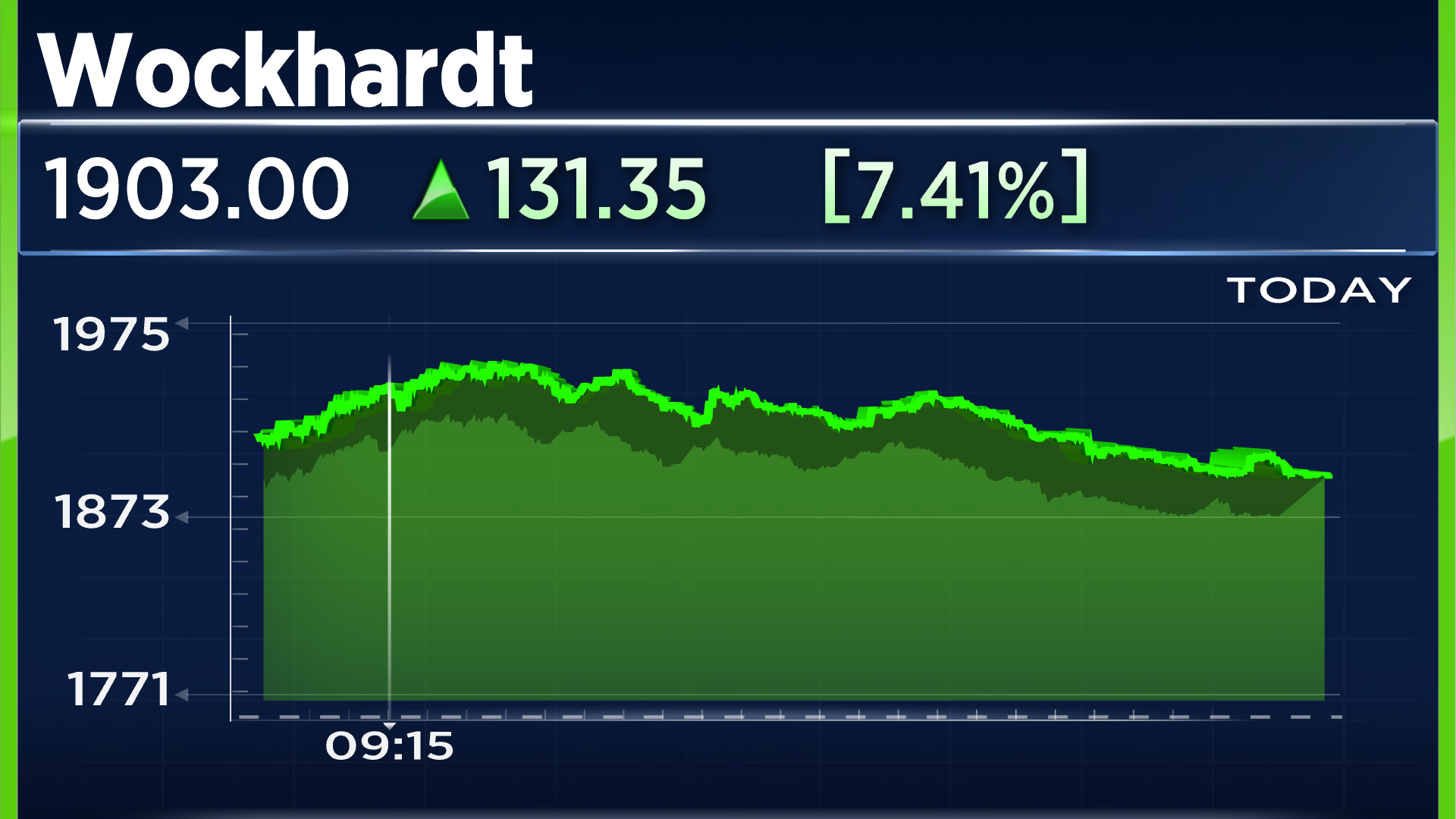
Ltd. climbed over 17% on Friday, May 29, after the company announced that the Central Drugs Standard Control Organisation (CDSCO) has approved the import and marketing of its breakthrough antibiotic Zaynich® (Zidebactam/Cefepime) in India.
The drug has been approved for the treatment of adult patients with complicated urinary tract infections (cUTI), including pyelonephritis, as well as infections accompanied by Gram-negative bacteremia.
According to the company, Zaynich® is an indigenously discovered and developed first-in-class antibiotic designed to tackle drug-resistant Gram-negative infections.
The approval is based on data from the pivotal ENHANCE-1 study, a multinational, randomised, double-blind Phase 3 clinical trial that evaluated the efficacy and safety of Zaynich® against meropenem in patients suffering from cUTI, including pyelonephritis.
Patients in the study were randomised in a 2:1 ratio to receive either Zaynich® or meropenem.
The trial showed that Zaynich® was statistically superior to meropenem on the primary endpoint of clinical cure and microbiological eradication at the test-of-cure visit, which was conducted around 10 days after completion of therapy.
The primary endpoint was achieved in 89% of patients treated with Zaynich®, compared to 68.4% in the meropenem arm, resulting in a treatment difference of 20.6% in favour of Zaynich®.
Among patients who had concurrent bacteremia at baseline, response rates at the test-of-cure visit stood at 89% in the Zaynich® arm, compared to 44% in the meropenem arm, highlighting its potential in severe and high-risk infections.
Before entering the Phase 3 programme, Zaynich® was evaluated in nine Phase 1 studies and a Phase 2 trial involving patients with documented meropenem-resistant Gram-negative infections.
The Phase 2 study was conducted across 15 tertiary care hospitals in India and demonstrated over 97% clinical efficacy across serious infections such as hospital-acquired bacterial pneumonia (HABP), ventilator-associated bacterial pneumonia (VABP), bloodstream infections (BSI), complicated intra-abdominal infections (cIAI), and cUTI.
Wockhardt said these findings highlight Zaynich®'s potential as a life-saving treatment option, especially for carbapenem-resistant infections where currently available therapies such as colistin and polymyxins are associated with high toxicity and limited efficacy.
The company added that Zaynich® is uniquely positioned to address metallo-β-lactamase (MBL)-mediated resistance, one of the most challenging and prevalent resistance mechanisms in India.
The Clinical and Laboratory Standards Institute has also assigned Cefepime/Zidebactam an investigational susceptible breakpoint of 64 mg/L, supporting its potential use against extensively drug-resistant Gram-negative pathogens in critically ill patients.
The drug has been approved for the treatment of adult patients with complicated urinary tract infections (cUTI), including pyelonephritis, as well as infections accompanied by Gram-negative bacteremia.
According to the company, Zaynich® is an indigenously discovered and developed first-in-class antibiotic designed to tackle drug-resistant Gram-negative infections.
The approval is based on data from the pivotal ENHANCE-1 study, a multinational, randomised, double-blind Phase 3 clinical trial that evaluated the efficacy and safety of Zaynich® against meropenem in patients suffering from cUTI, including pyelonephritis.
Patients in the study were randomised in a 2:1 ratio to receive either Zaynich® or meropenem.
The trial showed that Zaynich® was statistically superior to meropenem on the primary endpoint of clinical cure and microbiological eradication at the test-of-cure visit, which was conducted around 10 days after completion of therapy.
The primary endpoint was achieved in 89% of patients treated with Zaynich®, compared to 68.4% in the meropenem arm, resulting in a treatment difference of 20.6% in favour of Zaynich®.
Among patients who had concurrent bacteremia at baseline, response rates at the test-of-cure visit stood at 89% in the Zaynich® arm, compared to 44% in the meropenem arm, highlighting its potential in severe and high-risk infections.
Before entering the Phase 3 programme, Zaynich® was evaluated in nine Phase 1 studies and a Phase 2 trial involving patients with documented meropenem-resistant Gram-negative infections.
The Phase 2 study was conducted across 15 tertiary care hospitals in India and demonstrated over 97% clinical efficacy across serious infections such as hospital-acquired bacterial pneumonia (HABP), ventilator-associated bacterial pneumonia (VABP), bloodstream infections (BSI), complicated intra-abdominal infections (cIAI), and cUTI.
Wockhardt said these findings highlight Zaynich®'s potential as a life-saving treatment option, especially for carbapenem-resistant infections where currently available therapies such as colistin and polymyxins are associated with high toxicity and limited efficacy.
The company added that Zaynich® is uniquely positioned to address metallo-β-lactamase (MBL)-mediated resistance, one of the most challenging and prevalent resistance mechanisms in India.
The Clinical and Laboratory Standards Institute has also assigned Cefepime/Zidebactam an investigational susceptible breakpoint of 64 mg/L, supporting its potential use against extensively drug-resistant Gram-negative pathogens in critically ill patients.
/images/ppid_59c68470-image-17800725304921958.webp)
/images/ppid_59c68470-image-17800651202284662.webp)





/images/ppid_59c68470-image-178023505879617655.webp)
/images/ppid_59c68470-image-178003002438094569.webp)
/images/ppid_59c68470-image-178003504027437744.webp)