/images/ppid_59c68470-image-177943755554978970.webp)



What is the story about?
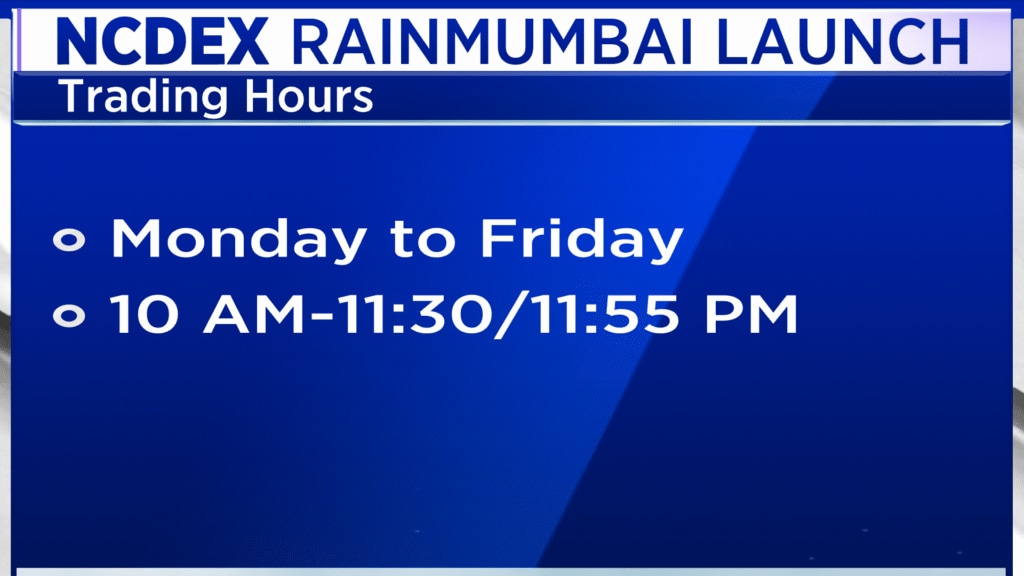
National Commodity and Derivatives Exchange (NCDEX) plans to expand its newly launched weather derivatives business beyond Mumbai rainfall contracts, with products linked to eastern monsoons and temperature variations already under development, according to Managing Director & CEO Arun Raste.
Raste believes climate-linked financial products could become increasingly important as businesses grapple with unpredictable rainfall, heatwaves and crop risks.
Raste said NCDEX is now working on weather products tied to eastern monsoons as well as temperature-linked contracts that could help sectors manage risks from global warming and changing climate patterns. “We are looking at a temperature product which would be possibly used by all the farm sector,” he said.
The move comes shortly after NCDEX launched India’s first rainfall derivative contract based on Mumbai monsoon data. The rainfall index uses 30 years of data from the India Meteorological Department (IMD) and was developed with support from IIT experts. Unlike traditional crop insurance, the product settles purely based on rainfall levels without requiring users to prove losses.
“We said there should be a mechanism to hedge the risk of weather, not only on crops, but anything and everything else related to rain,” Raste said.
The exchange sees demand for these products coming from far beyond agriculture. Hydroelectric companies, fast-moving consumer goods (FMCG) firms, transport operators and even banks financing monsoon-linked sectors could potentially use rainfall derivatives to manage business risks. According to Raste, lenders could particularly benefit as poor monsoons often translate into stress for borrowers and higher non-performing assets (NPAs).
Also Read | India to launch first weather trading contract to help businesses hedge monsoon shocks
NCDEX said the contracts are designed to protect against both deficient and excess rainfall. While weak monsoons can hurt agriculture and power generation, excessive rains can disrupt transport, urban infrastructure and consumption activity in cities like Mumbai.
Raste said the exchange conducted extensive consultations with brokers, banks, farmers and industry participants before launching the product. With nearly half of India’s economy directly or indirectly linked to monsoon activity, NCDEX believes weather derivatives could eventually become an important risk-management tool for businesses across sectors.
Catch all the latest updates from the stock market here
Raste believes climate-linked financial products could become increasingly important as businesses grapple with unpredictable rainfall, heatwaves and crop risks.
Raste said NCDEX is now working on weather products tied to eastern monsoons as well as temperature-linked contracts that could help sectors manage risks from global warming and changing climate patterns. “We are looking at a temperature product which would be possibly used by all the farm sector,” he said.
The move comes shortly after NCDEX launched India’s first rainfall derivative contract based on Mumbai monsoon data. The rainfall index uses 30 years of data from the India Meteorological Department (IMD) and was developed with support from IIT experts. Unlike traditional crop insurance, the product settles purely based on rainfall levels without requiring users to prove losses.
“We said there should be a mechanism to hedge the risk of weather, not only on crops, but anything and everything else related to rain,” Raste said.
The exchange sees demand for these products coming from far beyond agriculture. Hydroelectric companies, fast-moving consumer goods (FMCG) firms, transport operators and even banks financing monsoon-linked sectors could potentially use rainfall derivatives to manage business risks. According to Raste, lenders could particularly benefit as poor monsoons often translate into stress for borrowers and higher non-performing assets (NPAs).
Also Read | India to launch first weather trading contract to help businesses hedge monsoon shocks
NCDEX said the contracts are designed to protect against both deficient and excess rainfall. While weak monsoons can hurt agriculture and power generation, excessive rains can disrupt transport, urban infrastructure and consumption activity in cities like Mumbai.
Raste said the exchange conducted extensive consultations with brokers, banks, farmers and industry participants before launching the product. With nearly half of India’s economy directly or indirectly linked to monsoon activity, NCDEX believes weather derivatives could eventually become an important risk-management tool for businesses across sectors.
Catch all the latest updates from the stock market here






/images/ppid_a911dc6a-image-177917489546940504.webp)