/images/ppid_59c68470-image-177065507049415544.webp)

/images/ppid_59c68470-image-177061003540471716.webp)
/images/ppid_59c68470-image-177060506183573076.webp)

What is the story about?
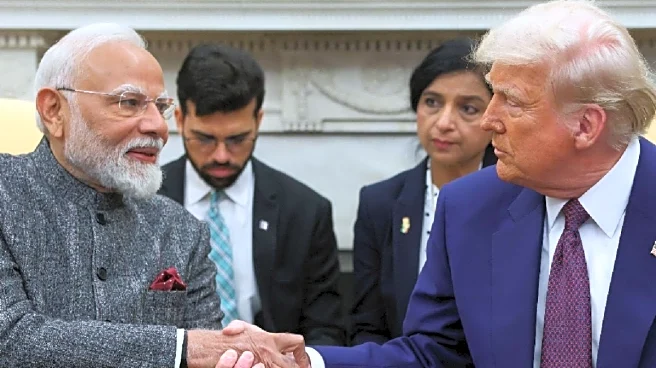
The interim trade deal between India and the United States has delivered immediate relief to two of India’s most export-dependent sectors—textiles and seafood—triggering a sharp rally in textile stocks and raising hopes of a demand revival after months of pressure from steep tariffs and falling orders.
Exporters say the agreement restores India’s price competitiveness in the US market, its single-largest export destination for textiles and a key market for seafood, at a time when both industries were grappling with slowing shipments and job losses.
Textile exporters regain tariff edge
For the textile and apparel sector, the deal has been widely welcomed as a competitiveness reset. With India now facing tariffs of 18%, compared with 20% for key rivals Bangladesh and Vietnam, exporters believe the differential could help India claw back market share lost in recent months.
The relief comes after a particularly difficult period for the industry. Textile exports to the US had fallen over 31% year-on-year in November 2025, leading to production slowdowns and employment cuts across key manufacturing hubs.
Markets responded swiftly to the improved outlook. Shares of major textile exporters such as Gokaldas Exports, Raymond, and Welspun surged as much as 8% in intraday trade, reflecting investor optimism that export volumes and margins could recover in the coming quarters.
Industry executives say US buyers, who had shifted orders to competing countries due to tariff disadvantages, may now reconsider India as a sourcing destination, especially for value-added apparel and home textiles.
Seafood industry sees early signs of revival
The seafood sector, which has been under intense pressure for much of the past year, is also seeing early signs of recovery. Exporters say enquiries have started coming in after a nearly two-month lull, following relief from cumulative tariffs that had crossed 58% at their peak.
The US accounts for about 35% of India’s seafood exports, but shipments had dropped sharply after August, with exporters estimating they had lost nearly 70% of their business in the market over the past several months.
“The trade deal brings much-needed breathing space,” exporters said, adding that while it will take time for shipments to normalise, the agreement could help the industry regain lost ground as price competitiveness improves.
‘Double win’ for seafood exporters
Seafood exporters are also celebrating what they describe as a “double win”, after India’s free trade agreement with the European Union brought down duties on Indian seafood exports to zero, significantly improving access to another key market.
The combination of tariff relief in the US and duty-free access in the EU is expected to improve capacity utilisation, cash flows and confidence across the marine products value chain, particularly among small and mid-sized exporters.
Also Read | Russian oil purchases is not part of the India-US trade deal: Goyal
Government eyes $100 billion export target
Commerce and Industry Minister Piyush Goyal said the trade developments put India on track to double exports of farm and marine products to $100 billion in the years ahead, underlining the government’s focus on using trade agreements to support export-led growth.
For now, markets and exporters alike are viewing the interim India–US trade deal as a near-term positive shock, offering relief to sectors that had borne the brunt of global trade frictions—and providing a potential catalyst for recovery in exports, earnings and jobs.
Exporters say the agreement restores India’s price competitiveness in the US market, its single-largest export destination for textiles and a key market for seafood, at a time when both industries were grappling with slowing shipments and job losses.
Textile exporters regain tariff edge
For the textile and apparel sector, the deal has been widely welcomed as a competitiveness reset. With India now facing tariffs of 18%, compared with 20% for key rivals Bangladesh and Vietnam, exporters believe the differential could help India claw back market share lost in recent months.
The relief comes after a particularly difficult period for the industry. Textile exports to the US had fallen over 31% year-on-year in November 2025, leading to production slowdowns and employment cuts across key manufacturing hubs.
Markets responded swiftly to the improved outlook. Shares of major textile exporters such as Gokaldas Exports, Raymond, and Welspun surged as much as 8% in intraday trade, reflecting investor optimism that export volumes and margins could recover in the coming quarters.
Industry executives say US buyers, who had shifted orders to competing countries due to tariff disadvantages, may now reconsider India as a sourcing destination, especially for value-added apparel and home textiles.
Seafood industry sees early signs of revival
The seafood sector, which has been under intense pressure for much of the past year, is also seeing early signs of recovery. Exporters say enquiries have started coming in after a nearly two-month lull, following relief from cumulative tariffs that had crossed 58% at their peak.
The US accounts for about 35% of India’s seafood exports, but shipments had dropped sharply after August, with exporters estimating they had lost nearly 70% of their business in the market over the past several months.
“The trade deal brings much-needed breathing space,” exporters said, adding that while it will take time for shipments to normalise, the agreement could help the industry regain lost ground as price competitiveness improves.
‘Double win’ for seafood exporters
Seafood exporters are also celebrating what they describe as a “double win”, after India’s free trade agreement with the European Union brought down duties on Indian seafood exports to zero, significantly improving access to another key market.
The combination of tariff relief in the US and duty-free access in the EU is expected to improve capacity utilisation, cash flows and confidence across the marine products value chain, particularly among small and mid-sized exporters.
Also Read | Russian oil purchases is not part of the India-US trade deal: Goyal
Government eyes $100 billion export target
Commerce and Industry Minister Piyush Goyal said the trade developments put India on track to double exports of farm and marine products to $100 billion in the years ahead, underlining the government’s focus on using trade agreements to support export-led growth.
For now, markets and exporters alike are viewing the interim India–US trade deal as a near-term positive shock, offering relief to sectors that had borne the brunt of global trade frictions—and providing a potential catalyst for recovery in exports, earnings and jobs.
/images/ppid_59c68470-image-177062509785292817.webp)


/images/ppid_59c68470-image-177045506769210684.webp)
/images/ppid_59c68470-image-177060753405348279.webp)
/images/ppid_59c68470-image-177046002614398790.webp)
/images/ppid_59c68470-image-177044505982222933.webp)
/images/ppid_59c68470-image-177060756327762255.webp)
/images/ppid_59c68470-image-177060506336869108.webp)