/images/ppid_59c68470-image-178030758318114237.webp)



/images/ppid_59c68470-image-178003754848023178.webp)
What is the story about?
India’s prolonged foreign investor selling is being driven more by short-term cyclical pressures than any permanent loss of confidence in the country’s growth story, according to Arbind Maheswari, Head of India Equities at BofA Securities.
Maheswari believes a large part of the negative news around earnings, geopolitics and global fund flows may already be priced into Indian equities, even as foreign investors continue to pull money out of the market.
“It seems more cyclical-driven rather than a structural reassessment,” Maheswari said while discussing the ongoing foreign institutional investor (FII) outflows from India.
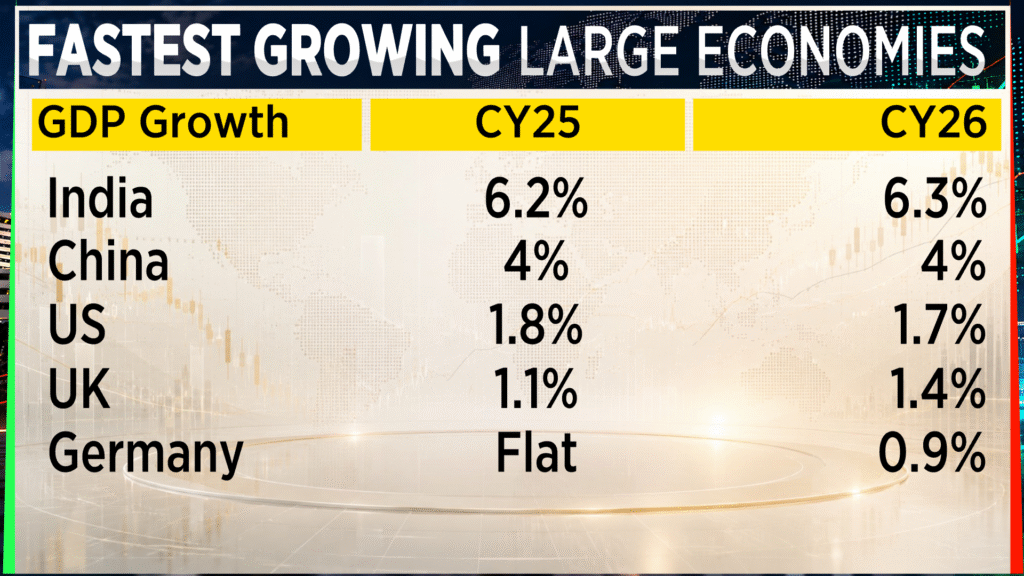
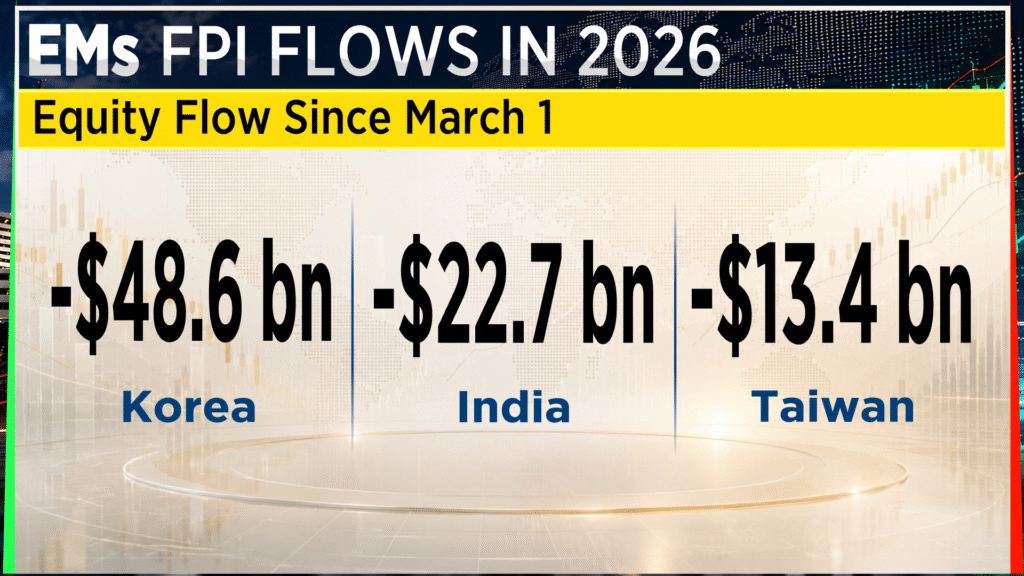
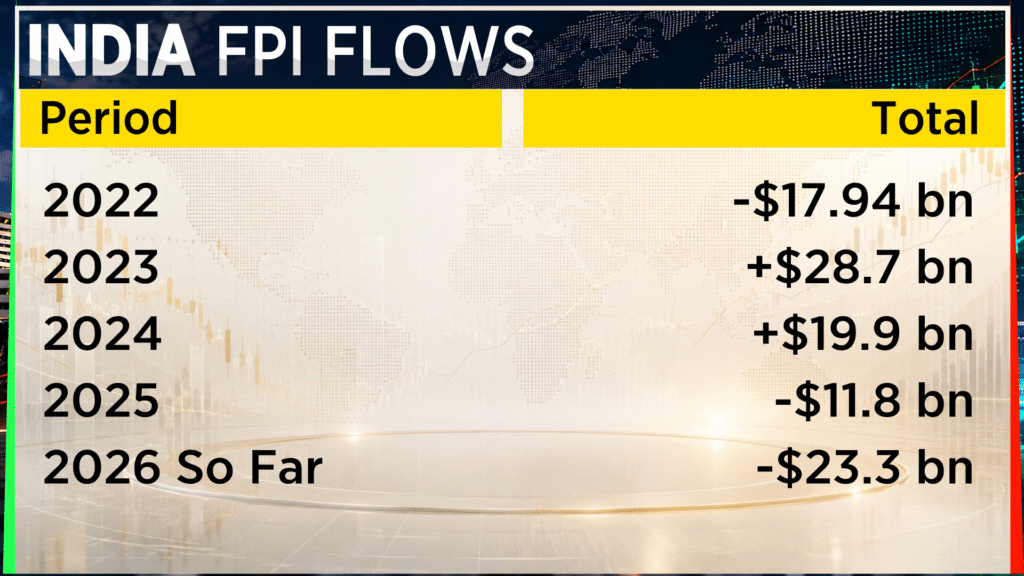
India has seen heavy foreign selling for nearly the last 15-18 months, with investors shifting money towards AI-linked themes in markets such as the US, Taiwan and South Korea. According to Maheswari, India currently sits outside the core global AI investment trade, which has become the dominant driver of equity flows worldwide.
“India has become a bit of a funding market,” he said, referring to the way global investors are using India allocations to fund investments into AI-related sectors elsewhere.
Also Read | India remains a compelling investment destination, says BofA's Vikram Sahu
He added that the recent MSCI rebalancing also led to unusually large selling flows, with nearly $2 billion estimated to have moved out due to index-related adjustments alone.
Despite the near-term weakness, Maheswari said global investor interest in India remains strong. He pointed to the large turnout at BofA’s India conference as evidence that investors are actively looking for fresh opportunities in the country after valuations corrected from earlier highs.
“We have 400 plus investors, which is much higher than where we were last year,” he said.
Also Read | BofA sees limited Nifty upside in 2026, spots new growth themes
According to him, earnings downgrades have clearly hurt sentiment. BofA has reduced its India earnings growth estimates from around 14-15% earlier to nearly 8.5% now, reflecting slower growth in large-cap companies.
Still, Maheswari believes India’s broader economic fundamentals remain resilient. He pointed to strong goods and services tax (GST) collections and stable economic growth as signs that the slowdown is not structural.
“The economy is still growing,” he said, adding that cyclical pressures linked to geopolitics and weaker flows are unlikely to last forever.
He also highlighted that foreign investors are increasingly expecting policy reforms from India, particularly around capital gains taxation. Many competing emerging markets do not levy capital gains tax on foreign investors, which currently makes India less attractive from a global capital allocation perspective.
Watch the full conversation here
At the same time, Maheswari called the rise in domestic investor participation a major positive for Indian markets. He said deeper liquidity has helped absorb large foreign outflows without causing severe market disruption.
Also Read | Fed caught between stagflation and reflation, says BofA
According to him, once geopolitical risks ease and earnings visibility improves, foreign investors could gradually start returning to India in search of new growth opportunities.
Catch all the latest updates from the stock market here
Maheswari believes a large part of the negative news around earnings, geopolitics and global fund flows may already be priced into Indian equities, even as foreign investors continue to pull money out of the market.
“It seems more cyclical-driven rather than a structural reassessment,” Maheswari said while discussing the ongoing foreign institutional investor (FII) outflows from India.
India has seen heavy foreign selling for nearly the last 15-18 months, with investors shifting money towards AI-linked themes in markets such as the US, Taiwan and South Korea. According to Maheswari, India currently sits outside the core global AI investment trade, which has become the dominant driver of equity flows worldwide.
“India has become a bit of a funding market,” he said, referring to the way global investors are using India allocations to fund investments into AI-related sectors elsewhere.
Also Read | India remains a compelling investment destination, says BofA's Vikram Sahu
He added that the recent MSCI rebalancing also led to unusually large selling flows, with nearly $2 billion estimated to have moved out due to index-related adjustments alone.
Despite the near-term weakness, Maheswari said global investor interest in India remains strong. He pointed to the large turnout at BofA’s India conference as evidence that investors are actively looking for fresh opportunities in the country after valuations corrected from earlier highs.
“We have 400 plus investors, which is much higher than where we were last year,” he said.
Also Read | BofA sees limited Nifty upside in 2026, spots new growth themes
According to him, earnings downgrades have clearly hurt sentiment. BofA has reduced its India earnings growth estimates from around 14-15% earlier to nearly 8.5% now, reflecting slower growth in large-cap companies.
Still, Maheswari believes India’s broader economic fundamentals remain resilient. He pointed to strong goods and services tax (GST) collections and stable economic growth as signs that the slowdown is not structural.
“The economy is still growing,” he said, adding that cyclical pressures linked to geopolitics and weaker flows are unlikely to last forever.
He also highlighted that foreign investors are increasingly expecting policy reforms from India, particularly around capital gains taxation. Many competing emerging markets do not levy capital gains tax on foreign investors, which currently makes India less attractive from a global capital allocation perspective.
Watch the full conversation here
At the same time, Maheswari called the rise in domestic investor participation a major positive for Indian markets. He said deeper liquidity has helped absorb large foreign outflows without causing severe market disruption.
Also Read | Fed caught between stagflation and reflation, says BofA
According to him, once geopolitical risks ease and earnings visibility improves, foreign investors could gradually start returning to India in search of new growth opportunities.
Catch all the latest updates from the stock market here


/images/ppid_59c68470-image-178021505031755503.webp)
/images/ppid_59c68470-image-17802875337711675.webp)
/images/ppid_59c68470-image-178029255114332868.webp)
/images/ppid_59c68470-image-178030259158114663.webp)
/images/ppid_a911dc6a-image-178020922360970789.webp)

/images/ppid_59c68470-image-178020252827036625.webp)
/images/ppid_59c68470-image-178003009636832499.webp)
/images/ppid_59c68470-image-178004253745188498.webp)