/images/ppid_59c68470-image-176992013653755298.webp)


/images/ppid_59c68470-image-176976008228355923.webp)
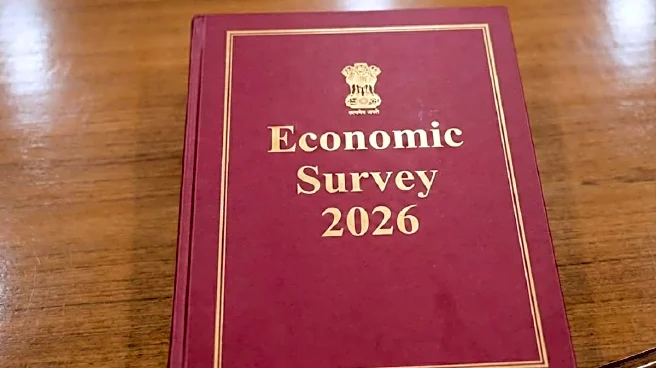
What is the story about?
Textile stocks, including Welspun Living, Gokaldas Exports, Vardhman Textiles, Pearl Global, Trident, among others are in focus on Sunday, February 1, as investors look ahead to the Union Budget 2026.
The spotlight comes at a time when India's textile and apparel exporters are recalibrating their global strategies, helped by recently signed free trade agreements with the EU and the UK.
With export opportunities expanding, the sector is hoping the upcoming Budget will offer meaningful policy support to help companies scale up, protect MSME-led employment, and improve India's competitiveness in global textile supply chains.
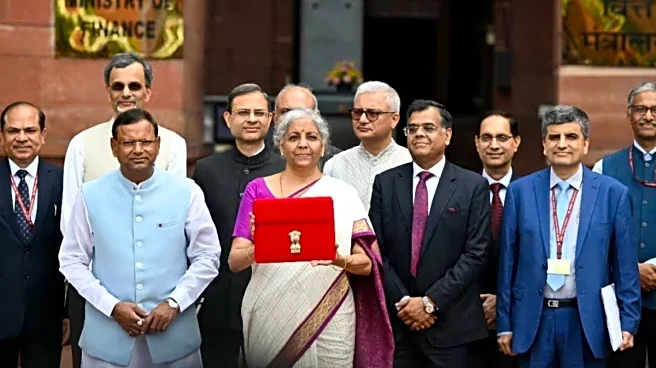
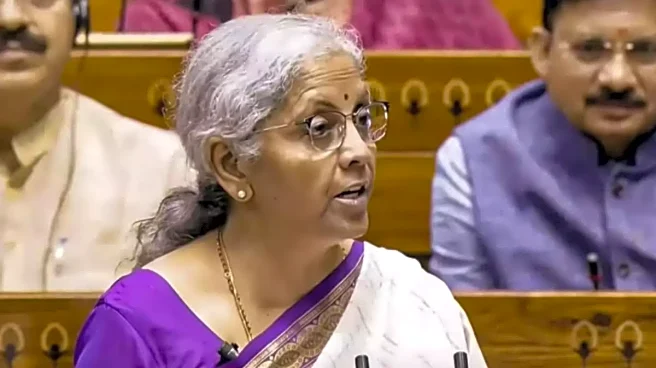
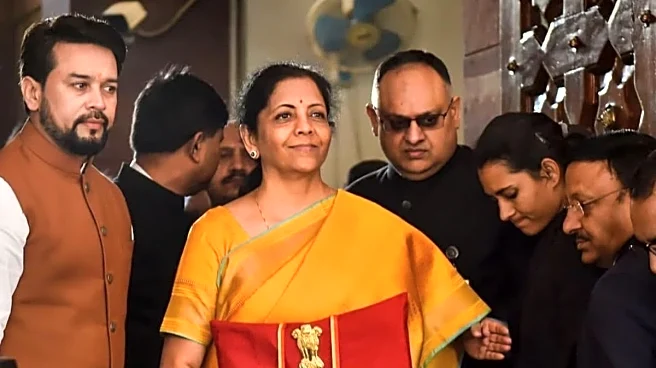
Finance Minister Nirmala Sitharaman will present the Union Budget 2026 in Parliament in New Delhi on February 1, 2026, with expectations that textiles could once again feature prominently in policy announcements.
In the previous Union Budget 2025, the government had placed a strong emphasis on strengthening the textile value chain, beginning at the farm level.
FM Sitharaman had announced a five-year Mission for Cotton Productivity aimed at improving yields, sustainability, and promoting extra-long staple cotton varieties
The initiative promised extensive science and technology support for farmers, with the broader objective of boosting farm incomes while ensuring a steady supply of quality cotton for India's traditional textile industry, in line with the government's integrated 5F vision.
The Budget 2025 had also sought to encourage domestic manufacturing of technical textiles such as agro-textiles, medical textiles and geo-textiles. As part of this push, two additional types of shuttle-less looms were added to the list of fully exempted textile machinery, lowering costs for manufacturers.
Further, customs duty changes were announced last year, with the basic customs duty on knitted fabrics across nine tariff lines revised from 10% or 20% to 20% or ₹115 per kg, whichever was higher. These measures were aimed at protecting domestic producers and supporting value addition within India.
With these policy signals as the backdrop, textile stocks are now being closely watched for cues from Budget 2026, as the sector looks for continuity and fresh incentives to support its next phase of growth.
The spotlight comes at a time when India's textile and apparel exporters are recalibrating their global strategies, helped by recently signed free trade agreements with the EU and the UK.
With export opportunities expanding, the sector is hoping the upcoming Budget will offer meaningful policy support to help companies scale up, protect MSME-led employment, and improve India's competitiveness in global textile supply chains.
Finance Minister Nirmala Sitharaman will present the Union Budget 2026 in Parliament in New Delhi on February 1, 2026, with expectations that textiles could once again feature prominently in policy announcements.
In the previous Union Budget 2025, the government had placed a strong emphasis on strengthening the textile value chain, beginning at the farm level.
FM Sitharaman had announced a five-year Mission for Cotton Productivity aimed at improving yields, sustainability, and promoting extra-long staple cotton varieties
The initiative promised extensive science and technology support for farmers, with the broader objective of boosting farm incomes while ensuring a steady supply of quality cotton for India's traditional textile industry, in line with the government's integrated 5F vision.
The Budget 2025 had also sought to encourage domestic manufacturing of technical textiles such as agro-textiles, medical textiles and geo-textiles. As part of this push, two additional types of shuttle-less looms were added to the list of fully exempted textile machinery, lowering costs for manufacturers.
Further, customs duty changes were announced last year, with the basic customs duty on knitted fabrics across nine tariff lines revised from 10% or 20% to 20% or ₹115 per kg, whichever was higher. These measures were aimed at protecting domestic producers and supporting value addition within India.
With these policy signals as the backdrop, textile stocks are now being closely watched for cues from Budget 2026, as the sector looks for continuity and fresh incentives to support its next phase of growth.
/images/ppid_59c68470-image-176978503297895880.webp)

/images/ppid_59c68470-image-176991506680157076.webp)
/images/ppid_59c68470-image-176991510924099789.webp)


/images/ppid_59c68470-image-176968270118370248.webp)