/images/ppid_59c68470-image-177910256019459800.webp)



What is the story about?
Texmaco Rail & Engineering aims to double its business over the next three to five years as the company expands beyond its traditional railway manufacturing operations into defence, mobility systems and high-value engineering segments, according to Sudipta Mukherjee, MD of the company.
He expects the company’s core business to contribute around 50-55% of the growth trajectory by 2030, while adjacencies and breakout businesses such as defence add to future expansion.
Mukherjee said Texmaco is targeting at least 20% growth in both revenue and profitability from its core business in the current financial year. He added that contributions from newer businesses would come in addition to this growth.
The company said its defence business will focus on differentiated and technology-led products aligned with the government’s indigenisation and Atmanirbhar initiatives. Texmaco has committed an initial investment of around ₹200 crore for the segment. Mukherjee said the company does not intend to enter commodity-style defence manufacturing and instead plans to focus on specialised products.
Apart from defence, Texmaco is also expanding into wheel sets, passenger mobility systems, propulsion systems and power electronics. Mukherjee said the company sees long-term opportunities in railway infrastructure due to the National Rail Plan and increasing focus on freight mobility.
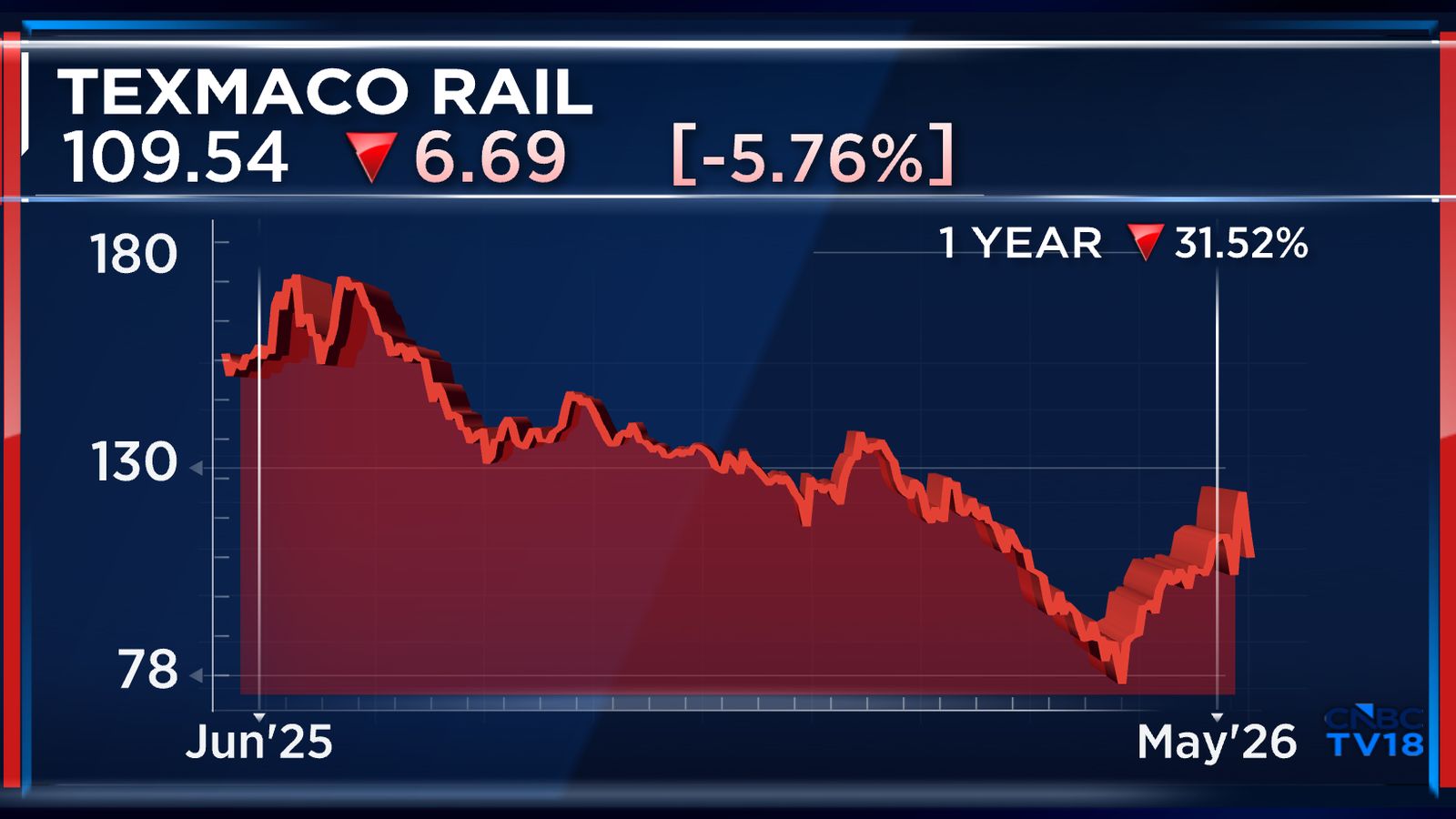
Texmaco Rail & Engineering, which also reported its fourth-quarter earnings for FY26 on May 12, has a market capitalisation of ₹4,457.20 crore and has seen its shares decline more than 31% over the last year.
These are edited excerpts from the interview.Q: Give us a few details, particularly on the new foray into defence. Tell us what kind of capacity are you looking at, what kind of investments you're looking at, and what kind of revenue visibility you have on this front - three to five years hence, what can this business look like?
A: Texmaco’s core businesses have primarily been in and around manufacturing freight rolling stock, foundry castings, and railway electrification infrastructure, primarily, and also some high-tech components. So, if you see the rolling stock business, with all this, we of course find a very decent domestic demand, and we have been the largest supplier and largest manufacturer of freight rolling stocks, and we feel that there will be a good amount of visibility in the coming five to seven years, because we, as a nation, have to catch up on the National Rail Plan, and it is much more relevant in today's geopolitical context that we move more and more on railways.
So other than this, of course, there is a conscious effort by the government to welcome private investment into the sphere, and I'm happy to let you know that today more than 70% of that stake is also with Texmaco. So, we have a good amount of visibility in terms of growth of our core business, and Texmaco is the largest exporter of rolling stocks and railway solutions out of India, and we also have a significant growth forecast in terms of our exports, insofar as our rolling stock, our castings, and our components are concerned.
Also Read | Shadowfax eyes 30% revenue growth over next two years, expects higher profitability from expansion
Third is the infrastructure push by the government, which, from the budget records one can fathom, and we are significantly growing there, both in electrical and regular signalling and other railway infrastructure.
But having said so, the realisation in our growth path, what you have seen in this trajectory, is that we are primarily into a business, which is heavily government-dependent, and of course infrastructure-dependent, and it could sometimes be cyclical.
So, we, as Texmaco, have a robust growth plan, and we want to grow the company into two times in the next three to five years' time. So, we, along with strengthening the core business, also feel that there has to be some more diversification. So, we call it, other than the core, adjacencies, and of course some breakout businesses.
The adjacencies, of course, we are planning to work in and around some components like wheel sets and getting into the passenger mobility ecosystem and into power electronics and propulsion systems and some niche components where we need to develop the ecosystem in India, and defence comes in the breakout business, which again we do not want to enter into the commodity sphere.
That's why it's quite a wide range we have taken, and ₹200 crore is not that significant a number, we know that, but it is the initial commitment with which we are getting into this space. These would be some differentiated products, which should be supported by the government under Atmanirbhar policies, and you already know that there has been a huge investment in developing and indigenising the technology, so we are focusing on coming around that. And these all are higher-beta businesses and in line with the planned objectives.
For the full interview, watch the accompanying videoQ: Just three very simple questions. You expect the revenue to double over the next three to five years, so the incremental ₹4,500 crore that comes in over the next three years — let's break that down. How much of that comes in from your current businesses? How much of that comes in from your adjacencies, the defence business that you spoke about, and even the fact that you've entered into mining, mineral value chains, etc.? So, of the incremental ₹4,500 crore revenue that you get, how much comes in from the new forays that you're making today?
A: I would rather make it simpler for your understanding. In the whole 2x growth trajectory, the core business would contribute around 50-55% by 2030, and the balance growth businesses will be contributing the rest of it.
Also Read | KEC International sees 10-15% FY27 growth despite West Asia, labour challenges
If I have to also give you a further indication on the near-term growth trajectory, we do not believe that whatever we have done in terms of revenue last year and EBITDA is the optimum one around the core business. In the near term, maybe in this fiscal — we are targeting the top line and the bottom line in and around the core business to grow at least 20%, and whatever will be coming from the new businesses will be in addition to that.
Catch all the latest updates from the stock market here
He expects the company’s core business to contribute around 50-55% of the growth trajectory by 2030, while adjacencies and breakout businesses such as defence add to future expansion.
Mukherjee said Texmaco is targeting at least 20% growth in both revenue and profitability from its core business in the current financial year. He added that contributions from newer businesses would come in addition to this growth.
The company said its defence business will focus on differentiated and technology-led products aligned with the government’s indigenisation and Atmanirbhar initiatives. Texmaco has committed an initial investment of around ₹200 crore for the segment. Mukherjee said the company does not intend to enter commodity-style defence manufacturing and instead plans to focus on specialised products.
Apart from defence, Texmaco is also expanding into wheel sets, passenger mobility systems, propulsion systems and power electronics. Mukherjee said the company sees long-term opportunities in railway infrastructure due to the National Rail Plan and increasing focus on freight mobility.
Texmaco Rail & Engineering, which also reported its fourth-quarter earnings for FY26 on May 12, has a market capitalisation of ₹4,457.20 crore and has seen its shares decline more than 31% over the last year.
These are edited excerpts from the interview.Q: Give us a few details, particularly on the new foray into defence. Tell us what kind of capacity are you looking at, what kind of investments you're looking at, and what kind of revenue visibility you have on this front - three to five years hence, what can this business look like?
A: Texmaco’s core businesses have primarily been in and around manufacturing freight rolling stock, foundry castings, and railway electrification infrastructure, primarily, and also some high-tech components. So, if you see the rolling stock business, with all this, we of course find a very decent domestic demand, and we have been the largest supplier and largest manufacturer of freight rolling stocks, and we feel that there will be a good amount of visibility in the coming five to seven years, because we, as a nation, have to catch up on the National Rail Plan, and it is much more relevant in today's geopolitical context that we move more and more on railways.
So other than this, of course, there is a conscious effort by the government to welcome private investment into the sphere, and I'm happy to let you know that today more than 70% of that stake is also with Texmaco. So, we have a good amount of visibility in terms of growth of our core business, and Texmaco is the largest exporter of rolling stocks and railway solutions out of India, and we also have a significant growth forecast in terms of our exports, insofar as our rolling stock, our castings, and our components are concerned.
Also Read | Shadowfax eyes 30% revenue growth over next two years, expects higher profitability from expansion
Third is the infrastructure push by the government, which, from the budget records one can fathom, and we are significantly growing there, both in electrical and regular signalling and other railway infrastructure.
But having said so, the realisation in our growth path, what you have seen in this trajectory, is that we are primarily into a business, which is heavily government-dependent, and of course infrastructure-dependent, and it could sometimes be cyclical.
So, we, as Texmaco, have a robust growth plan, and we want to grow the company into two times in the next three to five years' time. So, we, along with strengthening the core business, also feel that there has to be some more diversification. So, we call it, other than the core, adjacencies, and of course some breakout businesses.
The adjacencies, of course, we are planning to work in and around some components like wheel sets and getting into the passenger mobility ecosystem and into power electronics and propulsion systems and some niche components where we need to develop the ecosystem in India, and defence comes in the breakout business, which again we do not want to enter into the commodity sphere.
That's why it's quite a wide range we have taken, and ₹200 crore is not that significant a number, we know that, but it is the initial commitment with which we are getting into this space. These would be some differentiated products, which should be supported by the government under Atmanirbhar policies, and you already know that there has been a huge investment in developing and indigenising the technology, so we are focusing on coming around that. And these all are higher-beta businesses and in line with the planned objectives.
For the full interview, watch the accompanying videoQ: Just three very simple questions. You expect the revenue to double over the next three to five years, so the incremental ₹4,500 crore that comes in over the next three years — let's break that down. How much of that comes in from your current businesses? How much of that comes in from your adjacencies, the defence business that you spoke about, and even the fact that you've entered into mining, mineral value chains, etc.? So, of the incremental ₹4,500 crore revenue that you get, how much comes in from the new forays that you're making today?
A: I would rather make it simpler for your understanding. In the whole 2x growth trajectory, the core business would contribute around 50-55% by 2030, and the balance growth businesses will be contributing the rest of it.
Also Read | KEC International sees 10-15% FY27 growth despite West Asia, labour challenges
If I have to also give you a further indication on the near-term growth trajectory, we do not believe that whatever we have done in terms of revenue last year and EBITDA is the optimum one around the core business. In the near term, maybe in this fiscal — we are targeting the top line and the bottom line in and around the core business to grow at least 20%, and whatever will be coming from the new businesses will be in addition to that.
Catch all the latest updates from the stock market here