/images/ppid_59c68470-image-178168006216159691.webp)

/images/ppid_59c68470-image-178160502573594320.webp)

/images/ppid_59c68470-image-178159504528342102.webp)


What is the story about?
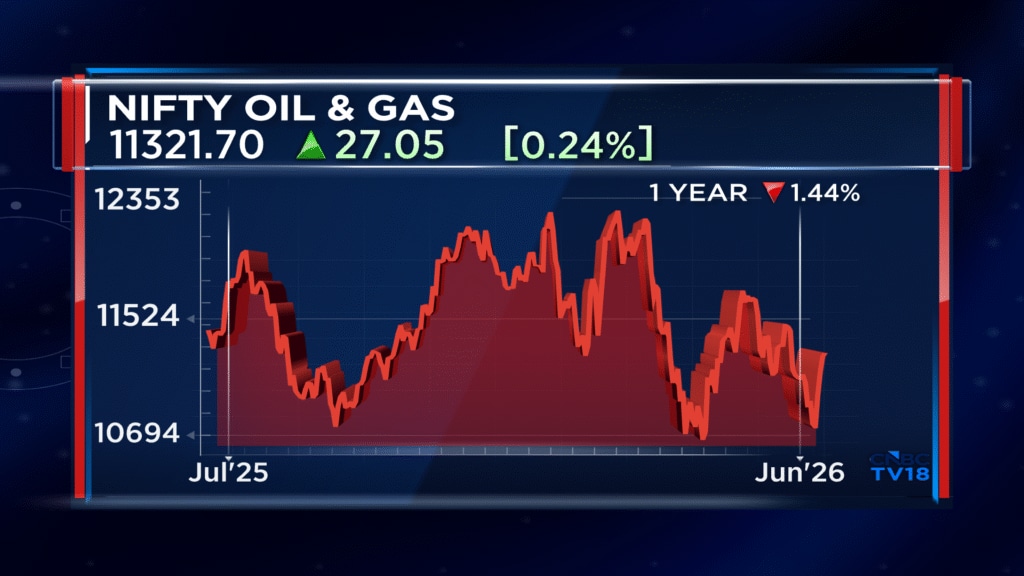
India's oil marketing companies (OMCs) could see a sharp improvement in profitability if lower crude oil prices persist, according to Probal Sen, Senior Research Analyst covering Indian Oil & Gas Sector, Indian Agrichem Sector, Institutional Equities at ICICI Securities.
Sen estimates that a $10 movement downwards in actual product prices can increase annual earnings before interest, taxes, depreciation and amortisation (EBITDA) for each of the three major OMCs by more than ₹20,000 crore.
An over 15% decline in oil prices over just the last six sessions has created a favourable backdrop for companies such as
Indian Oil Corporation (IOC), Bharat Petroleum Corporation (BPCL) and Hindustan Petroleum Corporation
(HPCL). However, Sen believes the market has not yet fully priced in the benefits because some key details of the geopolitical agreement underpinning the fall in oil prices are still being negotiated.
"If we look at our rough calculations, that can completely turn around," Sen said, referring to the earnings outlook for OMCs. He added that IOC and BPCL could see a meaningful improvement in profitability if current energy price trends continue and supply routes normalise.
Another major positive is the potential reduction in LPG losses. According to Sen, the losses borne by OMCs had crossed ₹650 per cylinder at the beginning of May, which could have translated into a quarterly loss of nearly ₹30,000 crore. With energy prices cooling and supplies improving, those losses could begin to moderate.
The benefits are not limited to OMCs. Gas companies could also gain if global LNG supplies improve. Sen expects Qatar's return to the LNG market to ease procurement costs, especially as long-term contracts linked to Brent crude are likely to be cheaper than spot purchases. "Directionally it's a massive positive," he said, noting that global LNG markets are expected to remain well supplied over the next three to five years.
While the outlook for energy companies has improved, Sen cautioned that the agri-input sector remains vulnerable to weather conditions. Fertiliser and agrochemical companies depend heavily on timely sowing activity, and delayed rainfall can disrupt the application window for crop protection products.
Watch the full conversation here
As of now, there is still hope that monsoon rains arrive in time for planting. But if sowing is delayed significantly, agrochemical companies could see weaker demand during a crucial part of the year.
Disclaimer: Network18, the parent company of CNBCTV18.com, is controlled by Independent Media Trust, of which Reliance Industries is the sole beneficiary.

Catch all the latest updates from the stock market here
Sen estimates that a $10 movement downwards in actual product prices can increase annual earnings before interest, taxes, depreciation and amortisation (EBITDA) for each of the three major OMCs by more than ₹20,000 crore.
An over 15% decline in oil prices over just the last six sessions has created a favourable backdrop for companies such as
"If we look at our rough calculations, that can completely turn around," Sen said, referring to the earnings outlook for OMCs. He added that IOC and BPCL could see a meaningful improvement in profitability if current energy price trends continue and supply routes normalise.
Another major positive is the potential reduction in LPG losses. According to Sen, the losses borne by OMCs had crossed ₹650 per cylinder at the beginning of May, which could have translated into a quarterly loss of nearly ₹30,000 crore. With energy prices cooling and supplies improving, those losses could begin to moderate.
The benefits are not limited to OMCs. Gas companies could also gain if global LNG supplies improve. Sen expects Qatar's return to the LNG market to ease procurement costs, especially as long-term contracts linked to Brent crude are likely to be cheaper than spot purchases. "Directionally it's a massive positive," he said, noting that global LNG markets are expected to remain well supplied over the next three to five years.
While the outlook for energy companies has improved, Sen cautioned that the agri-input sector remains vulnerable to weather conditions. Fertiliser and agrochemical companies depend heavily on timely sowing activity, and delayed rainfall can disrupt the application window for crop protection products.
Watch the full conversation here
As of now, there is still hope that monsoon rains arrive in time for planting. But if sowing is delayed significantly, agrochemical companies could see weaker demand during a crucial part of the year.
Disclaimer: Network18, the parent company of CNBCTV18.com, is controlled by Independent Media Trust, of which Reliance Industries is the sole beneficiary.
Catch all the latest updates from the stock market here
/images/ppid_59c68470-image-178172002864316899.webp)

/images/ppid_59c68470-image-17817700252053898.webp)
/images/ppid_59c68470-image-178177008567190508.webp)



/images/ppid_59c68470-image-178163259242637002.webp)