/images/ppid_59c68470-image-178067003560665611.webp)


/images/ppid_a911dc6a-image-178057604456062020.webp)
/images/ppid_59c68470-image-178064753652823472.webp)
What is the story about?
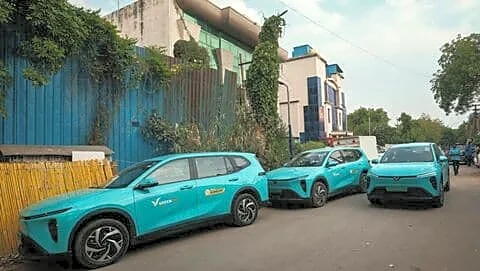
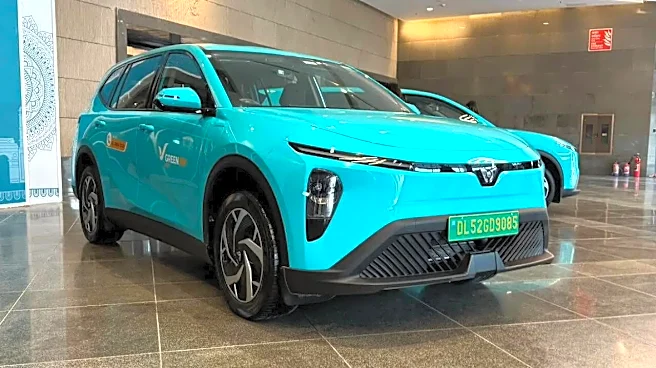
A new global player has officially entered India’s $15-billion ride-hailing market, attempting to revive the all-electric fleet dream with a heavily standardized, asset-heavy blueprint. Backed by EV manufacturer VinFast, Green SM has commenced operations in Delhi-NCR using a fleet-optimized, 7-seater electric MPV platform.
The timing is deliberate. Stepping into the vacuum left just over a year ago by the collapse of India's homegrown EV cab pioneer, Green SM is directly targeting traditional industry pain points by offering fares starting at an estimated ₹8/km with a strict policy of zero surge pricing.
The Pricing & Driver Strategy
Unlike the gig-worker model utilised by traditional ride-hailing giants, Green SM operates an asset-heavy, fleet-managed system. To stabilize operations and ensure service standardisation, the company directly employs its drivers, offering a guaranteed monthly income of ₹35,000 to ₹50,000+.
When questioned about competing in a brutally price-sensitive market against established players like Ola and Uber, Bach Tuan Anh, CEO, Green SM India, stated:"We are very clear that our pricing will be reasonable and affordable for Indian consumers. At this initial stage, we are not entering India with a purely competitive mindset. We are here to provide an additional mobility option for Indian consumers—whether they are travelling for work, leisure, or daily commutes within the city."
Addressing the unsustainable driver friction that has historically plagued the Indian ride-hailing sector, Tuan Anh emphasized their focus on driver security:
"We provide a guaranteed income for drivers of up to ₹35,000 per month, subject to meeting certain requirements. After the launch phase, total driver earnings can reach ₹50,000 per month or even more."
Navigating the Shadow of Past EV Failures
The asset-heavy EV cab model has previously humbled players in India, with past failures often tied to complex related-party vehicle sourcing. Because Green SM exclusively sources its fleet from its strategic partner, VinFast, questions regarding long-term structural viability naturally arise.
Addressing these challenges and how Green SM plans to avoid a similar fate, Tuan Anh noted:"Before entering India, we spent a significant amount of time studying the market, understanding the operating environment and learning from experiences in other countries... With our operational model and the experience we have built over the past three years in Vietnam, the Philippines, Indonesia and Laos, we believe we have the capability to succeed in India."
When pressed on unit economics, operational break-even points, and fleet utilization rates, the company remained focused on immediate execution rather than premature financial milestones. "Right now, our focus is on stabilising the model first. We are concentrating on building a strong driver network, strengthening our core business operations and ensuring service quality. At this stage, those are our immediate priorities."
The 15,000-Vehicle Roadmap
Green SM is launching with an initial footprint of 1,000 cabs across Gurgaon, Delhi, and Noida. However, the brand’s ambitions are aggressive, targeting a rapid scale-up to 15,000 vehicles by the end of the year before expanding its footprint southward to Bengaluru and Hyderabad.
Regarding the speed of the fleet expansion, Tuan Anh concluded:"Our first priority is to expand the fleet sufficiently so that customer waiting times remain as low as possible. From there, we will continue to evaluate actual demand and customer travel patterns. Based on that demand, we will gradually increase the number of vehicles in the fleet through the remainder of the year."
While India's ride-hailing landscape is littered with the wreckage of companies that couldn't crack the delicate balance of driver retention and passenger pricing, Green SM is banking on its cross-border operational playbook to build a sustainable business on Indian roads.
The timing is deliberate. Stepping into the vacuum left just over a year ago by the collapse of India's homegrown EV cab pioneer, Green SM is directly targeting traditional industry pain points by offering fares starting at an estimated ₹8/km with a strict policy of zero surge pricing.
The Pricing & Driver Strategy
Unlike the gig-worker model utilised by traditional ride-hailing giants, Green SM operates an asset-heavy, fleet-managed system. To stabilize operations and ensure service standardisation, the company directly employs its drivers, offering a guaranteed monthly income of ₹35,000 to ₹50,000+.
When questioned about competing in a brutally price-sensitive market against established players like Ola and Uber, Bach Tuan Anh, CEO, Green SM India, stated:"We are very clear that our pricing will be reasonable and affordable for Indian consumers. At this initial stage, we are not entering India with a purely competitive mindset. We are here to provide an additional mobility option for Indian consumers—whether they are travelling for work, leisure, or daily commutes within the city."
Addressing the unsustainable driver friction that has historically plagued the Indian ride-hailing sector, Tuan Anh emphasized their focus on driver security:
"We provide a guaranteed income for drivers of up to ₹35,000 per month, subject to meeting certain requirements. After the launch phase, total driver earnings can reach ₹50,000 per month or even more."
Navigating the Shadow of Past EV Failures
The asset-heavy EV cab model has previously humbled players in India, with past failures often tied to complex related-party vehicle sourcing. Because Green SM exclusively sources its fleet from its strategic partner, VinFast, questions regarding long-term structural viability naturally arise.
Addressing these challenges and how Green SM plans to avoid a similar fate, Tuan Anh noted:"Before entering India, we spent a significant amount of time studying the market, understanding the operating environment and learning from experiences in other countries... With our operational model and the experience we have built over the past three years in Vietnam, the Philippines, Indonesia and Laos, we believe we have the capability to succeed in India."
When pressed on unit economics, operational break-even points, and fleet utilization rates, the company remained focused on immediate execution rather than premature financial milestones. "Right now, our focus is on stabilising the model first. We are concentrating on building a strong driver network, strengthening our core business operations and ensuring service quality. At this stage, those are our immediate priorities."
The 15,000-Vehicle Roadmap
Green SM is launching with an initial footprint of 1,000 cabs across Gurgaon, Delhi, and Noida. However, the brand’s ambitions are aggressive, targeting a rapid scale-up to 15,000 vehicles by the end of the year before expanding its footprint southward to Bengaluru and Hyderabad.
Regarding the speed of the fleet expansion, Tuan Anh concluded:"Our first priority is to expand the fleet sufficiently so that customer waiting times remain as low as possible. From there, we will continue to evaluate actual demand and customer travel patterns. Based on that demand, we will gradually increase the number of vehicles in the fleet through the remainder of the year."
While India's ride-hailing landscape is littered with the wreckage of companies that couldn't crack the delicate balance of driver retention and passenger pricing, Green SM is banking on its cross-border operational playbook to build a sustainable business on Indian roads.