/images/ppid_59c68470-image-178956766586516813.webp)


/images/ppid_59c68470-image-178965256025712739.webp)
What is the story about?
India’s semiconductor sector could attract cumulative private and industry investments of around ₹5-6 lakh crore over the next five to seven years, as the country moves towards building a broader semiconductor manufacturing and supply-chain ecosystem, according to Ashok Chandak, President, SEMI India.
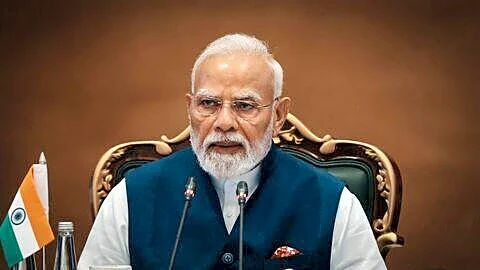
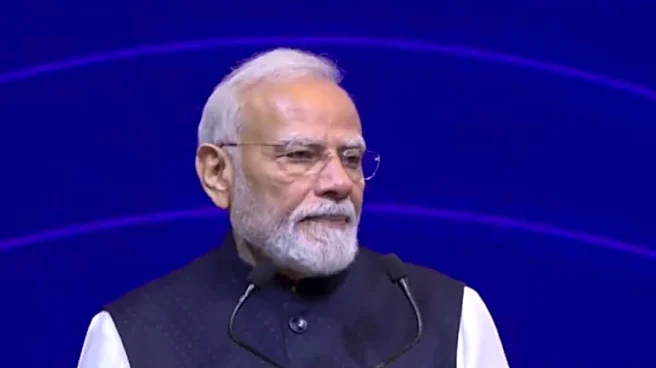
Prime Minister Narendra Modi is set to inaugurate Semicon India 2026 in New Delhi on September 17. The three-day event will bring together more than 600 exhibitors from 52 countries, with this year’s theme centred on “Silicon to Systems: Building the Ecosystem”, highlighting India’s focus on developing a broader semiconductor ecosystem.
Chandak added, “India is moving from announcements to execution with the policy credibility and industrial capability. India's ecosystem now is beginning to connect. This I see as the biggest flywheel opportunity where the design leading to IP and a startup, manufacturing and a packaging, component electronics, domestic demand, exports, all are driving and helping, reinforcing each other.”
The investment opportunity is expected to extend across chip design, fabrication, assembly and testing, equipment, materials, research and development, and talent development. Chandak said industry estimates point to more than 300 fabless chip companies, over seven fabs and around 15-20 additional OSAT facilities emerging in India over the next few years. He clarified that these are industry estimates and not firm commitments.
Read Here | India's semiconductor sector draws $1.4 billion funding, half of it since 2025
The sector could also see more than 50 equipment and materials companies and around 10-15 semiconductor R&D centres, according to the estimates shared by Chandak.
Chandak identified outsourced semiconductor assembly and testing (OSAT) as one of the near-term opportunities for India, given the relatively shorter gestation period for such projects. He also said India needs to leverage its strength in semiconductor design and engineering to move towards creating products and intellectual property.
Talent development is another key area, particularly as the global semiconductor industry is expected to face a shortage of skilled professionals. India’s large engineering talent pool could help address this requirement, he said.
The broader supply chain also offers opportunities for Indian companies. Local firms could become suppliers to global semiconductor equipment manufacturers by developing components and subsystems. Semiconductor-grade chemicals and gases are another area where domestic companies could expand, provided they can achieve the required purity levels.
Chandak also highlighted strong global interest in India, with international companies participating in the sector’s ecosystem-building efforts. He expects the combination of Semicon 2.0, private investment and global participation to support the semiconductor industry’s expansion over the longer term.
For full interview, watch accompanying video
Prime Minister Narendra Modi is set to inaugurate Semicon India 2026 in New Delhi on September 17. The three-day event will bring together more than 600 exhibitors from 52 countries, with this year’s theme centred on “Silicon to Systems: Building the Ecosystem”, highlighting India’s focus on developing a broader semiconductor ecosystem.
Chandak added, “India is moving from announcements to execution with the policy credibility and industrial capability. India's ecosystem now is beginning to connect. This I see as the biggest flywheel opportunity where the design leading to IP and a startup, manufacturing and a packaging, component electronics, domestic demand, exports, all are driving and helping, reinforcing each other.”
The investment opportunity is expected to extend across chip design, fabrication, assembly and testing, equipment, materials, research and development, and talent development. Chandak said industry estimates point to more than 300 fabless chip companies, over seven fabs and around 15-20 additional OSAT facilities emerging in India over the next few years. He clarified that these are industry estimates and not firm commitments.
Read Here | India's semiconductor sector draws $1.4 billion funding, half of it since 2025
The sector could also see more than 50 equipment and materials companies and around 10-15 semiconductor R&D centres, according to the estimates shared by Chandak.
Chandak identified outsourced semiconductor assembly and testing (OSAT) as one of the near-term opportunities for India, given the relatively shorter gestation period for such projects. He also said India needs to leverage its strength in semiconductor design and engineering to move towards creating products and intellectual property.
Talent development is another key area, particularly as the global semiconductor industry is expected to face a shortage of skilled professionals. India’s large engineering talent pool could help address this requirement, he said.
The broader supply chain also offers opportunities for Indian companies. Local firms could become suppliers to global semiconductor equipment manufacturers by developing components and subsystems. Semiconductor-grade chemicals and gases are another area where domestic companies could expand, provided they can achieve the required purity levels.
Chandak also highlighted strong global interest in India, with international companies participating in the sector’s ecosystem-building efforts. He expects the combination of Semicon 2.0, private investment and global participation to support the semiconductor industry’s expansion over the longer term.
For full interview, watch accompanying video