/images/ppid_59c68470-image-178184758136328105.webp)





What is the story about?
India's macroeconomic outlook could improve in the coming months as lower crude oil prices and a government initiative aimed at attracting non-resident Indian (NRI) deposits support the country's external position, according to Robert Subbaraman, Head of Global Macro Research at Nomura Singapore.
Subbaraman said Nomura expects the measures to attract overseas deposits of nearly $55 billion, helping reverse the pressure on India's balance of payments. Combined with lower oil prices, the inflows could reduce inflation, support economic growth and strengthen the rupee.
Subbaraman also highlighted that the sharp decline in crude oil prices from around $100 per barrel to nearly $80 per barrel is likely to benefit India more than most major economies because of its dependence on imported crude. "It's not just a 10% drop; it's a 20% drop. So, this can significantly improve India's fundamentals going forward," he said.
On concerns around artificial intelligence and its impact on technology services companies, Subbaraman acknowledged that software stocks have faced pressure. However, he said wider adoption of AI should eventually improve productivity globally as the technology becomes more widely integrated into business operations.
This is an edited transcript of the interview.Q: While last week we were talking about West Asia, the crisis, geopolitical concerns, and all of that, it seems like a large part of it is perhaps behind us now. The concerns are again around artificial intelligence, the impact that it could have on IT services, legacy IT companies, etc. We've seen the case of that in Accenture's results overnight. The stock was down 17%. Their managed services business, which corresponds directly to the Indian IT pack, was down about 15% as well. How much worse can it get for the IT pack before there are some signs of them pivoting and growing again? A: On the AI side, clearly software stocks have been hit by that, but on the other hand, as more of the AI gets adopted, we will, over time, see productivity gains as it becomes more of a general-purpose technology. And that's what the new Fed chair is very focused on, and that will not just be a US thing; it will be a global thing.
But, just getting back to how the Strait of Hormuz is opening up, I did want to make the point that the work we've done at Nomura, looking across all the major economies, shows that India is one of the economies that benefits most from this drop in oil prices. We've seen a very big drop, from around $100 per barrel to now around $80 per barrel. That's a 20% drop. India is the one that, out of all the major economies, benefits significantly. As a rule of thumb, a 10% drop in oil prices can reduce India's current account deficit (CAD) as a share of GDP by 0.5 percentage points, and it can reduce inflation by about 0.5% as well. So, it boosts growth and is a big thing. It's not just a 10% drop; it's a 20% drop. So, this can significantly improve India's fundamentals going forward.
Q: As someone pointed out, the question on capital flows and outflows have been a problem even before the war started. The Iran war added one more element to the macro issue, which is oil, not FDI so much, but at a net level, FDI flows have been pretty poor. Of course, there have been lots of exits because the market and the retail bid have been so strong, so, foreigners have been able to take money out. Do you think some of that also settles down? And that kind of goes back to the broader question of what else is doing better, right? Because capital will look for the highest rate of return.A: The highest rate of return, but also fundamentals. And I talked about how I think if oil prices stay around these levels, it is going to improve India's fundamentals.
India's balance of payments has deteriorated significantly in the last couple of months. There has been a current account deficit and net capital outflows. We do think this new government scheme that's focused on bolstering the capital account and attracting inflows from non-resident Indians with sweetened deposit rates is going to be significant. We think it could attract as much as $55 billion, and we think that is going to swing India's balance of payments deficit into a surplus in the coming months. This scheme is only in place until the end of September. So, there's a window to take advantage of it, and we think non-resident Indians will respond in a big way, and there's a huge diaspora for that.
You add that to this positive news around oil prices and India's current account deficit coming down. Inflation, over time, will come down. It's positive for growth. That, plus capital inflows, can change the dynamic, and we could start to see this negative spiral we've seen turn into more of a positive spiral, particularly if we start to see the rupee begin to appreciate more against the dollar, which has not been happening for a very long time.
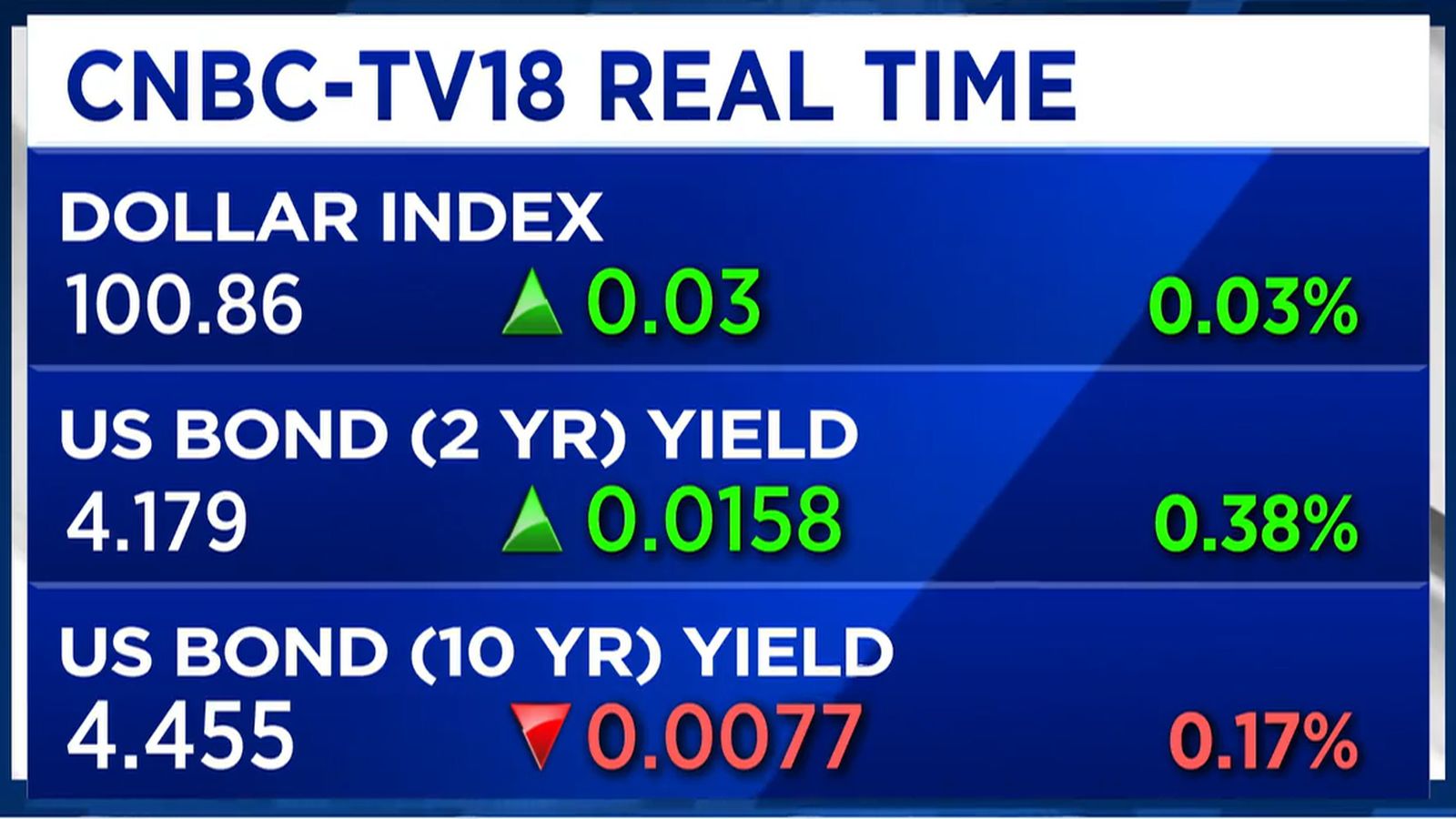
Q: I wanted your comment on what you made of the Fed chairman, Kevin Warsh, who spoke for the first time and was crisp, but it seems he was leaning more towards the hawkish side. What do you make of his speech? And also, when are you factoring in the Fed rate hike? October is what most are talking about. Do you think it comes in?A: So, for the Fed, there was no forward guidance. It was only mentioning that we will focus on price stability, and I'd agree with you that, overall, it was hawkish, and the markets reacted that way. The inflation forecasts by the FOMC members were revised up. Nine out of the 18 FOMC members see a rate hike this year. I think eight out of those nine see more than one rate hike, but we would say that Warsh, in the press conference, was neutral to maybe even slightly dovish with many of his comments.
And so, we do still think there is a political element here ahead of the midterms. To your question, the Nomura forecast right now is still for the Fed to remain on hold this year, but clearly there is a rising risk that there could be a hike. However, we think politics is important. Oil prices and US gasoline prices are starting to come down. Warsh has said he's going to be more forward-looking, and over time, if this Strait of Hormuz stays open, you could see US inflation start to roll over, and he will focus then more on the AI productivity gains, which will be disinflationary.
So, we're at this stage comfortable with the Fed-on-hold call, but clearly the risk is tilted towards a hike. The last thing I would say is that, with little forward guidance, the risk for markets is more surprises. We've been spoiled with so much forward guidance given by the Fed in the last two or three decades. That's going to be changing, and so we have to brace ourselves for potentially more surprises.
For the full interview, watch the accompanying videoCatch all the latest updates from the stock market here
Subbaraman said Nomura expects the measures to attract overseas deposits of nearly $55 billion, helping reverse the pressure on India's balance of payments. Combined with lower oil prices, the inflows could reduce inflation, support economic growth and strengthen the rupee.
Subbaraman also highlighted that the sharp decline in crude oil prices from around $100 per barrel to nearly $80 per barrel is likely to benefit India more than most major economies because of its dependence on imported crude. "It's not just a 10% drop; it's a 20% drop. So, this can significantly improve India's fundamentals going forward," he said.
On concerns around artificial intelligence and its impact on technology services companies, Subbaraman acknowledged that software stocks have faced pressure. However, he said wider adoption of AI should eventually improve productivity globally as the technology becomes more widely integrated into business operations.
This is an edited transcript of the interview.Q: While last week we were talking about West Asia, the crisis, geopolitical concerns, and all of that, it seems like a large part of it is perhaps behind us now. The concerns are again around artificial intelligence, the impact that it could have on IT services, legacy IT companies, etc. We've seen the case of that in Accenture's results overnight. The stock was down 17%. Their managed services business, which corresponds directly to the Indian IT pack, was down about 15% as well. How much worse can it get for the IT pack before there are some signs of them pivoting and growing again? A: On the AI side, clearly software stocks have been hit by that, but on the other hand, as more of the AI gets adopted, we will, over time, see productivity gains as it becomes more of a general-purpose technology. And that's what the new Fed chair is very focused on, and that will not just be a US thing; it will be a global thing.
But, just getting back to how the Strait of Hormuz is opening up, I did want to make the point that the work we've done at Nomura, looking across all the major economies, shows that India is one of the economies that benefits most from this drop in oil prices. We've seen a very big drop, from around $100 per barrel to now around $80 per barrel. That's a 20% drop. India is the one that, out of all the major economies, benefits significantly. As a rule of thumb, a 10% drop in oil prices can reduce India's current account deficit (CAD) as a share of GDP by 0.5 percentage points, and it can reduce inflation by about 0.5% as well. So, it boosts growth and is a big thing. It's not just a 10% drop; it's a 20% drop. So, this can significantly improve India's fundamentals going forward.
Q: As someone pointed out, the question on capital flows and outflows have been a problem even before the war started. The Iran war added one more element to the macro issue, which is oil, not FDI so much, but at a net level, FDI flows have been pretty poor. Of course, there have been lots of exits because the market and the retail bid have been so strong, so, foreigners have been able to take money out. Do you think some of that also settles down? And that kind of goes back to the broader question of what else is doing better, right? Because capital will look for the highest rate of return.A: The highest rate of return, but also fundamentals. And I talked about how I think if oil prices stay around these levels, it is going to improve India's fundamentals.
India's balance of payments has deteriorated significantly in the last couple of months. There has been a current account deficit and net capital outflows. We do think this new government scheme that's focused on bolstering the capital account and attracting inflows from non-resident Indians with sweetened deposit rates is going to be significant. We think it could attract as much as $55 billion, and we think that is going to swing India's balance of payments deficit into a surplus in the coming months. This scheme is only in place until the end of September. So, there's a window to take advantage of it, and we think non-resident Indians will respond in a big way, and there's a huge diaspora for that.
You add that to this positive news around oil prices and India's current account deficit coming down. Inflation, over time, will come down. It's positive for growth. That, plus capital inflows, can change the dynamic, and we could start to see this negative spiral we've seen turn into more of a positive spiral, particularly if we start to see the rupee begin to appreciate more against the dollar, which has not been happening for a very long time.
Q: I wanted your comment on what you made of the Fed chairman, Kevin Warsh, who spoke for the first time and was crisp, but it seems he was leaning more towards the hawkish side. What do you make of his speech? And also, when are you factoring in the Fed rate hike? October is what most are talking about. Do you think it comes in?A: So, for the Fed, there was no forward guidance. It was only mentioning that we will focus on price stability, and I'd agree with you that, overall, it was hawkish, and the markets reacted that way. The inflation forecasts by the FOMC members were revised up. Nine out of the 18 FOMC members see a rate hike this year. I think eight out of those nine see more than one rate hike, but we would say that Warsh, in the press conference, was neutral to maybe even slightly dovish with many of his comments.
And so, we do still think there is a political element here ahead of the midterms. To your question, the Nomura forecast right now is still for the Fed to remain on hold this year, but clearly there is a rising risk that there could be a hike. However, we think politics is important. Oil prices and US gasoline prices are starting to come down. Warsh has said he's going to be more forward-looking, and over time, if this Strait of Hormuz stays open, you could see US inflation start to roll over, and he will focus then more on the AI productivity gains, which will be disinflationary.
So, we're at this stage comfortable with the Fed-on-hold call, but clearly the risk is tilted towards a hike. The last thing I would say is that, with little forward guidance, the risk for markets is more surprises. We've been spoiled with so much forward guidance given by the Fed in the last two or three decades. That's going to be changing, and so we have to brace ourselves for potentially more surprises.
For the full interview, watch the accompanying videoCatch all the latest updates from the stock market here






/images/ppid_a911dc6a-image-178185355692421062.webp)

/images/ppid_a911dc6a-image-178185352936586414.webp)
/images/ppid_a911dc6a-image-178185286006026616.webp)