/images/ppid_59c68470-image-177893503238332477.webp)

/images/ppid_59c68470-image-177885753283174303.webp)
/images/ppid_59c68470-image-177894503943539914.webp)

What is the story about?
Indian infrastructure developer, Welspun Enterprises' Managing Director Sandeep Garg, said the company expects 15–20% revenue growth in the future, supported by a consolidated order book of nearly ₹20,000 crore, including ₹5,000 crore from operations and maintenance projects.
Speaking after the company reported its January–March 2026 quarter earnings on May 14, Garg said, “The revenue visibility is right there,” while maintaining earnings before interest, taxes, depreciation, and amortisation (EBITDA) margin guidance of 18% plus.
He said annualised EBITDA margins remained above 22%, but management chose to stay cautious because inflation-linked cost escalation clauses may not fully offset rising costs. Garg added that Welspun Enterprises received over ₹100 crore in collections during the fourth quarter from pending Jal Jeevan Mission-related projects. “We are hopeful that we will be able to complete these projects and get the revenue before the year-end,” he said.
Welspun Enterprises also said labour availability has started improving after disruptions linked to migration and earlier supply challenges. The company further indicated that it currently has no immediate plans for fresh fundraising despite having approval for a ₹1,000 crore enabling resolution.
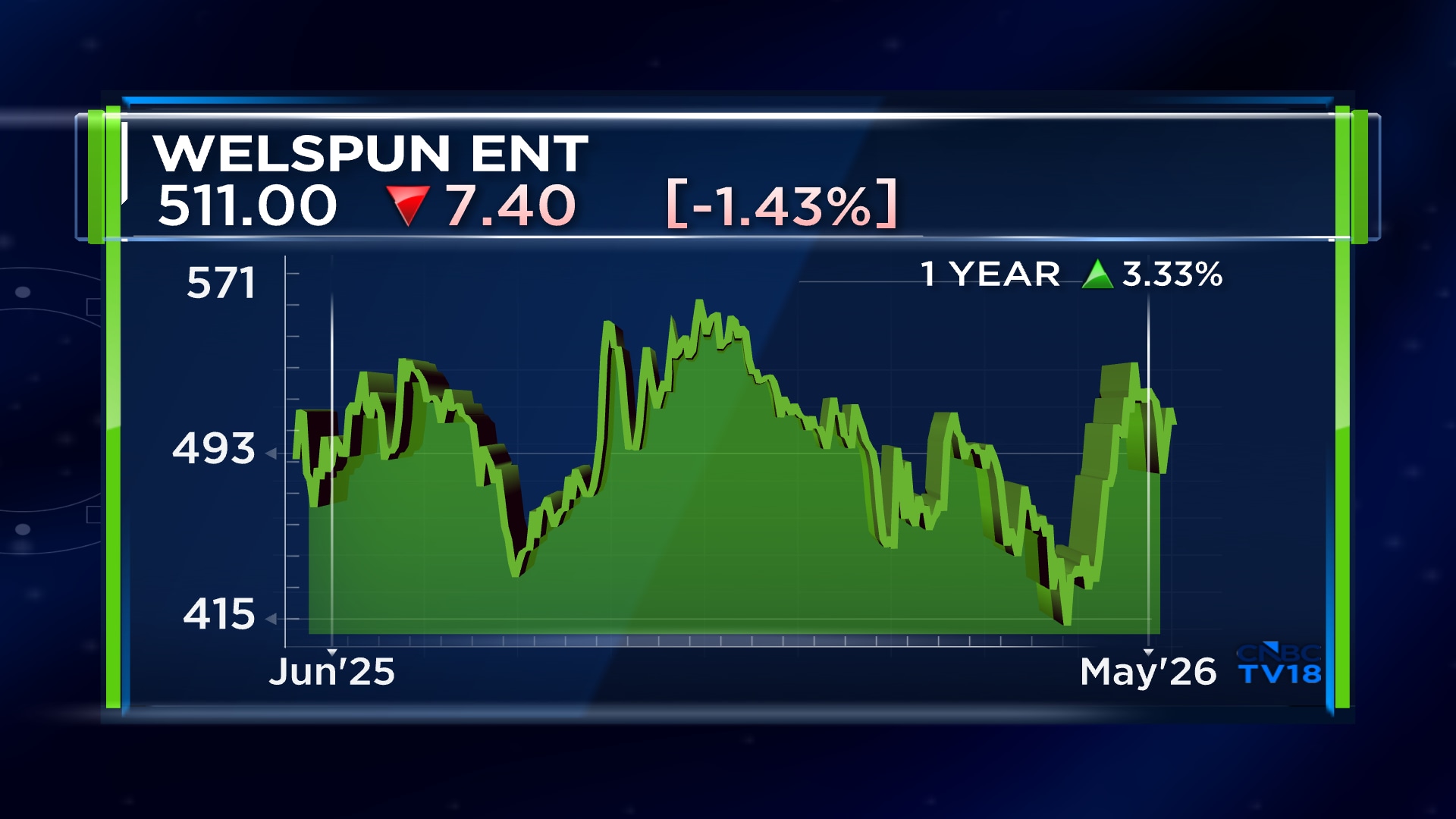
The company, which has a market capitalisation of ₹7,066.03 crore, has seen its shares rise around 3% over the past year.
This is an edited transcript of the interview.Q: 15 to 20% growth is what you're talking about. That's gettable, or do you believe that things are a little bit sketchy? Also, if you could help us out with margins — last quarter, you did around 20%. Now you are guiding for around 18%, so what are you factoring in out there? And just one more word with regard to the receivables position, because on some of your projects a few quarters ago, it wasn't coming. Have things improved?
A: Talking about the revenue growth, as we have received the award for the Pune Shirur project, the order book is very healthy. It stands at around ₹20,000 crore at the consolidated level, including ₹5,000 crore of O&M. So, the revenue visibility is right there. Q4 has been a very reassuring quarter. So, we believe that our focus on execution excellence is paying off. The EBITDA margins, on an annualised basis, of about 22.5% plus give us confidence in the healthy order book in terms of profitability. Although we are doing very well right now, we would want to give guidance of anything between 15 to 20% on revenue. And on an EBITDA level, we will continue with a cautious guidance of 18% plus.
Coming to the collection side of the business, I think the Uttar Pradesh Jal Jeevan Mission (UP JJM) was what we referred to at that point in time. I'm happy to share that in Q4, we did receive funds of about ₹100 crore plus, and we believe that there is an assurance at the topmost level that these projects will be financially supported. We are moving forward to completing these projects as soon as we can.
So, the extension of time for the projects has been received till December 2026, and we are hopeful that we will be able to complete these projects and get the revenue before the year-end.
Also Read | Welspun Enterprises confident of ₹10,000 crore orders in FY26 as project pipeline builds
Q: You ended last year with margins of above 20%, but now you're saying you're taking a cautious call on it, with 18% margin guidance for FY27. Is it because you operate on fixed EPC contracts and costs have gone up, so you've got to absorb it? What's gone behind this guidance cut — not cut, but lowering of guidance versus last year?
A: There are a couple of things. Although most of our projects do have a WPI-CPI-linked compensation for increased costs, we are not so much exposed to these variations. But the WPI-CPI mechanism may not cover 100% of the cost increase, so we are cautious of that situation. And as I said, I would also want to say that we are being cautious here - 18% plus, so the plus can be anything. Hopefully, we will be able to meet our past performances, all things falling into place.
Q: Is labour a problem?
A: Labour was a problem because of the challenges, both in terms of workers' ability to sustain themselves and the lack of some gas or LPG availability. Their experience during COVID and the knee-jerk response led to a certain exodus of labour. However, we are trying to manage this as best as we can, along with the industry. The elections at that point in time did not help either, because there was migration because of that as well. I believe that labour is now coming back, and hopefully things will improve going forward.
Q: What percentage - if there's any way to tell — and I'm not looking for an exact number. In Mumbai, for example, anecdotally, we hear lots of construction sites are not operational because of labour issues and other issues as well. Any sense of how much of the projects are affected by this labour issue?
A: Currently, we are not largely affected in Mumbai. But overall, I would think labour shortages are contributing to about 5 to 7% of the labour not being available at certain sites. In certain sites, it could rise as high as 10 to 12%.
Q: I wanted to ask you about this enabling resolution for a fundraise of around ₹1,000 crore. Are we likely to hear something about it? I recall, I think, the promoter entity has taken some warrants as well. Do they want to participate more? Give us some colour on the fundraise plan. And where are the promoters satisfied in terms of their holding in the company? They're already at around 56%. Do they want to go up more?
A: This question belongs to the promoters. For the enabling resolution, it is just an enabling one. Currently, there are no plans for any further fundraise.
As you may be aware, there is an ongoing warrant issue of ₹1,000 crore, out of which ₹250 crore have been received. So, we have an ability to call for ₹750 crore over 18 months from the time of announcing the warrant issue.
We are a liquid company. We are currently at about ₹1,725 crore of consolidated cash. We see a lot of opportunity unfolding going forward, and that is why we keep preparing. We are also focused on an asset-light model. So, we have a couple of projects, which are completed and which we believe will throw up an equity return.
Also Read | JSW Steel and Radico Khaitan top Motilal Oswal's buy list after strong earnings
So, we are fully funded at this point in time. But should there be an opportunity that we have not factored in that may unfold, we would like to have an enabling provision so that we can quickly ramp up, should there be a need.
For the full interview, watch the accompanying videoQ: You have the JV with the Adani Group - 35% out there, and that's in an interesting segment, oil and gas exploration as well. Could you tell us what the plan is out there? If you could quantify, what are the assets over there? Do you all have a plan to get that JV up and going in the next two to three years?
A: These are very interesting times in terms of where we are. The geopolitical situation has focused attention on the fact that energy security is a crucial issue. We do have gas in place of about 1.1 TCF in a cluster of three blocks. The country expects a rise from about 200 million standard cubic metres consumption of gas to about 300 million up to 2030. So, there is going to be demand coming in.
We are in a position to produce from there in about two to two-and-a-half years from now, subject to a couple of things that the government is right now seized with. One issue is the sharing of infrastructure that is available so that there can be early monetisation. We expect another government focus to bring results in a very short time. Subject to our FDP approval, we would want to produce in FY29.
Speaking after the company reported its January–March 2026 quarter earnings on May 14, Garg said, “The revenue visibility is right there,” while maintaining earnings before interest, taxes, depreciation, and amortisation (EBITDA) margin guidance of 18% plus.
He said annualised EBITDA margins remained above 22%, but management chose to stay cautious because inflation-linked cost escalation clauses may not fully offset rising costs. Garg added that Welspun Enterprises received over ₹100 crore in collections during the fourth quarter from pending Jal Jeevan Mission-related projects. “We are hopeful that we will be able to complete these projects and get the revenue before the year-end,” he said.
Welspun Enterprises also said labour availability has started improving after disruptions linked to migration and earlier supply challenges. The company further indicated that it currently has no immediate plans for fresh fundraising despite having approval for a ₹1,000 crore enabling resolution.
The company, which has a market capitalisation of ₹7,066.03 crore, has seen its shares rise around 3% over the past year.
This is an edited transcript of the interview.Q: 15 to 20% growth is what you're talking about. That's gettable, or do you believe that things are a little bit sketchy? Also, if you could help us out with margins — last quarter, you did around 20%. Now you are guiding for around 18%, so what are you factoring in out there? And just one more word with regard to the receivables position, because on some of your projects a few quarters ago, it wasn't coming. Have things improved?
A: Talking about the revenue growth, as we have received the award for the Pune Shirur project, the order book is very healthy. It stands at around ₹20,000 crore at the consolidated level, including ₹5,000 crore of O&M. So, the revenue visibility is right there. Q4 has been a very reassuring quarter. So, we believe that our focus on execution excellence is paying off. The EBITDA margins, on an annualised basis, of about 22.5% plus give us confidence in the healthy order book in terms of profitability. Although we are doing very well right now, we would want to give guidance of anything between 15 to 20% on revenue. And on an EBITDA level, we will continue with a cautious guidance of 18% plus.
Coming to the collection side of the business, I think the Uttar Pradesh Jal Jeevan Mission (UP JJM) was what we referred to at that point in time. I'm happy to share that in Q4, we did receive funds of about ₹100 crore plus, and we believe that there is an assurance at the topmost level that these projects will be financially supported. We are moving forward to completing these projects as soon as we can.
So, the extension of time for the projects has been received till December 2026, and we are hopeful that we will be able to complete these projects and get the revenue before the year-end.
Also Read | Welspun Enterprises confident of ₹10,000 crore orders in FY26 as project pipeline builds
Q: You ended last year with margins of above 20%, but now you're saying you're taking a cautious call on it, with 18% margin guidance for FY27. Is it because you operate on fixed EPC contracts and costs have gone up, so you've got to absorb it? What's gone behind this guidance cut — not cut, but lowering of guidance versus last year?
A: There are a couple of things. Although most of our projects do have a WPI-CPI-linked compensation for increased costs, we are not so much exposed to these variations. But the WPI-CPI mechanism may not cover 100% of the cost increase, so we are cautious of that situation. And as I said, I would also want to say that we are being cautious here - 18% plus, so the plus can be anything. Hopefully, we will be able to meet our past performances, all things falling into place.
Q: Is labour a problem?
A: Labour was a problem because of the challenges, both in terms of workers' ability to sustain themselves and the lack of some gas or LPG availability. Their experience during COVID and the knee-jerk response led to a certain exodus of labour. However, we are trying to manage this as best as we can, along with the industry. The elections at that point in time did not help either, because there was migration because of that as well. I believe that labour is now coming back, and hopefully things will improve going forward.
Q: What percentage - if there's any way to tell — and I'm not looking for an exact number. In Mumbai, for example, anecdotally, we hear lots of construction sites are not operational because of labour issues and other issues as well. Any sense of how much of the projects are affected by this labour issue?
A: Currently, we are not largely affected in Mumbai. But overall, I would think labour shortages are contributing to about 5 to 7% of the labour not being available at certain sites. In certain sites, it could rise as high as 10 to 12%.
Q: I wanted to ask you about this enabling resolution for a fundraise of around ₹1,000 crore. Are we likely to hear something about it? I recall, I think, the promoter entity has taken some warrants as well. Do they want to participate more? Give us some colour on the fundraise plan. And where are the promoters satisfied in terms of their holding in the company? They're already at around 56%. Do they want to go up more?
A: This question belongs to the promoters. For the enabling resolution, it is just an enabling one. Currently, there are no plans for any further fundraise.
As you may be aware, there is an ongoing warrant issue of ₹1,000 crore, out of which ₹250 crore have been received. So, we have an ability to call for ₹750 crore over 18 months from the time of announcing the warrant issue.
We are a liquid company. We are currently at about ₹1,725 crore of consolidated cash. We see a lot of opportunity unfolding going forward, and that is why we keep preparing. We are also focused on an asset-light model. So, we have a couple of projects, which are completed and which we believe will throw up an equity return.
Also Read | JSW Steel and Radico Khaitan top Motilal Oswal's buy list after strong earnings
So, we are fully funded at this point in time. But should there be an opportunity that we have not factored in that may unfold, we would like to have an enabling provision so that we can quickly ramp up, should there be a need.
For the full interview, watch the accompanying videoQ: You have the JV with the Adani Group - 35% out there, and that's in an interesting segment, oil and gas exploration as well. Could you tell us what the plan is out there? If you could quantify, what are the assets over there? Do you all have a plan to get that JV up and going in the next two to three years?
A: These are very interesting times in terms of where we are. The geopolitical situation has focused attention on the fact that energy security is a crucial issue. We do have gas in place of about 1.1 TCF in a cluster of three blocks. The country expects a rise from about 200 million standard cubic metres consumption of gas to about 300 million up to 2030. So, there is going to be demand coming in.
We are in a position to produce from there in about two to two-and-a-half years from now, subject to a couple of things that the government is right now seized with. One issue is the sharing of infrastructure that is available so that there can be early monetisation. We expect another government focus to bring results in a very short time. Subject to our FDP approval, we would want to produce in FY29.
/images/ppid_59c68470-image-177909761013323079.webp)

/images/ppid_59c68470-image-177907252831960362.webp)

/images/ppid_59c68470-image-177909518904794041.webp)
/images/ppid_59c68470-image-177910504065892475.webp)

/images/ppid_59c68470-image-177910252903766647.webp)