



What is the story about?
Pixxel co-founder and CEO Awais Ahmed has rejected online claims that the Bengaluru-based spacetech startup is not Indian. In a 1,580-word post on X on November 2, he said, “First, Pixxel is Indian-HQed, Indian owned, Indian-managed and Indian-controlled.”
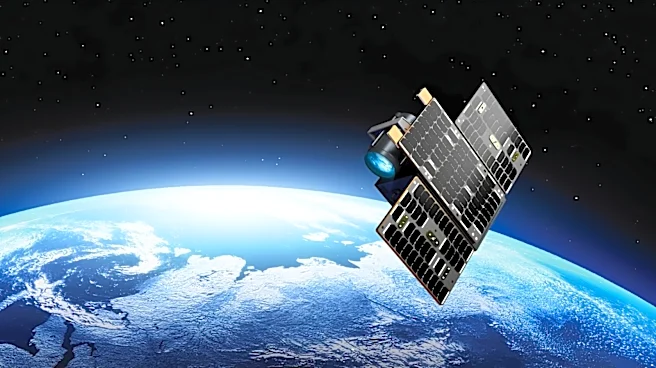
Pixxel announced on October 29 that it had set up Pixxel Federal, a US subsidiary, to tap American defence and intelligence business. The company's hyperspectral satellites capture images across many wavelengths, which gives more detail than conventional satellite imagery.
Soon after, social media users claimed Pixxel was never headquartered in India and had always been a US company. They also questioned whether it could properly serve Indian defence institutions, including under the Innovations for Defence Excellence (iDEX) initiative.
Ahmed Hits Back
Ahmed, 28, a BITS Pilani graduate, spoke of “targeted attacks on Twitter”, “anonymous emails to our government customers and repeated attempts to cast doubt on our ownership, technology and credentials”.
He said co-founder Kshitij Khandelwal had been branded a traitor and accused of “selling our soul”, of “being bought by American PE” and of running a company where “CIA is running Pixxel”.
He said, “As an Indian born to a muslim family, having my nationality and patriotism questioned is unfortunately nothing new. I've seen this before. But I will not stand by while lies are spread about a company we've spent eight years building..”
On incorporation, Ahmed said the Indian entity was set up in 2018, before any international entity. The US entity followed in 2019. “Yes, we incorporated a US entity too, a few months after our Indian entity, to serve American and international customers,” he said.
On intellectual property (IP), he said, “All IP developed for Indian government projects is held in India, under Indian ownership and control.” No foreign entity has ownership or decision-making authority over these programmes.
On Pixxel Federal, he said the newly announced board and CEO are only for the US government-focused subsidiary and have no control over Pixxel's Indian operations or government programmes.
He added that entities in different countries are needed to work in regulated industries, because of national security, export controls, licensing and customer confidentiality.
The company said a foreign presence does not automatically subject Indian-designed satellites and their IP to US export restrictions, though it acknowledged that foreign-origin components and technologies carry compliance requirements.
Pixxel has many foreign investors. Ahmed said its corporate structure will be disclosed when it launches an IPO in India in a few years.
“We are a private company and we haven't put out our exact corporate structure anywhere yet. All I can say is that not a single public snapshot of our corporate structure is completely accurate,” he said.
Rivalry Resurfaces
On November 1, rival spacetech startup GalaxEye, led by Suyash Sinha, published a long blog on X titled “Built in India, Headquartered in India: The GalaxEye Story”.
It did not name Pixxel, but people in the sector linked the two. It said, “Every contract and every bid we have applied for has come from a single entity: GalaxEye.” It added that GalaxEye had avoided setting up multiple companies to win projects.
The two startups have clashed before. In February 2024, Sinha wrote a blog titled “Is space-based Hyperspectral imagery just a pipe dream today?” It did not name Pixxel either, but Pixxel is the only Indian startup offering hyperspectral imagery.
Sinha argued that hyperspectral imagery helps agriculture and mining but may not meet defence and security needs, which he said call for combining data from multiple sensors. GalaxEye is developing such technology.
The blog was widely shared, including on WhatsApp groups. A few days later, Ahmed addressed Sinha in a closed WhatsApp group of space tech founders and scientists. He said that bringing other companies down “doesn't help anyone as we're trying to take off as a country”.
Export Control Fears
Beyond the dispute, Moneycontrol reported that experts see a wider risk for spacetech firms with US operations. They said such firms can face US export controls, compliance mandates and investor pressure, which could expose them to US-directed data blackouts and operational restrictions during conflicts. Pixxel declined to comment when the publication first approached it. Ahmed has now addressed these concerns in his post.
Funding and Business
Pixxel recently raised $100 million in a Series C round co-led by Temasek and Seraphim, taking its total funding to $195 million. In 2022, after a pre-seed round, it raised a $27 million Series A led by Radical Ventures. In 2023, it secured a $36 million Series B, with Google (Alphabet) as an investor.
Pixxel has six Firefly hyperspectral satellites in orbit. Ahmed told businessline earlier that the company serves 35-40 customers through Firefly. Government contracts bring in about 75% of revenue and commercial enterprises the other 25%.
GalaxEye Space was spun out of IIT Madras in 2021 and has raised roughly $26–$34 million. It is building Earth observation satellites that combine Synthetic Aperture Radar and optical payloads.
Pixxel announced on October 29 that it had set up Pixxel Federal, a US subsidiary, to tap American defence and intelligence business. The company's hyperspectral satellites capture images across many wavelengths, which gives more detail than conventional satellite imagery.
300+
Indians have spent years of their lives building satellites and critical technology for this country. They deserve better than having their work and patriotism questioned by manufactured controversies.
I owe them a response. Here it is: https://t.co/vZnnwus4LP
— Awais Ahmed (@awaisahmedna) November 2, 2026
Soon after, social media users claimed Pixxel was never headquartered in India and had always been a US company. They also questioned whether it could properly serve Indian defence institutions, including under the Innovations for Defence Excellence (iDEX) initiative.
Ahmed Hits Back
Ahmed, 28, a BITS Pilani graduate, spoke of “targeted attacks on Twitter”, “anonymous emails to our government customers and repeated attempts to cast doubt on our ownership, technology and credentials”.
He said co-founder Kshitij Khandelwal had been branded a traitor and accused of “selling our soul”, of “being bought by American PE” and of running a company where “CIA is running Pixxel”.
He said, “As an Indian born to a muslim family, having my nationality and patriotism questioned is unfortunately nothing new. I've seen this before. But I will not stand by while lies are spread about a company we've spent eight years building..”
On incorporation, Ahmed said the Indian entity was set up in 2018, before any international entity. The US entity followed in 2019. “Yes, we incorporated a US entity too, a few months after our Indian entity, to serve American and international customers,” he said.
On intellectual property (IP), he said, “All IP developed for Indian government projects is held in India, under Indian ownership and control.” No foreign entity has ownership or decision-making authority over these programmes.
On Pixxel Federal, he said the newly announced board and CEO are only for the US government-focused subsidiary and have no control over Pixxel's Indian operations or government programmes.
He added that entities in different countries are needed to work in regulated industries, because of national security, export controls, licensing and customer confidentiality.
The company said a foreign presence does not automatically subject Indian-designed satellites and their IP to US export restrictions, though it acknowledged that foreign-origin components and technologies carry compliance requirements.
Pixxel has many foreign investors. Ahmed said its corporate structure will be disclosed when it launches an IPO in India in a few years.
“We are a private company and we haven't put out our exact corporate structure anywhere yet. All I can say is that not a single public snapshot of our corporate structure is completely accurate,” he said.
Rivalry Resurfaces
On November 1, rival spacetech startup GalaxEye, led by Suyash Sinha, published a long blog on X titled “Built in India, Headquartered in India: The GalaxEye Story”.
It did not name Pixxel, but people in the sector linked the two. It said, “Every contract and every bid we have applied for has come from a single entity: GalaxEye.” It added that GalaxEye had avoided setting up multiple companies to win projects.
The two startups have clashed before. In February 2024, Sinha wrote a blog titled “Is space-based Hyperspectral imagery just a pipe dream today?” It did not name Pixxel either, but Pixxel is the only Indian startup offering hyperspectral imagery.
Sinha argued that hyperspectral imagery helps agriculture and mining but may not meet defence and security needs, which he said call for combining data from multiple sensors. GalaxEye is developing such technology.
The blog was widely shared, including on WhatsApp groups. A few days later, Ahmed addressed Sinha in a closed WhatsApp group of space tech founders and scientists. He said that bringing other companies down “doesn't help anyone as we're trying to take off as a country”.
Export Control Fears
Beyond the dispute, Moneycontrol reported that experts see a wider risk for spacetech firms with US operations. They said such firms can face US export controls, compliance mandates and investor pressure, which could expose them to US-directed data blackouts and operational restrictions during conflicts. Pixxel declined to comment when the publication first approached it. Ahmed has now addressed these concerns in his post.
Funding and Business
Pixxel recently raised $100 million in a Series C round co-led by Temasek and Seraphim, taking its total funding to $195 million. In 2022, after a pre-seed round, it raised a $27 million Series A led by Radical Ventures. In 2023, it secured a $36 million Series B, with Google (Alphabet) as an investor.
Pixxel has six Firefly hyperspectral satellites in orbit. Ahmed told businessline earlier that the company serves 35-40 customers through Firefly. Government contracts bring in about 75% of revenue and commercial enterprises the other 25%.
GalaxEye Space was spun out of IIT Madras in 2021 and has raised roughly $26–$34 million. It is building Earth observation satellites that combine Synthetic Aperture Radar and optical payloads.