



What is the story about?
Foreign portfolio investors (FPIs) appear to be rediscovering value in Indian equities after withdrawing billions of dollars from the world’s fifth-largest stock market over the past two years.
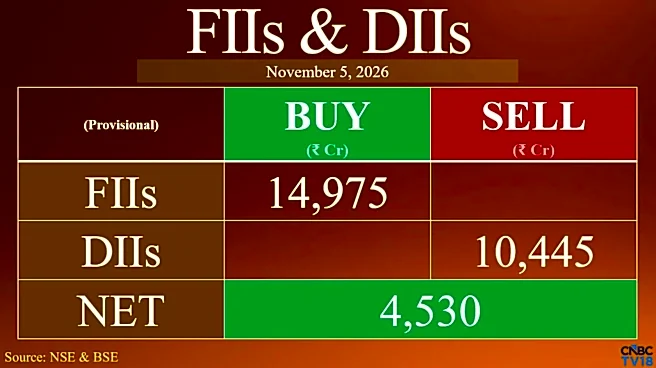
In a strong signal of renewed foreign investor interest, FPIs bought nearly ₹15,000 crore worth of shares on Thursday, marking their biggest single-day purchase since September 20, 2024, when they invested ₹15,181 crore, according to provisional exchange data.
In contrast, domestic institutional investors (DIIs) sold shares worth ₹10,445 crore on Thursday. However, domestic investors have remained a strong counterbalance to foreign outflows, pumping nearly ₹6.7 lakh crore, or $71 billion, into Indian equities so far this year.
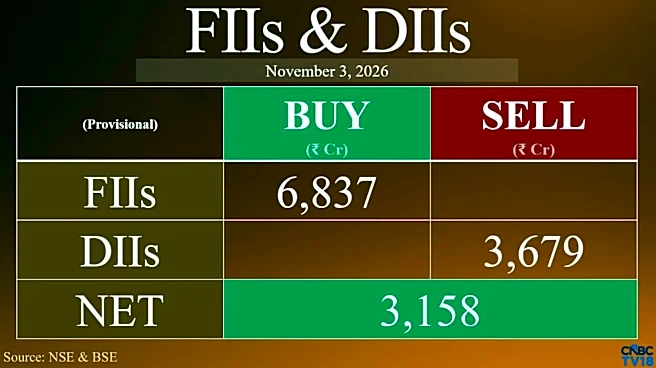
Thursday's buying, amounting to around $1.6 billion, takes cumulative FPI purchases to nearly $6 billion over the past 14 trading sessions. This is almost equivalent to the amount they withdrew from Indian equities in September and October combined. FPIs sold shares worth $4.1 billion in September, followed by outflows of $2.2 billion in October.
The change in sentiment is also reflected in the frequency of their purchases. Over the past 14 sessions, overseas investors have been net sellers in just three sessions, with cumulative selling on those days limited to around $230 million.
Large-cap stocks lead the foreign investor comeback
Historically, overseas investors have preferred large, liquid frontline stocks over mid- and small-cap companies. Their latest buying activity is reflected in the stronger rally in blue-chip stocks.
"We are seeing signs of FII flows returning to emerging markets, with Chinese stocks also witnessing a sharp rally. Large frontline stocks are likely to be the focus of foreign institutional investors," said Manishi Raychaudhuri, Chief Executive Officer of Emmer Capital Partners.
According to Raychaudhuri, Reliance Industries, India's largest company by market capitalisation, offers several investment opportunities and significant inherent value. Its refining business, in particular, could benefit from an environment of declining crude oil prices.
The buying preference for frontline stocks is evident in recent market performance. The benchmark Nifty 50 has rallied more than 8% over the past six trading sessions, compared with gains of 5.8% in the mid-cap index and 2.7% in the small-cap index.
Among Nifty 50 constituents, Bajaj Finance emerged as the biggest gainer, surging 17% over the six sessions. Shriram Finance and InterGlobe Aviation followed with gains of around 16% each. Reliance Industries and Jio Financial Services advanced 13.4% and 12%, respectively. Notably, none of the Nifty 50 constituents ended in the red during this six-session winning streak.
FPI inflows lend support to the rupee
The return of foreign capital has also provided support to the Indian rupee. The domestic currency extended its gains for a fifth consecutive session, closing at ₹94.48 against the US dollar on Thursday, its strongest closing level in 15 days.
The latest buying spree has also narrowed FPIs' year-to-date net selling to less than $27 billion, down from a peak of around $33 billion recorded in mid-October, according to Bloomberg data.