/images/ppid_59c68470-image-17781525671882379.webp)

/images/ppid_59c68470-image-177796572496269197.webp)
/images/ppid_59c68470-image-177796569338560501.webp)
/images/ppid_59c68470-image-177815253375413109.webp)
What is the story about?
Sanjai Kumar, CMD, RailTel Corporation of India, said the company is targeting over 20% revenue growth in the financial year 2026-27 (FY27) while expecting margins to remain broadly stable after reporting improved telecom and data centre business performance in the financial year 2025-26 (FY26).
The company expects its data centre business to contribute nearly ₹300 crore to revenue this year, up from ₹200 crore in FY26.
“Data centres are going to be in focus for us in the years to come,” Kumar said, adding that the company is strengthening its position in the government sector data centre market.
The company also expects telecom business momentum to improve after securing fresh orders, including projects from the Indian Air Force. Kumar said efforts made over the last year are now translating into higher revenue visibility.
“We are now seeing those efforts converting into revenue,” he said.
The company’s order book currently stands at over ₹11,500 crore, of which ₹3,000 crore to ₹3,500 crore is expected to convert into revenue during FY27. Kumar added that return on capital employed (RoCE), currently around 16%, is expected to improve further despite margin pressures.
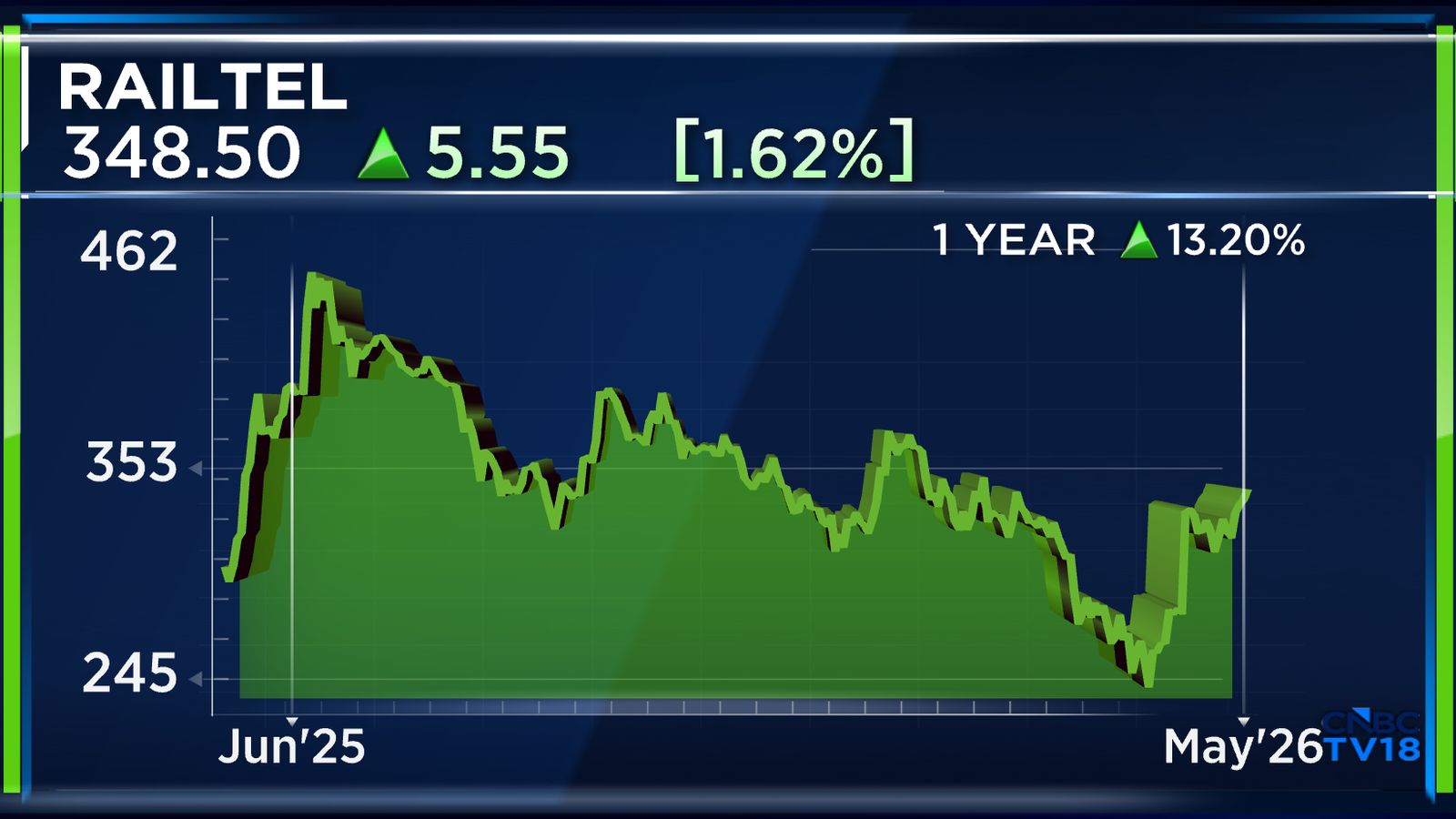
The company, which has a current market capitalisation of ₹11,176.68 crore, has seen its shares gain more than 13% over the last year.
This is an edited transcript of the interview.Q: While you've guided for a 25% revenue growth for FY26, you've done 23%, and you have achieved margins of almost 15% versus a target of 11% to 12% that you've done now. What next for FY27? What are you targeting in terms of revenues and EBITDA margins, and how big a contributor will data centres be to that?A: We are basically targeting the next financial year with the same revenue guidance of 20%-25%, close to maybe 20%-plus. And as far as the margin is concerned, the margin will also remain almost in the same bracket where we have performed last financial year.
If you talk about Q4 in particular, Q4 has generally been good for us for the last three to four years because of projects getting completed and because there were always funds available with the government organisations where we are executing these projects. So, there is always a faster pace, where we always get good numbers in Q4 as far as telecom margins are concerned.
For the full interview, watch the accompanying video
Again, I don't see Q4 as a standalone quarter, because if we see annually, the margins would be moderate. Sometimes what happens is that customers do not take the commissioning, and then we commission circuits maybe in Q2 or Q3, and then they are accepted in Q4. So then it also makes an impact. But those kinds of impacts are generally rare. Those kinds of impacts are not very common.
But yes, they are better. Certainly, we are improving telecom margin, and our growth has also improved in Q4.
Q: You've done well in terms of your data centre opportunity. I think you've done around ₹200 crores for the year from there.A: Data centres, yes, we projected ₹200 crore types of numbers when we were talking last year. And this year also, we are expecting somewhere around ₹300 crore of business from data centres.
So, data centres are going to be in focus for us in the years to come, and we are consolidating our position, though, in a niche segment, targeting customers in the government sector only, and then talking to them one by one.
Also Read | Godrej Consumer CFO says double digit growth is on track despite commodity and weather risks
We are the only data centre service provider in the public sector domain that has its own in-house data centre team managing it, other than NIC. Of course, NIC also does this. And then we have on-premise facilities to manage their data centre requirements, while also providing data centre services through our facilities.
Q: If I could just add that in telecom ex-data centre, how did that do? And what are you guiding for in terms of growth within that segment in FY27? Because Q4 looks strong.A: I have been sharing with media and investors also that telecom was an area where, somehow, we were making efforts for the last year, and we are now seeing those efforts converting into revenue.
We have got a few new orders also. You must have seen we have got an order from the Air Force recently. So, in the telecom sector, we are making ourselves ready for better numbers in future years.
Q: As of now, ₹200 crores of that was data centre, right?A: Yes.
Q: Your order book seems strong at ₹10,000 crores approximately. What portion will be executable in the next 12 to 18 months, or FY27, out of this ₹10,000 crore?A: I will correct that. Our order book is more than ₹11,500 crore right now. And what we are expecting to convert in FY27, if I talk of it, I expect it to be somewhere around ₹3,000 crore to ₹3,500 crore at least, to convert into realisable revenue in FY27.
Q: 3,000 crore to ₹3,500 crore in FY27. Out of which, the Kavach order book is the ₹1,000 crore number, correct? That is what you have in this particular segment. How big of an opportunity is this one? Because the government has been pushing more Kavach orders. Are the margins higher? Would that mean a higher margin opportunity for the company as well?A: So yes, Kavach is close to ₹1,000 crore. That's true. And as far as future opportunities are concerned, they would be there. But in the recent period, there have been no new tenders coming in.
I think the Ministry of Railways is thinking that at least those awarded contracts should get onto the ground, and then they can see the performance. Maybe that may be the reason. I will not comment upon that.
And of course, these are, I wouldn't say higher-margin, but yes, they are moderately good-margin projects for us as a business.
Q: The other piece of information that we wanted, and you already spoke about, is the order book as well as the telecom vertical. What might be the headwinds in terms of, say, margin pressure for you going into FY27, if any?A: Margin pressures, we are talking about this in every interaction. If we are growing strongly, then that converts into improving return on capital employed, or RoCE.
If you see our numbers, RoCE has been continuously improving, and that is the thing which is more important to the investors and stakeholders rather than absolute EBITDA margin ratio or EBIT margin ratios.
Also Read | Raymond Lifestyle sees strong traction in premium exports across US, Europe
But we are getting good EBITDA absolute numbers certainly, and that is what matters. Margin pressure, of course, will be there. But then our RoCE, I expect, will continue to improve.
Q: What would that be then? What are you targeting for this number?A: We are somewhere around 16%. These numbers will certainly improve marginally. But then improvement, like if you see the profit after tax (PAT) growth, our compounded annual growth rate (CAGR) PAT growth is around 17% for the last three years, and our net worth is around ₹2,100 crore. So that is where we are.
Q: Need to be at 16% or improve from there, the RoCE, the return on capital employed for the company.A: Right now, it is around 16%.
Q: How much will it improve to? You said that is something that will improve.A: It is hard to predict right now, but it will certainly be improving by a few percentage points.
Catch all the latest updates from the stock market here
The company expects its data centre business to contribute nearly ₹300 crore to revenue this year, up from ₹200 crore in FY26.
“Data centres are going to be in focus for us in the years to come,” Kumar said, adding that the company is strengthening its position in the government sector data centre market.
The company also expects telecom business momentum to improve after securing fresh orders, including projects from the Indian Air Force. Kumar said efforts made over the last year are now translating into higher revenue visibility.
“We are now seeing those efforts converting into revenue,” he said.
The company’s order book currently stands at over ₹11,500 crore, of which ₹3,000 crore to ₹3,500 crore is expected to convert into revenue during FY27. Kumar added that return on capital employed (RoCE), currently around 16%, is expected to improve further despite margin pressures.
The company, which has a current market capitalisation of ₹11,176.68 crore, has seen its shares gain more than 13% over the last year.
This is an edited transcript of the interview.Q: While you've guided for a 25% revenue growth for FY26, you've done 23%, and you have achieved margins of almost 15% versus a target of 11% to 12% that you've done now. What next for FY27? What are you targeting in terms of revenues and EBITDA margins, and how big a contributor will data centres be to that?A: We are basically targeting the next financial year with the same revenue guidance of 20%-25%, close to maybe 20%-plus. And as far as the margin is concerned, the margin will also remain almost in the same bracket where we have performed last financial year.
If you talk about Q4 in particular, Q4 has generally been good for us for the last three to four years because of projects getting completed and because there were always funds available with the government organisations where we are executing these projects. So, there is always a faster pace, where we always get good numbers in Q4 as far as telecom margins are concerned.
For the full interview, watch the accompanying video
Again, I don't see Q4 as a standalone quarter, because if we see annually, the margins would be moderate. Sometimes what happens is that customers do not take the commissioning, and then we commission circuits maybe in Q2 or Q3, and then they are accepted in Q4. So then it also makes an impact. But those kinds of impacts are generally rare. Those kinds of impacts are not very common.
But yes, they are better. Certainly, we are improving telecom margin, and our growth has also improved in Q4.
Q: You've done well in terms of your data centre opportunity. I think you've done around ₹200 crores for the year from there.A: Data centres, yes, we projected ₹200 crore types of numbers when we were talking last year. And this year also, we are expecting somewhere around ₹300 crore of business from data centres.
So, data centres are going to be in focus for us in the years to come, and we are consolidating our position, though, in a niche segment, targeting customers in the government sector only, and then talking to them one by one.
Also Read | Godrej Consumer CFO says double digit growth is on track despite commodity and weather risks
We are the only data centre service provider in the public sector domain that has its own in-house data centre team managing it, other than NIC. Of course, NIC also does this. And then we have on-premise facilities to manage their data centre requirements, while also providing data centre services through our facilities.
Q: If I could just add that in telecom ex-data centre, how did that do? And what are you guiding for in terms of growth within that segment in FY27? Because Q4 looks strong.A: I have been sharing with media and investors also that telecom was an area where, somehow, we were making efforts for the last year, and we are now seeing those efforts converting into revenue.
We have got a few new orders also. You must have seen we have got an order from the Air Force recently. So, in the telecom sector, we are making ourselves ready for better numbers in future years.
Q: As of now, ₹200 crores of that was data centre, right?A: Yes.
Q: Your order book seems strong at ₹10,000 crores approximately. What portion will be executable in the next 12 to 18 months, or FY27, out of this ₹10,000 crore?A: I will correct that. Our order book is more than ₹11,500 crore right now. And what we are expecting to convert in FY27, if I talk of it, I expect it to be somewhere around ₹3,000 crore to ₹3,500 crore at least, to convert into realisable revenue in FY27.
Q: 3,000 crore to ₹3,500 crore in FY27. Out of which, the Kavach order book is the ₹1,000 crore number, correct? That is what you have in this particular segment. How big of an opportunity is this one? Because the government has been pushing more Kavach orders. Are the margins higher? Would that mean a higher margin opportunity for the company as well?A: So yes, Kavach is close to ₹1,000 crore. That's true. And as far as future opportunities are concerned, they would be there. But in the recent period, there have been no new tenders coming in.
I think the Ministry of Railways is thinking that at least those awarded contracts should get onto the ground, and then they can see the performance. Maybe that may be the reason. I will not comment upon that.
And of course, these are, I wouldn't say higher-margin, but yes, they are moderately good-margin projects for us as a business.
Q: The other piece of information that we wanted, and you already spoke about, is the order book as well as the telecom vertical. What might be the headwinds in terms of, say, margin pressure for you going into FY27, if any?A: Margin pressures, we are talking about this in every interaction. If we are growing strongly, then that converts into improving return on capital employed, or RoCE.
If you see our numbers, RoCE has been continuously improving, and that is the thing which is more important to the investors and stakeholders rather than absolute EBITDA margin ratio or EBIT margin ratios.
Also Read | Raymond Lifestyle sees strong traction in premium exports across US, Europe
But we are getting good EBITDA absolute numbers certainly, and that is what matters. Margin pressure, of course, will be there. But then our RoCE, I expect, will continue to improve.
Q: What would that be then? What are you targeting for this number?A: We are somewhere around 16%. These numbers will certainly improve marginally. But then improvement, like if you see the profit after tax (PAT) growth, our compounded annual growth rate (CAGR) PAT growth is around 17% for the last three years, and our net worth is around ₹2,100 crore. So that is where we are.
Q: Need to be at 16% or improve from there, the RoCE, the return on capital employed for the company.A: Right now, it is around 16%.
Q: How much will it improve to? You said that is something that will improve.A: It is hard to predict right now, but it will certainly be improving by a few percentage points.
Catch all the latest updates from the stock market here

/images/ppid_59c68470-image-177811756736139676.webp)
/images/ppid_59c68470-image-177812005286552712.webp)
/images/ppid_59c68470-image-177798517490193940.webp)
/images/ppid_59c68470-image-177806253630880345.webp)
/images/ppid_59c68470-image-177804760756056301.webp)


/images/ppid_59c68470-image-177813006576320881.webp)
/images/ppid_59c68470-image-177807008309029089.webp)
/images/ppid_59c68470-image-177803508966165713.webp)