/images/ppid_59c68470-image-178042006542166929.webp)

/images/ppid_a911dc6a-image-178015249190990035.webp)
/images/ppid_59c68470-image-178014502754346980.webp)
What is the story about?
Geopolitical tensions, trade fragmentation and concerns around strategic dependencies are now becoming central issues for company boards and chief executives across the world, according to Mirek Dusek, Managing Director and Chief Business Officer at the World Economic Forum (WEF).
Speaking in an exclusive interview with CNBC-TV18, Dusek said the global business environment has changed significantly since the COVID-19 pandemic, forcing companies to think beyond efficiency and focus more on resilience and long-term strategic planning.
“I think it is clear now that factoring in geopolitical and geoeconomic relations and change has become more material to CEOs, chairs, and boards across the world,” Dusek said.
“We live in a more dynamic, contested landscape, and for companies, it means they need more agility and more foresight,” he added.
Dusek said global businesses are increasingly re-evaluating supply chains, investment decisions and trade relationships as regions and geography begin playing a larger role in the world economy.
“There is also this view of thinking through dependencies, which has become a big issue,” he said.
“We used to live in a world where it was all about efficiency. Now, I think efficiency is still there, but you are also adding this aspect of resilience.”
According to Dusek, concepts such as “strategic interdependence” are now becoming active discussions inside boardrooms as companies and governments seek to reduce vulnerabilities without becoming completely isolated.
“Not everyone is large enough to build full capacity around AI or be fully autonomous in terms of energy,” he said. “So for the rest of the world, how are you smart about your dependencies?”
Dusek also said energy security has returned as a major strategic concern amid geopolitical instability and conflicts in West Asia.
“Energy has re-emerged as a strategic conversation and a strategic asset, not only for companies but also for governments and other stakeholders,” he said.
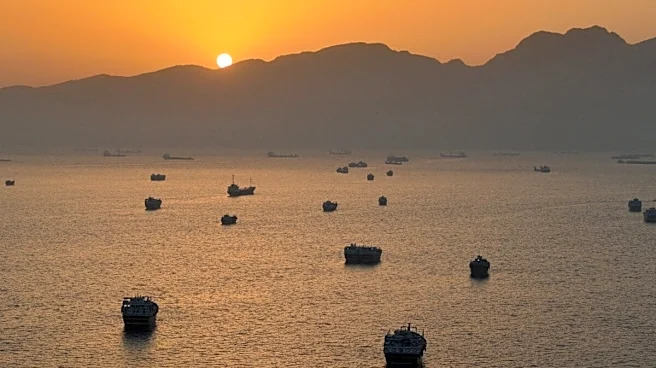
He said recent tensions in the Middle East and concerns around the Strait of Hormuz have reinforced the need for countries and companies to revisit their energy strategies.
“That only shows you, again, that how you look at your dependencies and your overall energy strategy as a country or a company needs revisiting,” he said.
“Maybe you need a little more redundancy, maybe a little more optionality.”
Dusek noted that companies are also reassessing their decarbonisation plans alongside concerns around energy access, energy security and sustainability.
At the same time, he said the world economy is entering a more fragmented and contested phase, where dialogue and cooperation remain important despite rising geopolitical differences.
“The fact that people may disagree more today, not only on the how but also on some of the fundamentals, does not mean we should give up agency or that there is no value in bringing people together,” he said.
Dusek said institutions such as the World Economic Forum continue to see value in creating spaces for dialogue between governments, businesses and civil society groups even as the global order evolves.
Also Read | Global growth to weaken, India stands out with strongest growth prospect: WEF survey
“Despite what we see — and perhaps precisely because of it — we need to double down on dialogue,” he said.
He added that the current environment is forcing policymakers and business leaders to think more carefully about long-term structural shifts rather than focusing only on short-term geopolitical events.
“I think there is a broad consensus that we have entered some kind of new era for the world or the world economy,” Dusek said.
Speaking in an exclusive interview with CNBC-TV18, Dusek said the global business environment has changed significantly since the COVID-19 pandemic, forcing companies to think beyond efficiency and focus more on resilience and long-term strategic planning.
“I think it is clear now that factoring in geopolitical and geoeconomic relations and change has become more material to CEOs, chairs, and boards across the world,” Dusek said.
“We live in a more dynamic, contested landscape, and for companies, it means they need more agility and more foresight,” he added.
Dusek said global businesses are increasingly re-evaluating supply chains, investment decisions and trade relationships as regions and geography begin playing a larger role in the world economy.
“There is also this view of thinking through dependencies, which has become a big issue,” he said.
“We used to live in a world where it was all about efficiency. Now, I think efficiency is still there, but you are also adding this aspect of resilience.”
According to Dusek, concepts such as “strategic interdependence” are now becoming active discussions inside boardrooms as companies and governments seek to reduce vulnerabilities without becoming completely isolated.
“Not everyone is large enough to build full capacity around AI or be fully autonomous in terms of energy,” he said. “So for the rest of the world, how are you smart about your dependencies?”
Dusek also said energy security has returned as a major strategic concern amid geopolitical instability and conflicts in West Asia.
“Energy has re-emerged as a strategic conversation and a strategic asset, not only for companies but also for governments and other stakeholders,” he said.
He said recent tensions in the Middle East and concerns around the Strait of Hormuz have reinforced the need for countries and companies to revisit their energy strategies.
“That only shows you, again, that how you look at your dependencies and your overall energy strategy as a country or a company needs revisiting,” he said.
“Maybe you need a little more redundancy, maybe a little more optionality.”
Dusek noted that companies are also reassessing their decarbonisation plans alongside concerns around energy access, energy security and sustainability.
At the same time, he said the world economy is entering a more fragmented and contested phase, where dialogue and cooperation remain important despite rising geopolitical differences.
“The fact that people may disagree more today, not only on the how but also on some of the fundamentals, does not mean we should give up agency or that there is no value in bringing people together,” he said.
Dusek said institutions such as the World Economic Forum continue to see value in creating spaces for dialogue between governments, businesses and civil society groups even as the global order evolves.
Also Read | Global growth to weaken, India stands out with strongest growth prospect: WEF survey
“Despite what we see — and perhaps precisely because of it — we need to double down on dialogue,” he said.
He added that the current environment is forcing policymakers and business leaders to think more carefully about long-term structural shifts rather than focusing only on short-term geopolitical events.
“I think there is a broad consensus that we have entered some kind of new era for the world or the world economy,” Dusek said.
/images/ppid_59c68470-image-178033503512450101.webp)

/images/ppid_59c68470-image-178032755015224852.webp)
/images/ppid_59c68470-image-178028253263433528.webp)
/images/ppid_59c68470-image-178040014191388220.webp)
/images/ppid_a911dc6a-image-178041769256331067.webp)

/images/ppid_59c68470-image-178037753707183343.webp)