


Introduction to Gujarati Food
Gujarati cuisine is renowned for its diverse flavors and vegetarian focus, offering a delightful blend of sweet, sour, and spicy tastes. The use of jaggery,
lemon, and chilies is common, creating a harmonious balance. Traditional Gujarati meals often feature multiple dishes served together, emphasizing the importance of shared meals and community. The region's varied geography contributes to the culinary diversity, with influences from neighboring states and centuries of cultural exchange. Gujarat's cuisine offers a rich tapestry of flavors, making it a favorite among food lovers. These dishes have evolved over time, reflecting the state's vibrant history and traditions. Each dish tells a story, offering insights into the local culture and the values of hospitality and togetherness that define Gujarat.
Dhokla: The Steamed Delight
Dhokla, a steamed cake made from fermented batter of rice and split chickpeas (chana dal), stands as a beloved Gujarati snack. Its soft, spongy texture and tangy flavor make it irresistible. Often garnished with mustard seeds, coriander leaves, and a sprinkle of coconut, dhokla is a versatile dish enjoyed at breakfast, as a snack, or as a side. There are many variations, including the khatta dhokla (sour) and the rava dhokla (made with semolina). The fermentation process gives it a slightly sour taste and a light, airy texture. This easy-to-digest snack is a healthy and flavorful choice, popular in homes and street food stalls. Dhokla is not just a dish; it's a celebration of simplicity and taste, perfectly reflecting Gujarati culinary skills and preferences.
Thepla: A Flatbread Staple
Thepla, a soft and flavorful flatbread, is a staple in Gujarati households. Made from wheat flour, fenugreek leaves (methi), and spices, thepla is perfect for breakfast or as a travel-friendly snack. It can be enjoyed with yogurt, pickles, or chutney. The addition of fenugreek leaves gives thepla its distinctive taste and aroma, making it a favorite among all age groups. Variations include plain thepla, methi thepla, and masala thepla, each offering unique flavors. It is often packed for lunches and picnics, as it stays soft for longer. The versatility of thepla makes it a fundamental element of Gujarati cuisine, reflecting its adaptability and cultural significance. Thepla highlights the significance of fresh ingredients and home-style cooking.
Undhiyu: A Winter Specialty
Undhiyu, a mixed vegetable dish, is a winter specialty traditionally cooked upside down in earthen pots (matlu). The unique cooking method gives the vegetables a smoky flavor. A mix of seasonal vegetables like eggplant, potatoes, beans, and green peas, is cooked with a blend of aromatic spices and herbs. The vegetables are then slow-cooked, creating a rich and flavorful stew. Undhiyu is often served with puri (deep-fried bread) and shrikhand (sweet yogurt dessert), which makes it a complete and satisfying meal. This dish represents the essence of Gujarati culinary tradition, with the use of fresh, seasonal ingredients and intricate cooking methods. Undhiyu is synonymous with festive gatherings and family celebrations.
Khandvi: The Rolled Delight
Khandvi, a savory snack made from gram flour (besan) and yogurt, presents a delicate balance of flavors and textures. The batter is steamed, rolled into thin sheets, and cut into bite-sized pieces. Seasoned with mustard seeds, curry leaves, and grated coconut, khandvi has a mild, tangy taste. It is visually appealing, making it a popular dish for both casual and festive occasions. The cooking process requires precision, making khandvi a testament to the cook's skill. This snack epitomizes the elegance and finesse of Gujarati cuisine, combining simple ingredients to create a treat that delights the senses. Khandvi is often enjoyed as a light appetizer or snack.
Fafda-Jalebi: The Dynamic Duo
Fafda-Jalebi is a classic Gujarati breakfast combination, pairing crispy fafda (a savory, fried snack made from gram flour) with sweet, syrupy jalebi. Fafda has a crunchy texture and a slightly tangy taste. Jalebi is a deep-fried sweet that is soaked in sugar syrup, resulting in a combination of crispiness and sweetness. This pairing is a celebration of contrasting flavors and textures, creating a delightful eating experience. It is a popular street food and is often enjoyed during festivals and special occasions. The contrast between the savory and the sweet makes this duo a favorite throughout Gujarat. This combination mirrors the diverse tastes and preferences in Gujarati culinary culture.
Gujarati Thali: A Feast
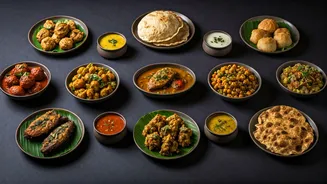
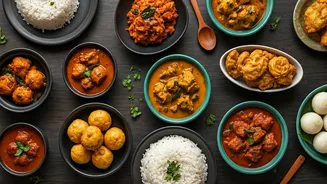
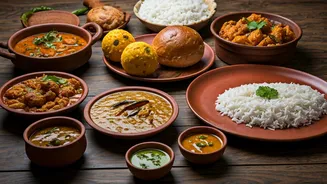
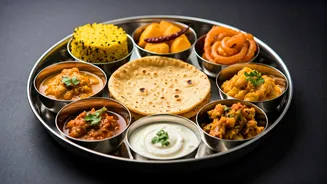
The Gujarati Thali is a comprehensive meal consisting of several dishes served on a single platter, offering a sampling of the cuisine's best. The thali generally includes various vegetables, lentils, dal, rice, roti or puri, farsan (savory snacks), and a sweet dish. It offers a well-balanced meal, focusing on diverse flavors and textures. Seasonal variations and regional differences are common, ensuring a varied culinary experience. A Gujarati thali reflects the cultural emphasis on offering diverse flavors in a single meal. The experience is about exploring various dishes in one sitting, showcasing the richness of Gujarati culinary heritage. The thali reflects the core values of hospitality and togetherness that are prevalent in Gujarat.
Dal Dhokli: A Hearty Meal
Dal Dhokli is a wholesome and comforting dish featuring wheat flour dumplings (dhokli) simmered in a flavorful dal (lentil) broth. The dhokli is made from wheat flour and spices, imparting a hearty texture and unique taste. The combination of lentils and dumplings creates a filling meal, perfect for colder days. This dish is usually seasoned with spices, tamarind, and jaggery, which produces a complex flavor profile. This dish is a good balance of flavors, making it a comforting and nutritious meal. It's a favorite in Gujarati households, signifying the use of simple ingredients to create satisfying meals.
Khaman: The Soft & Fluffy
Khaman is another popular steamed snack similar to dhokla, but it differs in its texture and preparation. It's made from a batter of chana dal (split chickpeas) and spices and has a softer, more porous texture than dhokla. The batter is steamed and then tempered with mustard seeds, curry leaves, and sometimes green chilies and other spices. Khaman is known for its light, fluffy texture and is often served with chutney and sev (crispy noodles). It is a favorite snack among locals, showcasing the variety within Gujarati steamed snacks. The simplicity of Khaman, combined with its delicious taste, has made it a favorite throughout Gujarat, making it a must-try dish.