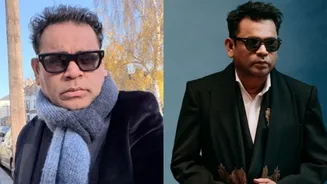









Context of Incident
The controversy that arose involved a comment made regarding AR Rahman, which subsequently drew criticism for its perceived communal undertones. This comment stirred
up a debate among the public. It sparked various reactions, and the situation soon attracted attention from media outlets and social media users. The comment's content was considered insensitive by some, leading to a wave of online discussions. The core of the matter centered on the interpretation of the remark and its potential to be divisive. As a result, Khatija Rahman decided to respond, addressing the concerns and offering her perspective on the matter. This response was seen as an effort to clarify the situation, promote understanding, and mitigate any negative implications associated with the comment.
Khatija's Reaction Analyzed
Khatija Rahman's response was marked by her emphasis on constructive dialogue and a clear rejection of disrespectful behavior. Her statements reflected a commitment to addressing the issue with maturity. She advocated for a focus on understanding rather than engaging in personal attacks or spreading negativity. Khatija's stance was interpreted by many as a call for a more respectful exchange of ideas. Her response encouraged people to think critically about the implications of their words and actions, thereby promoting a more civil online environment. Furthermore, she expressed a desire for a resolution that would foster better relations among individuals, irrespective of their backgrounds. By taking this approach, Khatija Rahman set an example of how to handle controversies with grace and a focus on positive outcomes.
Importance of Respect
The incident highlighted the crucial need for respect in public discourse. Khatija Rahman's reaction underscored this importance. Respect, in this case, meant valuing different opinions and engaging with one another respectfully, even when there are disagreements. In an age of digital interactions, where communication can be instantaneous and frequently lacking nuance, the need for mutual respect is more apparent than ever. Promoting respect ensures that discussions remain productive and don't descend into personal attacks or hurtful exchanges. It is vital to consider how words can affect others and to choose them thoughtfully. The goal is to build a culture where respect is prioritized, making it easier to navigate sensitive topics and build bridges, rather than walls, between people. Khatija's response thus serves as a reminder of the significance of respect.
Beyond the Controversy
Beyond the immediate context of the incident, Khatija Rahman's response holds significance. It reminds us of the wider need for promoting empathy and understanding. When issues arise, the focus should be on building bridges and seeking common ground, rather than widening divides. Khatija's approach also serves as a case study in how to maintain composure in times of public criticism. By responding calmly and thoughtfully, she demonstrated how to control a situation instead of letting it control her. Her actions offer a useful lesson in conflict resolution and the cultivation of healthy relationships. Ultimately, her approach helps to make sure that the focus remains on the core issues at hand while maintaining a respectful dialogue.
Lessons Learned
The events surrounding the comment and Khatija Rahman's response offer several valuable lessons. Firstly, it underscores the need for greater awareness of how language can be perceived, particularly in a diverse society. Secondly, it highlights the importance of critical thinking and questioning the context of information before accepting it as the truth. Lastly, it suggests that when dealing with disagreement, focusing on understanding and mutual respect leads to constructive results. These lessons are relevant for all, irrespective of social status or background. Khatija Rahman's handling of the situation provides a model for responding to controversy thoughtfully and working to build a more respectful and harmonious community. These are essential skills that promote healthy public dialogue.