







A Mission's End
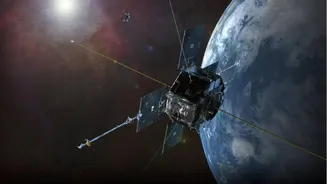
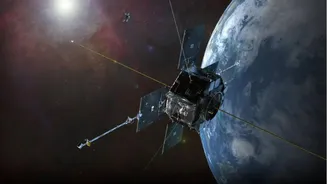
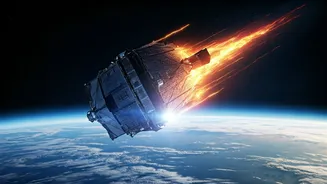
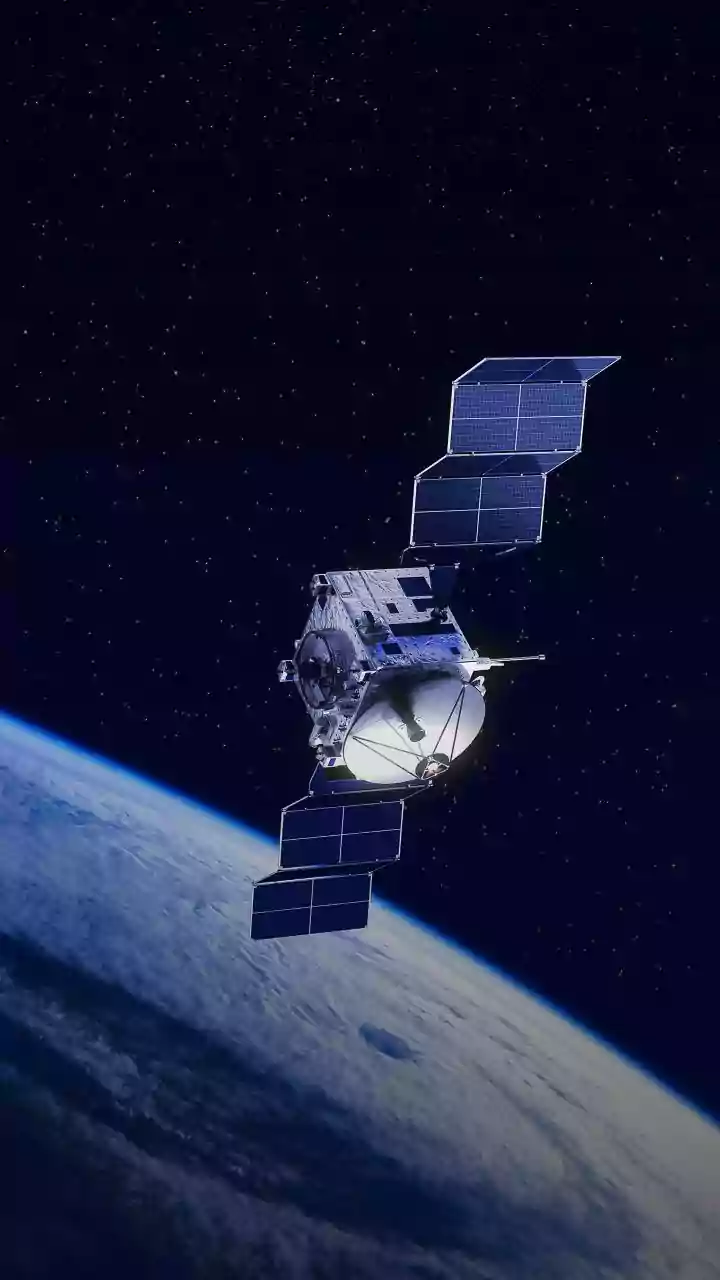
In a cosmic ballet nearing its conclusion, NASA's Van Allen Probe A is poised for an atmospheric reentry on March 10, 2026, with the US Space Force predicting
a fiery demise around 23:45 UTC. Launched in 2012 alongside its twin, Probe B, this mission was initially slated for a two-year duration. However, both probes far surpassed expectations, operating until 2019. During their extended operational life, they diligently traversed the Van Allen belts, Earth's protective shields formed by charged particles trapped by our planet's magnetic field. This prolonged exploration allowed scientists to gather unprecedented data, deepening our comprehension of these vital radiation belts that safeguard us from harsh cosmic rays and solar outbursts.
Unveiling the Belts
The Van Allen Probes played a pivotal role in revolutionizing our understanding of Earth's magnetosphere. They were the first spacecraft specifically engineered to study the Van Allen belts in detail. Among their most significant discoveries was evidence pointing to the existence of a temporary, third belt that emerges during periods of heightened solar activity. This finding was crucial in painting a more complete picture of the dynamic environment surrounding our planet. The mission's conclusion in 2019, prompted by the exhaustion of the probes' fuel supply, marked the end of an era in space exploration, though the data they collected continues to inform scientific research.
Solar Winds Accelerate
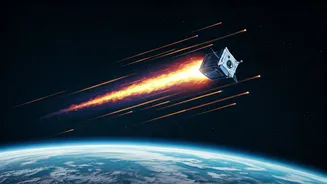
The projected reentry date for the Van Allen probes in 2019 anticipated a descent in 2034. However, a surge in solar activity, particularly during Solar Cycle 25, has expedited Probe A's journey back to Earth. The Sun's increased dynamism in recent times has led to greater heat injection into Earth's atmosphere, causing it to expand. This atmospheric inflation, akin to a balloon inflating, consequently increases drag on satellites. Probe A experienced this amplified drag, leading to a faster-than-anticipated reduction in its orbital altitude, thus accelerating its reentry. In contrast, Probe B is not expected to reenter Earth's atmosphere until after 2030, suggesting it is on a slower descent trajectory.