





Cosmic Origins Revealed
Deep within Maharashtra's Buldhana district lies a breathtaking testament to a celestial event: Lonar Lake. This isn't your average body of water; it's
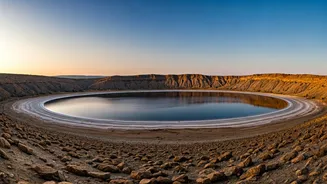
a profound crater, sculpted by the immense force of a meteorite impact that occurred approximately 50,000 years ago. What exists today is a spectacle that appears almost ethereal, a vast, isolated expanse of water born from the remnants of space debris. The sheer scale and unique formation make it a geological wonder, a direct connection to the cosmos etched into the Earth's surface. This circular depression, a scar from a high-velocity impact, offers a rare glimpse into the dynamic history of our planet and its encounters with the universe beyond. It stands as a powerful reminder of the forces that have shaped our world over millennia.
An Unrivaled Water Body
Lonar Crater Lake holds a distinct title as the world's sole known saline and alkaline crater lake. The water's composition is extraordinarily unusual, boasting a saltiness nearly seven times that of typical seawater. This highly saline and alkaline environment creates an extreme habitat, a challenging niche where only highly specialized life forms can flourish and survive. The unique chemistry of the water influences everything from the potential for life within its depths to the very appearance of its surface. It's a natural laboratory for studying extremophiles and understanding the limits of life in harsh conditions, offering insights that extend beyond the lake itself into broader biological and chemical sciences.
Vibrant Color Transformations
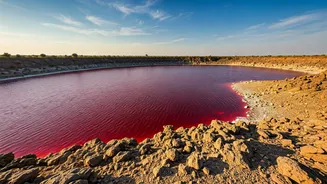
One of the most captivating and dynamic characteristics of Lonar Lake is its mesmerizing ability to change color. Throughout the year, the lake's hue can shift dramatically, transitioning from deep, verdant greens to striking shades of pink. This remarkable transformation is orchestrated by specialized microorganisms, most notably Halobacteriaceae and a type of algae called Dunaliella salina. These hardy organisms thrive in the lake's extreme saline and alkaline waters, and their population dynamics, influenced by factors like sunlight and nutrient availability, directly dictate the visual spectacle. This living color palette makes Lonar Lake a constantly evolving natural wonder, a visual treat that draws observers with its unpredictable beauty.
Geological Time Capsule
Nestled within the basaltic rock formations of the Deccan Plateau, Lonar Lake serves as an invaluable geological time capsule. The impact that created the lake didn't just excavate the land; it also formed unique shocked minerals, such as maskelynite, a glassy substance resulting from intense pressure. These mineralogical remnants provide scientists with crucial data, offering a preserved record of the ancient volcanic activity that shaped the Deccan Traps over 65 million years ago. By studying these geological artifacts within the lakebed and surrounding crater walls, researchers can piece together a more comprehensive understanding of past geological events, their intensity, and their long-term impact on the Earth's crust.
Lunar Analog on Earth
Remarkably, Lonar Lake offers a unique terrestrial connection to celestial bodies. Research, including significant studies conducted by IIT Bombay, has revealed striking similarities between the soil minerals found around Lonar and lunar samples brought back to Earth by NASA's Apollo missions. This unexpected correlation makes the lake a vital natural laboratory for geologists and planetary scientists. It provides an accessible, Earth-bound analogue for studying lunar geology and understanding the processes that occur on the Moon's surface. The lake's mineralogical composition and formation environment serve as a proxy, allowing for in-depth analysis and comparative studies without needing to travel to space.
Cultural Significance and Lore
Beyond its scientific marvels, Lonar Lake is deeply interwoven with India's rich cultural tapestry and local folklore. Ancient legends attribute the lake's creation to divine intervention, often linking it to Lord Vishnu. The crater is encircled by numerous ancient temples, some dating back as far as the 6th century, each whispering tales of devotion and historical practices. These sacred sites, coupled with the myths surrounding the lake's origin, imbue the area with a profound sense of spirituality and historical depth. The convergence of natural wonder and human belief creates a multi-layered experience for visitors, connecting them to both the geological past and the enduring cultural heritage of the region.