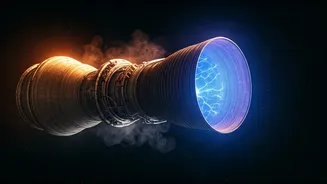





Power Head Testing Underway
ISRO is actively engaged in the development of a powerful semicryogenic engine, slated for integration into an enhanced version of its formidable LVM3
rocket. Recent documentation from the agency highlights the successful completion of numerous short-duration tests on the Semicryogenic Engine Power Head Test Article (PHTA). Notably, a modified subsystem test was successfully conducted on January 13, 2026, marking a step forward. This was closely followed by the qualification of the Isrosene propellant tank on February 20, 2026, a pivotal achievement in the engine's developmental journey. While ISRO has not yet provided a definitive completion timeline for the entire project, responses to Right to Information (RTI) queries in late 2025 indicated that further rigorous testing, culminating in an integrated hot-fire test, is planned. ISRO Chairman V Narayanan had previously mentioned in October 2025, during the 35th Convocation Ceremony at Birla Institute of Technology, Mesra, that power head testing was in progress, with all components except the thrust chamber undergoing development. The team was preparing for integrated engine testing at that time. The third hot test of the PHTA for this upgraded semicryogenic engine was successfully carried out by ISRO on May 28, 2025, underscoring the sustained progress in this vital program.
Towards Reusable Rockets
The development of this indigenously designed semicryogenic engine, designated SE-2000 (formerly SCE-2000), is crucial for enhancing ISRO's LVM3 launch vehicle. This engine is engineered to generate a substantial thrust of 2,000 kN and will be incorporated into the Semicryogenic Propulsion Stage (SC120). This new stage is intended to replace the current liquid-fueled L110 core stage of the LVM3, which provides a thrust of 1,600 kN. The ultimate goal of this advanced engine is to enable future ISRO launch vehicles to have their first stage either return to the launch pad or land safely on an ocean platform. Such reusability of the first stage, which is typically expended after each mission, promises to dramatically reduce the operational costs associated with accessing space, making future missions more economical and sustainable. This innovation is a significant step towards a more cost-effective and frequent launch cadence for India.