






Ancient Indus Roots
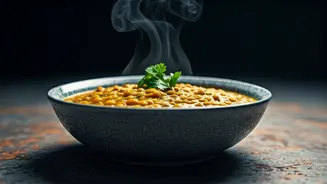
The story of dal, a staple in Indian cuisine, stretches back an astonishing 4,500 years to the Indus Valley Civilisation, around 2500 BCE. During this
ancient era, pulses, which include lentils, were a foundational element of the diet for early communities. Their nutritional value made them indispensable, setting the stage for dal's enduring significance in the culinary landscape of the subcontinent. This early reliance on lentils established a tradition that has continued unbroken through millennia, evolving into the myriad forms of dal enjoyed across India today. The very concept of a simple yet nourishing lentil preparation was born in these early settlements, marking the beginning of a dietary cornerstone that would traverse through history and culture.
Echoes in Ancient Texts
As civilizations flourished, dal preparations began to appear in historical records, suggesting their inclusion in significant events. Ancient writings indicate that lentil dishes were not just everyday fare but also featured prominently in celebratory feasts. One notable historical reference connects an early iteration of 'ghugni' – a popular street food snack in Eastern India even now – to the wedding of Chandragupta Maurya back in 303 BCE. This linkage highlights how dal, in its various forms, has been interwoven with cultural milestones and community gatherings for centuries, demonstrating its adaptability from humble sustenance to a dish worthy of royal unions.
Royal Culinary Flourish
The medieval period witnessed a significant elevation in the status of dal, particularly within the confines of royal kitchens. The refinement of techniques like 'dum pukht', a slow steam-cooking method, allowed for the development of richer, more complex lentil dishes. Chana dal, in particular, rose to prominence during this era, with court cooks dedicating considerable effort and expertise to its preparation. These elaborate culinary processes transformed a simple pulse into a dish fit for kings, showcasing a period of intense gastronomic innovation that greatly influenced India's culinary heritage and solidified dal's place in elaborate dining traditions.
The Rise of Panchmel Dal
A testament to the ingenuity and evolving tastes of royal culinary arts is the creation of 'panchmel dal', also known as 'panchratna dal'. This dish ingeniously combines five different types of lentils, creating a symphony of textures and flavours. It is believed to have gained traction within the royal household of Mewar before becoming a favoured delicacy in the Mughal courts, notably during the reigns of emperors like Shah Jahan and Aurangzeb. Legends even trace its lineage further back, attributing its origin to the epic Mahabharata, where the hero Bhim is said to have prepared mixed dals using a slow-cooking method in an earthen pot, underscoring its deep cultural and mythological roots.
Moradabadi Dal's Genesis
The spirit of culinary experimentation continued, leading to the birth of unique regional dal preparations. 'Moradabadi dal', named in honour of Prince Murad, is a prime example of such innovation. This lighter preparation, primarily featuring moong dal, reportedly emerged from an experiment within the royal kitchen. Characterized by its fresh garnishes of onions, green chillies, and 'amchur' (dried mango powder), it stands out as a flavourful snack rather than a main course. Its distinctive profile showcases how dal could be adapted for lighter, more immediate enjoyment, reflecting the diverse ways it could be prepared and savoured.
Dal Makhni's Modern Fame
The 20th century brought forth one of dal's most globally recognized incarnations: dal makhni. Developed by restaurateur Kundan Lal Gujral, this iconic dish masterfully blends urad dal and chana dal with rajma (kidney beans), all simmered in a rich, creamy tomato-based gravy. Conceived as a complementary dish to the now-famous butter chicken, dal makhni quickly captivated palates and achieved widespread popularity, extending its reach far beyond India's borders. Its success exemplifies how traditional ingredients can be reimagined to create contemporary culinary stars that resonate with a global audience.