




Dhokla: The Iconic Snack
Dhokla, a beloved Gujarati snack, is a steamed cake made from fermented batter, typically of rice and split chickpeas. This fluffy, spongy delight is often
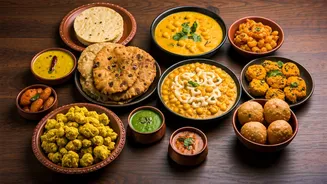
seasoned with mustard seeds, green chilies, and a touch of asafoetida. Dhokla offers a delightful combination of textures, being both soft and slightly tangy. Its lightness makes it a perfect snack or a side dish. The fermentation process gives it a distinct flavour, enhanced by the tempering of spices. This dish is usually served with chutney, providing a sweet and spicy contrast. Dhokla reflects Gujarati's appreciation for simple yet flavourful vegetarian cuisine. It is a popular street food and a regular feature in Gujarati homes, exemplifying the region’s culinary charm.
Thepla: A Flatbread Delight
Thepla, a versatile flatbread, is a staple in Gujarati households, especially during travel. Made from wheat flour, spices, and fenugreek leaves, it is a savoury and slightly spiced bread, making it a great accompaniment to curries or enjoyed on its own. The addition of fenugreek leaves provides a subtle bitterness that balances the spices. Thepla’s preparation involves kneading the dough and then gently rolling it out into a thin, round shape before cooking on a griddle. It's often served with yogurt, pickles, or chutney. Its long shelf life makes it ideal for travel, embodying practicality and taste. Thepla’s adaptability ensures it remains a favoured choice in the diverse Indian cuisine.
Undhiyu: A Winter Specialty
Undhiyu is a seasonal vegetable casserole, particularly popular during winter, and is synonymous with the Gujarati culinary tradition. It's a mix of seasonal vegetables, slow-cooked in a unique earthen pot called an 'handi', which gives it a distinct smoky flavour. The vegetables are marinated in a blend of spices and cooked with herbs. Undhiyu involves a complex preparation process, often including layering vegetables such as eggplant, potatoes, and beans with a variety of spices. This dish reflects the Gujarati tradition of celebrating seasonality and togetherness. Served with puri and shrikhand, Undhiyu is not only a flavourful treat but also a reflection of cultural richness, encapsulating the essence of Gujarati cuisine and festive spirit.
Khandvi: Rolled Goodness
Khandvi, another popular Gujarati snack, showcases the region's culinary skill with its delicate preparation. This dish consists of thinly rolled gram flour and yogurt sheets, seasoned with mustard seeds, curry leaves, and other spices. The delicate rolls are known for their melt-in-your-mouth texture, creating a delightful eating experience. Making khandvi requires skill, as the batter needs to be cooked to the right consistency. Garnished with fresh coriander and grated coconut, khandvi presents a combination of textures and flavors. Its visual appeal and ease of consumption make it a favourite at social gatherings and as a light snack. Khandvi is a true representation of Gujarati culinary artistry.
Dal Dhokli: A Hearty Meal
Dal Dhokli is a wholesome and comforting dish, combining the richness of dal (lentils) and the heartiness of dhokli (wheat flour dumplings). It is made by simmering the dhokli in a flavourful lentil soup, spiced with aromatic herbs and spices. The dish offers a perfect blend of textures, with the soft dumplings absorbing the flavour of the dal. This one-pot meal is satisfying, nutritious, and very easy to prepare, making it a staple in many Gujarati homes. Dal Dhokli often includes ingredients like curry leaves, turmeric, and ginger, which add complexity to the flavours. It is not just a meal; it's a testament to Gujarati resourcefulness, offering both taste and nourishment.
Handvo: Savory Cake
Handvo is a savoury cake, a baked preparation made from a mix of lentils, vegetables, and rice. The batter is seasoned with spices, and it is usually baked or pan-fried until golden brown. The vegetables add a delightful texture and flavour, making Handvo a versatile dish. It presents a good way to include a wide range of vegetables in one dish. The preparation often involves a fermentation process, enhancing the flavour and contributing to a light, spongy texture. Handvo is a popular dish during family gatherings. The blend of textures and tastes demonstrates the innovative spirit of Gujarati cooking.
Fafda-Jalebi: Sweet & Savoury
Fafda-Jalebi is a classic Gujarati breakfast combination, an iconic pairing of crispy savoury fafda (gram flour snack) with sweet and syrupy jalebi (deep-fried batter swirls). Fafda is a fried snack, made from gram flour, seasoned with carom seeds and turmeric. Jalebi provides a sweet contrast to the savoury fafda, creating a delightful balance of flavors. This combo is a favourite among Gujaratis, enjoyed during festivals, celebrations, and even as a regular breakfast treat. The combination embodies the Gujarati appreciation for contrasting flavors, making it a very popular street food. This delicious mix shows Gujarati culinary innovation.
Khaman: Another Steamed Cake
Khaman, another variation of steamed cake like dhokla, is made from a batter of ground chana dal (split chickpeas). Khaman is light, fluffy and is usually served with a tempering of mustard seeds, green chilies, and coriander leaves. The texture of khaman is soft and airy. Khaman is often enjoyed as a snack or appetizer. It's a quick and easy dish to make, representing the simplicity and practicality of Gujarati cuisine. This snack often highlights the importance of fresh ingredients and flavourful spice blends. Khaman reflects Gujarati's passion for light, easily digestible food, and is a staple in many households across Gujarat.
Gujarati Kadhi: Tangy Soup
Gujarati Kadhi is a thin, tangy, and subtly sweet soup made from yogurt and gram flour. It is seasoned with ginger, green chilies, and a tempering of mustard seeds and curry leaves. The kadhi presents a soothing flavour, often served with rice. The fermentation of yogurt gives the kadhi a distinct tanginess. The addition of spices enhances its flavour. Gujarati kadhi is not just a soup; it's a comfort food, often enjoyed with rice for a complete meal. It exemplifies the Gujarati approach to balancing flavors – sweet, sour, and spicy – demonstrating the culinary expertise of the region and is a popular dish during all festivals.