





Essential Ingredients
To begin your journey towards perfect ragi dosas, gather your core components. The foundation of this healthy batter is built upon 1 cup of ragi, also
known as finger millet, which imparts its distinctive nutty flavor and nutritional richness. Alongside this, you'll need ½ cup of urad dal, a black gram lentil that contributes to the batter's smooth texture and fermentation process. To complement these, measure out ¼ cup of rice, or alternatively, ¼ cup of rice flour, which helps in achieving that desirable crispiness and structure for your dosas. These proportions are key to a well-balanced batter that is both flavorful and easy to work with.
Fermentation Boosters
To ensure your ragi dosa batter ferments beautifully and develops a subtle depth of flavor, incorporating a small but significant ingredient is crucial. Add ½ teaspoon of fenugreek seeds, or methi seeds, to your mix. These tiny seeds are not just flavor enhancers; they play a vital role in promoting natural fermentation. Their presence aids the microorganisms in the batter to multiply, leading to a lighter texture and that characteristic tangy aroma and taste associated with well-fermented batters. This simple addition makes a noticeable difference in the final outcome of your crispy ragi dosas.
Batter Preparation Steps
The creation of your ragi dosa batter begins with meticulous preparation. First, thoroughly rinse the urad dal, rice, and methi seeds under clean running water. This step is essential to remove any dust or impurities. Once rinsed, submerge these ingredients in ample water and let them soak for a period of 4 to 6 hours. This soaking time allows them to soften considerably, making them easier to grind. If you are using whole ragi grains, they should also be soaked along with the lentils and rice; however, if you opt for ragi flour, this step can be skipped as it does not require soaking.
Grinding and Fermenting
After the soaking period, it's time to transform your softened ingredients into a batter. Drain the soaked urad dal, rice, and methi seeds, and then grind them to achieve a smooth, airy consistency. If you're using ragi flour, incorporate it directly during this grinding stage and ensure it's mixed uniformly into the batter. Once ground to perfection, transfer this batter to a deep container. Cover it securely and place it in a warm environment to ferment for approximately 6 to 8 hours. This crucial fermentation period allows the batter to rise and develop its characteristic flavor profile and texture, essential for crispy dosas.
Final Batter Adjustments
Once your batter has successfully fermented and risen, it's ready for its final adjustments before cooking. Gently stir the fermented batter to incorporate the air and even out the consistency. At this stage, add salt to taste, which is a vital seasoning element. You'll also need to adjust the batter's thickness by adding water. The goal is to achieve a consistency that is pourable enough to spread thinly onto the tawa, yet still possesses a slight thickness that contributes to the dosa's crispiness. This balance is key to achieving that perfect texture when cooked.
Cooking Your Crispy Dosa
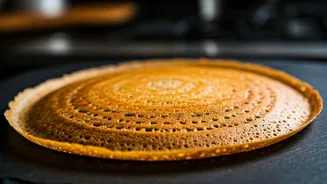
With your perfectly prepared and adjusted batter, you're now set to cook delicious, crispy ragi dosas. Heat a tawa, or griddle, to the right temperature – it should be hot enough to cook the dosa quickly but not so hot that it burns. Pour a ladleful of batter onto the center of the hot tawa. Using the back of the ladle, spread the batter outwards in a thin, circular motion to form a delicate crepe. Drizzle a little oil or ghee around the edges and on top. Cook until the underside is golden brown and crisp, then flip and cook the other side briefly. Serve immediately for the best crispy experience.