





High-Altitude Wonders
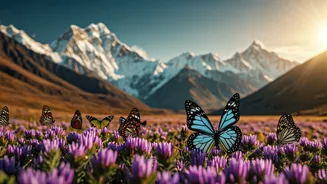
The Himalayas are home to a unique array of butterfly species, including the magnificent Common Blue Apollo. This species is particularly notable for its
resilience in high-altitude meadows, thriving even in cold environments. Its presence signifies a healthy alpine ecosystem. These hardy insects are a testament to nature's ability to adapt to challenging conditions, adding a splash of vibrant colour to the otherwise stark mountain scenery. Observing them requires patience and a keen eye for detail, as they flit amongst the wildflowers, a true spectacle of high-altitude biodiversity. Their existence is intrinsically linked to the specific flora and microclimates found only at these elevated elevations, making them special inhabitants of this iconic mountain range.
Forest Flyers
Within the lush forests of the Himalayas, a different kind of butterfly takes flight. One such notable species is a fast-flying forest butterfly, a common sight for those venturing through the wooded areas. Its agility and speed make it a captivating subject to observe, often seen darting through sunlit clearings or along forest paths. Unlike its high-altitude counterparts, this species is adapted to the dappled light and denser vegetation of the lower and mid-elevations. Its presence indicates a healthy forest ecosystem, contributing to pollination and serving as a food source for other creatures. The ease with which it navigates its environment highlights its perfect adaptation to its sylvan habitat, making it a familiar and welcome sight for nature enthusiasts.
Widespread Visitors
Among the most recognizable butterflies gracing the Himalayan landscape is the Painted Lady. This species boasts an incredibly wide distribution, meaning it can be found across vast stretches of the Himalayas, from lower valleys to more accessible higher grounds. Its migratory nature and adaptability allow it to thrive in diverse habitats, making it a consistent presence throughout the region. The Painted Lady's widespread range is a key factor in its familiarity to many, representing a common yet beautiful element of the Himalayan natural world. Its resilience and ability to colonize varied environments make it a remarkable example of butterfly success in this challenging, yet rewarding, geographical setting. Its vibrant colours offer a touch of artistry against the backdrop of towering peaks.
Subtle Hues
The Himalayan Brimstone stands out with its distinctive pale coloration, making it easily noticeable against the varied Himalayan backdrop. These butterflies possess a gentle beauty, their subdued tones offering a pleasing contrast to more vividly coloured species. Their presence adds a delicate charm to the meadows and forest edges where they are typically found. The soft shades of the Himalayan Brimstone are a product of its evolutionary adaptation to its specific environment, possibly aiding in camouflage or thermoregulation. Observing these butterflies provides a moment of quiet appreciation for the subtle wonders of nature, reminding us that beauty comes in many forms, not just the most flamboyant. Their understated elegance is a unique characteristic that distinguishes them within the diverse insect population.
Common Whites
A very common sight across many central Himalayan areas is the Pieris canidia indica, a classic white butterfly. Its ubiquity in this region makes it a familiar presence for locals and visitors alike. These butterflies often flutter through gardens, meadows, and along pathways, their pure white wings a constant, gentle movement in the air. The Pieris canidia indica is a prime example of a species that has successfully adapted to human-influenced landscapes as well as natural ones, demonstrating its versatility. Its frequent appearance underscores its ecological success and its integral role in the butterfly populations of the central Himalayas. Their simple, clean aesthetic is a recurring motif in the region's natural beauty.
Jewels of Flora
Adding a touch of brilliant colour to the Himalayan flora is the small, yet striking, Red Pierrot butterfly. Its vivid hues are a delightful surprise, often found flitting among colourful blossoms, creating a beautiful synergy between insect and flower. This small butterfly's bright appearance makes it a charming focal point, its vibrant colours a stark contrast to the often muted tones of the forest floor or rocky terrain. The Red Pierrot’s presence highlights the intricate relationships within the Himalayan ecosystem, where even the smallest creatures contribute to the overall vibrancy and health of the environment. Observing this butterfly is like finding a tiny, living gem nestled within the mountains' rich tapestry of life.
Metallic Sheen
The Sorrel Sapphire is a truly beautiful butterfly, celebrated for its mesmerizing metallic sheen. When sunlight catches its wings, it reflects a dazzling iridescence, creating a captivating display. This unique optical quality makes it stand out, appearing almost jewel-like as it flies. Its beauty is not just in its colour but in the way light interacts with its scales, producing a shimmering effect that is both enchanting and ethereal. The Sorrel Sapphire’s radiant appearance adds a touch of magic to the Himalayan wilderness, making it a sought-after sight for lepidopterists and nature lovers. It embodies the spectacular natural artistry found in these remote and majestic mountains, a true testament to evolution's creative power.