



What's Happening?
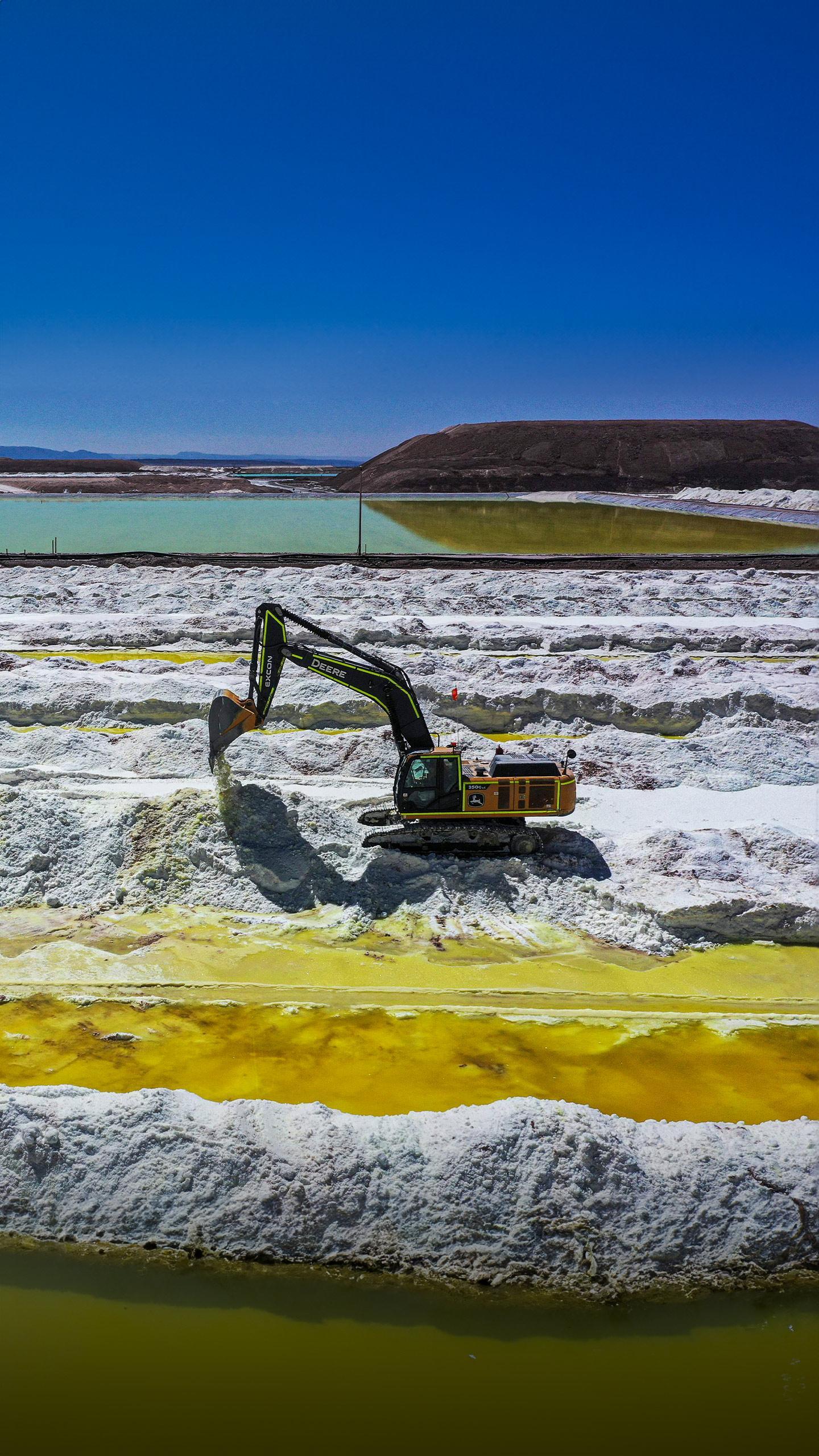
PMET Resources Inc. has released an Updated Feasibility Study (FS) for its CV5 Lithium-Tantalum Project at the Shaakichiuwaanaan Property in Quebec, Canada. The updated study outlines a derisked and improved
development scenario, focusing on higher-grade underground operations first and introducing tantalum recovery. This approach is projected to materially reduce the life-of-mine (LOM) operating cost and enhance overall project economics. Key financial improvements include an after-tax Net Present Value (NPV) of approximately CA$5.10 billion (US$3.72 billion) and an Internal Rate of Return (IRR) of about 40.4%. The LOM total cash operating cost (FOB Quebec ports) is now estimated at CA$594/t (US$433/t), an 19% reduction, and the All-in Sustaining Cost (AISC) at CA$657/t (US$480/t), an 18% reduction, largely due to tantalum co-product credits. The project aims to produce up to 800,000 tonnes per annum (tpa) of spodumene concentrate and 635,000 lbs per annum of contained Ta2O5 at full production. The initial capital expenditure for Phase 1 is CA$1,391 million, with an expansion CAPEX for Phase 2 of CA$672 million.
Why It's Important?
This enhanced feasibility study is significant for the North American critical minerals supply chain, positioning the Shaakichiuwaanaan Project as a potentially major source of lithium and tantalum. The inclusion of tantalum recovery not only diversifies the project's output but also substantially improves its economic resilience against fluctuating commodity prices. The reduced operating costs and increased profitability make the project more attractive to investors and strategic partners, crucial for securing the necessary funding. Furthermore, the project's location in Quebec, Canada, a stable jurisdiction, and its potential to supply North American, European, and Asian markets, aligns with global efforts to secure critical mineral supplies outside of traditional sources. The project's scale and long life, estimated at nearly 20 years, could provide a consistent supply of essential materials for electric vehicle batteries, advanced electronics, and other high-tech industries, thereby contributing to energy transition and technological independence.
What's Next?
PMET Resources plans to continue advancing detailed engineering for Phase 1 development. Concurrently, the company will pursue a Preliminary Economic Assessment (PEA) exploring an alternative development scenario that integrates both the CV5 and CV13 pegmatites, and includes caesium in addition to lithium and tantalum. The company is also progressing its underground bulk sample program targeting the high-grade Nova Zone to validate design assumptions and test product specifications. A Final Investment Decision (FID) is targeted for late 2027, contingent on securing project approvals and financing. The company is actively engaging with potential customers, strategic investors, and government stakeholders, leveraging non-binding letters of interest from financial institutions and its existing partnership with Volkswagen Group's PowerCo. Commissioning of the first processing plant is targeted for late 2029, with commercial production expected by the end of Q1 2030.
Beyond the Headlines
The Shaakichiuwaanaan Project's development underscores a broader trend in critical mineral sourcing, driven by increasing demand for electric vehicles and renewable energy technologies. The project's emphasis on both lithium and tantalum highlights the growing importance of diversified mineral portfolios to meet complex industrial needs. The Canadian government's support for critical mineral projects, as evidenced by various financial and commercial support mechanisms, reflects a strategic national interest in building robust domestic supply chains. This project could serve as a model for sustainable mining practices, given its ongoing engagement with Eeyou/Cree stakeholders and the comprehensive environmental assessment process. The long-term implications extend to geopolitical stability, as securing diverse and reliable sources of critical minerals reduces reliance on potentially volatile regions and strengthens economic security for the U.S. and its allies.