



What's Happening?
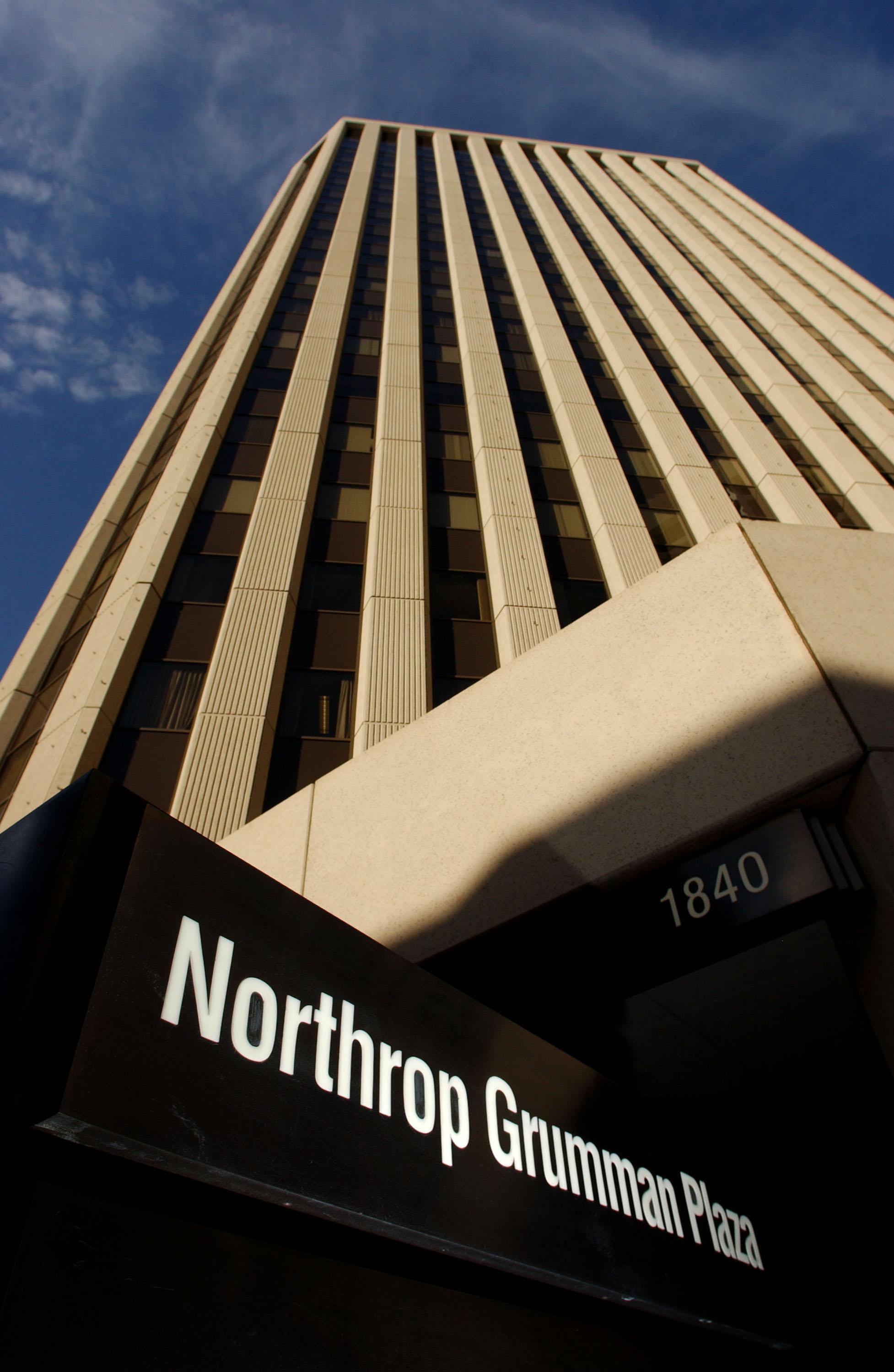
Northrop Grumman, a prominent defense contractor, has reported a record backlog of $104.69 billion, driven by significant second-quarter awards totaling $20 billion. These awards include $7.6 billion for
the Sentinel Intercontinental Ballistic Missile (ICBM) program and $4.3 billion for restricted programs. The company's earnings per share (EPS) for the second quarter reached $7.68, surpassing the estimated $6.82. Northrop Grumman is a key player in developing advanced defense systems, including the B-21 bomber and various munitions. Despite a 19.07% decline in share price over the past year, the company has consistently increased its quarterly dividend, with the latest raise from $2.31 to $2.47 per share, effective from the June 1, 2026, ex-dividend date. This marks a continuous trend of dividend increases since 2004, excluding a one-time payment in 2011.
Why It's Important?
The substantial increase in Northrop Grumman's backlog underscores the ongoing robust demand for defense technologies and services within the U.S. and potentially from allied nations. This trend is critical for the U.S. defense industrial base, indicating sustained investment in national security priorities such as strategic deterrence (Sentinel ICBM) and advanced aerial capabilities (B-21 bomber). For investors, the rising dividend, despite a fluctuating share price, signals management's confidence in future free cash flow generation, which is projected to be between $3.1 billion and $3.5 billion for 2026. The company's strategy to double international sales to $10 billion by 2031 also highlights a broader effort to diversify revenue streams and capitalize on global defense spending. However, the reliance on fixed-price development contracts and classified programs introduces risks, as evidenced by operating income adjustments due to specific program costs, which could impact profitability.
What's Next?
Northrop Grumman anticipates a full-year book-to-bill ratio of at least 1.25 times, indicating continued growth in new orders relative to revenue. The company's commitment to increasing international sales to $10 billion by 2031 suggests a strategic focus on expanding its global footprint. Investors will be watching for further dividend increases, given the company's consistent track record and strong free cash flow guidance. However, the company faces challenges related to capital expenditure for programs like the B-21 ramp-up, which could compete with payout growth. The performance of fixed-price development and classified programs will also be under scrutiny, as cost overruns in these areas have historically led to unexpected charges. The company's ability to manage these risks while maintaining its growth trajectory will be crucial in the coming years.
Beyond the Headlines
The sustained growth in Northrop Grumman's backlog and its focus on advanced defense systems reflect a broader geopolitical landscape characterized by increasing global tensions and a renewed emphasis on military modernization. The development of programs like the B-21 bomber and Sentinel ICBM represents significant long-term investments in strategic deterrence, shaping the future of U.S. defense capabilities. The company's reliance on classified programs, while strategically important, also raises questions about transparency and oversight, as cost overruns can emerge as 'surprise charges.' This dynamic highlights the inherent complexities and risks associated with high-stakes defense contracting. Furthermore, the push for international sales indicates a strategic shift towards leveraging U.S. defense technology in a competitive global market, potentially influencing international alliances and defense postures.