


What's Happening?
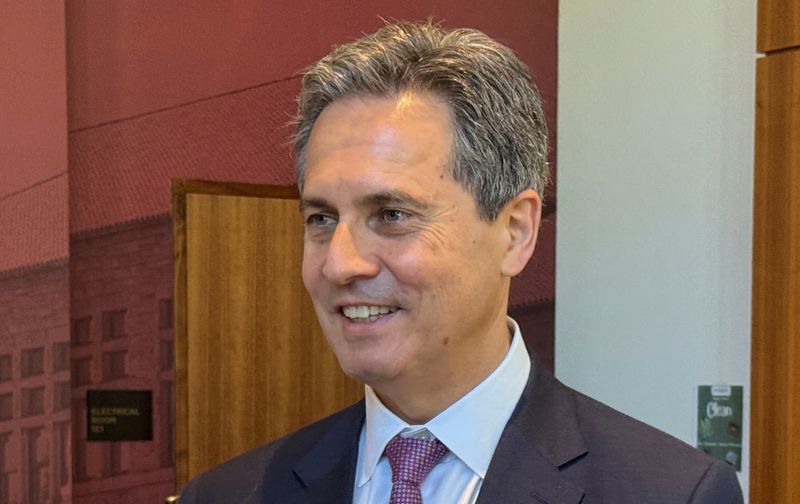
Emmett Soldati, owner of Totally Tea + Coffee in Concord, New Hampshire, is producing a documentary detailing his multi-year legal battle against Facebook. The dispute originated in 2018 when the official
Instagram account for his previous cafe, Teatotaller, was deleted without notice. Soldati filed a small claims case against Facebook, alleging the deletion caused business losses and that Facebook provided contradictory reasons for the account's removal. After an initial dismissal, Soldati appealed to the New Hampshire Supreme Court in 2020, where he won, leading to a successful ruling in his favor at Dover Small Claims Court in 2023. Facebook was found liable for breaching its contract, though Soldati received only a few hundred dollars in compensation, and the account was not restored. Soldati, who represented himself, views his victory as empowering individuals against large corporations. He began working on the documentary in 2024, with filming scheduled for spring and summer, aiming for a $200,000 budget. The film is fiscally sponsored by Film Forum, a New York City-based nonprofit indie theater.
Why It's Important?
Emmett Soldati's documentary project highlights a significant and growing concern regarding the power dynamics between individuals and large technology corporations, particularly social media platforms. His legal victory against Facebook, though resulting in minimal financial compensation, sets a precedent for individuals seeking recourse against perceived arbitrary actions by tech giants. This case underscores the challenges small businesses face when their digital presence, often crucial for marketing and customer engagement, is abruptly disrupted without clear explanation or recourse. The documentary aims to shed light on the 'frustrating bureaucracy' of navigating social media platforms when issues arise, resonating with millions who have experienced similar problems with account suspensions or deletions. It also emphasizes the importance of individual agency and the potential for legal challenges to hold powerful corporations accountable, even when the odds seem stacked against them. The film could inspire others to pursue similar avenues, fostering a broader conversation about digital rights and corporate responsibility.
What's Next?
Emmett Soldati is currently in the pre-production and development phase of his documentary, with filming slated to begin in the spring and continue into the summer. He anticipates completing the film next year and plans to showcase it at theaters and film festivals. The documentary's release will likely reignite discussions about corporate accountability in the tech sector and the rights of users on social media platforms. Depending on its reception, the film could influence public perception of companies like Facebook and potentially inspire more individuals or small businesses to pursue legal action when they feel wronged. Furthermore, the project's fiscal sponsorship by Film Forum suggests it will gain traction within the independent film circuit, potentially reaching a wide audience interested in social justice, technology, and David-and-Goliath narratives. The success of the documentary could also encourage other content creators to explore similar themes, amplifying the conversation around digital governance and user protection.
Beyond the Headlines
Soldati's documentary delves into deeper implications beyond his personal legal battle, touching upon the ethical and societal dimensions of living in a digital age dominated by massive social media companies. The film's narrative contrasts the 'zany, colorful, eccentric, queer, and flamboyant' environment of his cafe with the 'monolithic, massive corporation' of Facebook, creating a compelling visual and thematic juxtaposition. This contrast highlights the struggle of individual expression and community building against the impersonal, often opaque, algorithms and policies of tech platforms. The documentary aims to address the widespread feeling of powerlessness when users encounter glitches, suspensions, or deletions without customer support or clear avenues for resolution. It implicitly questions the ethical responsibilities of platforms that serve as essential communication and commerce tools but operate with limited transparency and accountability. The film could contribute to a cultural shift, encouraging greater scrutiny of tech company practices and advocating for more robust user protections and clearer recourse mechanisms.