
What's Happening?
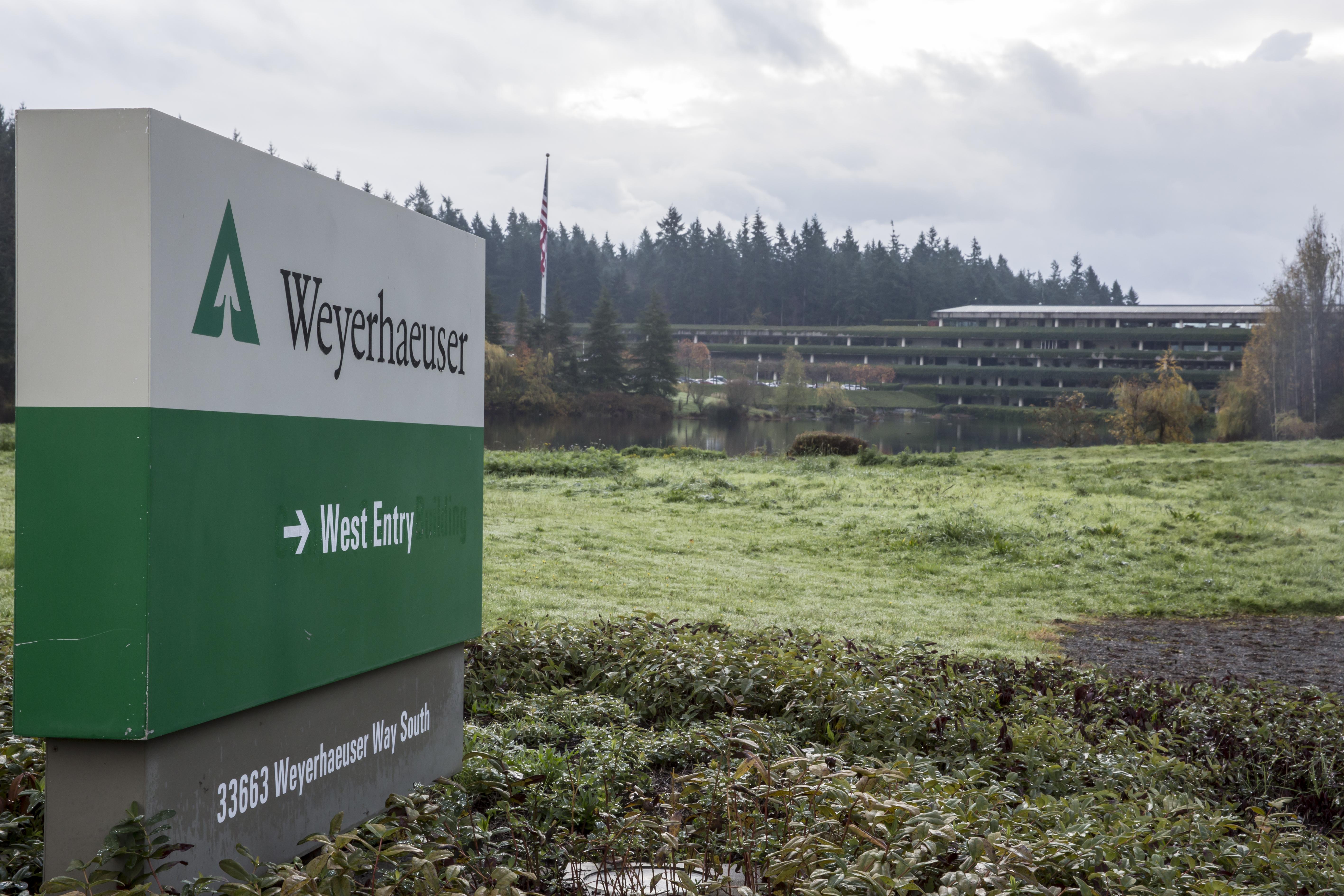
Weyerhaeuser, a U.S.-based timber, land, and wood-products company founded in 1900 and headquartered in Seattle, continues to be a significant player in its industry. The company specializes in sustainable
timber, forest products, and land management. Its stock is publicly traded on the NYSE under the ticker symbol WY. As of November 6, 2026, Weyerhaeuser's stock price stood at $20.98. The company boasts a market capitalization of $15.11 billion and offers investors a dividend of $0.84 per share annually, resulting in a yield of 3.88%. Furthermore, Weyerhaeuser's financial metrics include a price-to-earnings ratio of 33.3 and a price-to-earnings-growth ratio of 4.29. The company is also noted as a supplier of engineered wood products, including TJI I-joists, MicroLam LVL, Parallam PSL, and TimberStrand LSL, which are integral to various construction projects.
Why It's Important?
Weyerhaeuser's sustained market presence and financial performance are important indicators for the U.S. timber and construction industries. As a major supplier of wood products, its stability directly impacts the availability and pricing of essential materials for residential and commercial construction across the nation. The company's commitment to sustainable timber and land management practices also highlights a growing trend towards environmentally responsible resource utilization within the business sector. Its dividend yield makes it an attractive option for income-focused investors, while its market capitalization reflects investor confidence in its long-term viability. The company's role in providing engineered wood products underscores its contribution to modern building techniques and the efficiency of construction projects, influencing housing affordability and infrastructure development.
What's Next?
Weyerhaeuser is expected to continue its operations in sustainable timber, forest products, and land management, maintaining its role as a key supplier to the U.S. construction industry. The company's stock performance will likely be influenced by broader economic conditions, particularly those affecting the housing market and construction demand. Investors will monitor its dividend payouts and financial ratios, such as the price-to-earnings and price-to-earnings-growth ratios, for future investment decisions. The ongoing demand for engineered wood products, including TJI I-joists and LVL, suggests a continued focus on efficient and durable building materials. Weyerhaeuser's strategic decisions regarding land management and timber harvesting will also be crucial in balancing economic output with environmental stewardship, potentially setting industry standards for sustainable practices.
Beyond the Headlines
Weyerhaeuser's long-standing presence and focus on sustainable practices extend beyond mere financial performance, touching upon critical environmental and societal aspects. Its extensive landholdings and timber management practices play a significant role in carbon sequestration and biodiversity, contributing to broader climate change mitigation efforts. The company's influence on the construction sector also has implications for housing accessibility and urban development, as the availability and cost of wood products directly affect building costs. Furthermore, Weyerhaeuser's commitment to sustainability can serve as a model for other resource-based industries, promoting responsible land use and forest stewardship. The balance between economic growth and ecological preservation, exemplified by companies like Weyerhaeuser, remains a crucial discussion point in national policy and corporate responsibility.